
2026 Top High Pressure Dosing Pump Types?
Choosing the right High Pressure Dosing Pump in 2026 requires more than comparing pressure ratings. Real installations reveal the difference. A pump may perform well in a laboratory, yet struggle with crystallizing chemicals, fluctuating temperatures, or long discharge lines. Operators often notice these problems through unstable flow, vibrating pipes, or a pressure gauge that moves like a nervous heartbeat.
This guide examines major pump types, including diaphragm, plunger, peristaltic, and hydraulic-driven designs. Each type offers distinct advantages. Diaphragm pumps provide strong containment and accurate metering. Plunger pumps can deliver high pressure and consistent output. Peristaltic pumps simplify maintenance when fluid isolation matters. Hydraulic designs suit demanding industrial systems, but they require careful control and inspection. Small details matter.
Selection should begin with the process, not the catalog. Check fluid viscosity, temperature, solids content, pulsation tolerance, required flow, and maximum discharge pressure. Material compatibility also deserves close attention. Stainless steel may suit one chemical, while reinforced plastics or special alloys may perform better elsewhere. Manufacturer data is useful, but field conditions remain decisive. That is where judgment matters.
There is no universal winner. A technically impressive pump can still be the wrong choice. Seal wear, calibration drift, and operator access may affect lifetime costs more than the purchase price. In this overview, we compare practical strengths, limitations, and suitable applications for each High Pressure Dosing Pump type. The aim is reliable selection, not exaggerated certainty. Results still depend on installation quality.
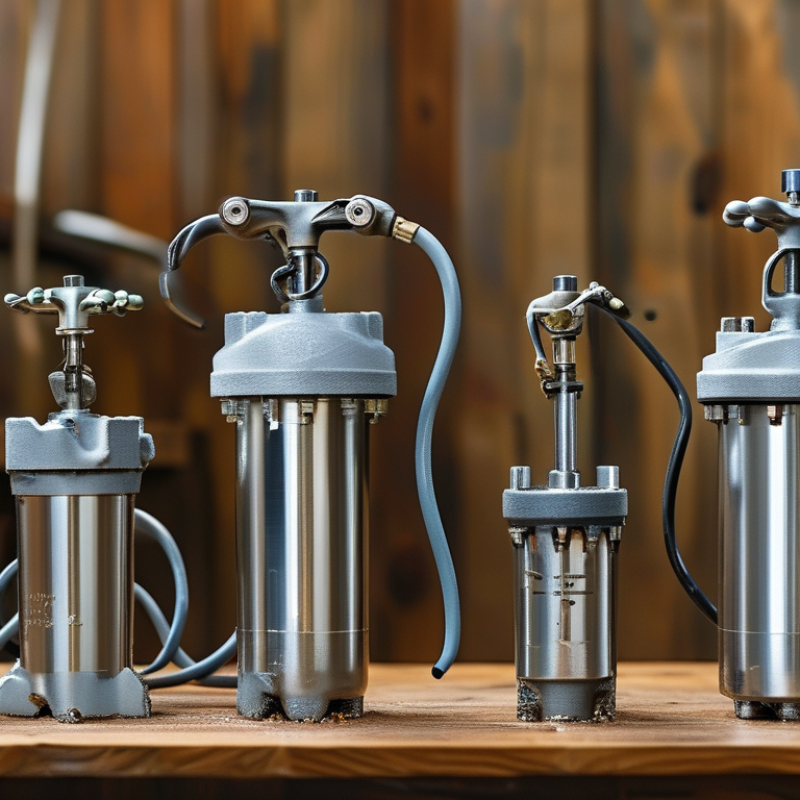
What Defines a High-Pressure Dosing Pump in 2026
A high-pressure dosing pump in 2026 is defined by controlled accuracy under pressure, not pressure alone. No universal pressure threshold exists. In practice, many process systems classify pressures above 100 bar as high pressure, while specialized units exceed 400 bar. The suitable design depends on fluid viscosity, temperature, chemical compatibility, and required flow stability.
Common types include plunger, mechanically actuated diaphragm, hydraulically actuated diaphragm, and piston diaphragm pumps. Plunger models suit high pressure and low flow. Diaphragm designs provide stronger containment when leakage cannot be tolerated. API 675 emphasizes controlled-volume metering, repeatability, and protective features. These remain useful benchmarks for specifying equipment, although compliance does not guarantee perfect field performance.
Energy use also matters. The U.S. Department of Energy reports that pumping systems can consume about 25% of industrial electricity. A poorly selected dosing pump wastes energy through oversized motors, bypass flow, or excessive pulsation. The UN World Water Development Report 2024 states that agriculture accounts for roughly 70% of global freshwater withdrawals. This strengthens demand for accurate chemical dosing in irrigation and water treatment. Yet pressure alone can mislead. A pump rated for 300 bar may perform badly at tiny flow rates without stable stroke control, calibration, and proper relief protection. Field conditions often expose that weakness.
2026 Top High Pressure Dosing Pump Types? - What Defines a High-Pressure Dosing Pump in 2026
Comparative overview of the principal high-pressure dosing pump technologies used for accurate chemical and process-fluid injection
| Pump Type | Typical Maximum Discharge Pressure | Typical Flow Range | Typical Metering Accuracy | How It Doses Fluid | Best-Suited Applications | Key Advantages | Main Limitations |
|---|---|---|---|---|---|---|---|
| Hydraulic-Diaphragm Metering Pump | 100–400 bar | 0.1–10,000 L/h | Typically ±1% of rated capacity | A hydraulic oil chamber transfers the reciprocating motion of the drive to a flexible diaphragm, separating the process fluid from the mechanical drive. | High-pressure chemical injection, water treatment, oil and gas processing, polymer dosing, and hazardous or corrosive fluids. | Leak-minimizing design, good containment, strong chemical compatibility, and reliable operation at high discharge pressure. | Higher purchase cost and greater system complexity than simpler mechanical designs; correct hydraulic protection is essential. |
| Plunger Metering Pump | 100–1,000 bar | 0.5–10,000 L/h | Typically ±0.5–1% | A solid plunger reciprocates inside a packed or sealed chamber to create positive-displacement suction and discharge strokes. | Very-high-pressure injection, boiler-water treatment, reverse-osmosis pretreatment, process additives, and relatively clean liquids. | Very high pressure capability, efficient energy transfer, robust construction, and stable flow with suitable calibration. | Not ideal for abrasive, highly corrosive, gas-laden, or crystallizing fluids; seal and packing wear can lead to leakage. |
| Piston Metering Pump | 50–700 bar | 1–20,000 L/h | Typically ±0.5–1% | A piston moves within a cylinder and uses inlet and outlet check valves to produce a controlled positive-displacement flow. | High-pressure water treatment, liquid additives, process chemicals, hydraulic testing, and clean-to-moderately viscous fluids. | High volumetric efficiency, accurate repeatable dosing, and good performance across a broad pressure range. | Dynamic seals are exposed to wear; abrasive solids and aggressive chemicals may require specialized wetted materials. |
| Mechanical-Diaphragm Metering Pump | 10–200 bar | 0.5–5,000 L/h | Typically ±1–2% | An eccentric drive or crank mechanism directly flexes a diaphragm, which displaces the process fluid through check valves. | General industrial dosing, water and wastewater treatment, cooling-water chemicals, and non-extreme pressure service. | Simple construction, no dynamic process-fluid seal, relatively low maintenance, and good resistance to many corrosive chemicals. | Pressure capability is generally lower than hydraulic-diaphragm and plunger designs; diaphragm fatigue and gas locking must be managed. |
| Peristaltic Dosing Pump | Up to approximately 15–30 bar | 0.001–10,000 L/h | Typically ±1–2% | Rollers or shoes compress a flexible tube or hose and move the fluid without direct contact with the pump mechanism. | Slurries, abrasive chemicals, viscous fluids, suspended solids, laboratory dosing, and applications requiring low contamination risk. | Excellent fluid isolation, self-priming capability, dry-run tolerance, and simple maintenance through tube replacement. | Tube or hose life is affected by pressure, temperature, chemical compatibility, and cycling; pulsation can be significant. |
| Solenoid-Driven Diaphragm Pump | Typically up to 10–20 bar | 0.01–100 L/h | Typically ±1–3% | An electromagnetic actuator moves a diaphragm in timed strokes, with flow controlled by stroke frequency and stroke length. | Small-volume chemical injection, disinfection systems, pH control, laboratory equipment, and packaged water-treatment systems. | Compact size, simple electronic control, low installed cost, and convenient integration with automated control systems. | Limited flow and pressure compared with industrial reciprocating pumps; dosing accuracy can be affected by back pressure and fluid properties. |
| Multi-Head Reciprocating Metering Pump | 50–1,000 bar, depending on head design | 10–100,000 L/h | Typically ±0.5–1% | Several synchronized piston, plunger, or diaphragm heads combine their discharges to provide higher capacity or multiple chemical streams. | Large process plants, high-capacity injection skids, coordinated additive dosing, and applications requiring multiple independent flow rates. | Scalable capacity, multiple-stream dosing, high pressure capability, and improved flow continuity when heads are phased correctly. | Larger footprint, more complex calibration and maintenance, and greater sensitivity to incorrect system balancing or pulsation control. |
| High-Pressure Dosing Pump: Practical Definition | Application-dependent; commonly 50 bar and above | Selected according to process demand | Usually specified by process tolerance | A positive-displacement pump designed to deliver a controlled, repeatable quantity of fluid against substantial system back pressure. | Any process where accurate injection must be maintained against high line pressure, static head, or pressure fluctuations. | Repeatable dosing, controllable flow, compatibility with automated systems, and suitability for demanding process conditions. | There is no universal pressure threshold; the correct classification depends on the fluid, flow rate, temperature, materials, and required safety margin. |
Note: The pressure, flow, and accuracy values shown are typical engineering ranges rather than universal limits. Actual performance depends on pump size, wetted materials, fluid viscosity, vapor pressure, temperature, solids content, suction conditions, calibration, and manufacturer-specific design.
Related Posts
-
China Top Solenoid Dosing Pump Manufacturers and Suppliers?
-
How to Choose the Right Diaphragm Metering Pump?
-
2026 Best Diaphragm Dosing Pump What to Look For?
-

2026 How to Choose the Right Solenoid Dosing Pump for Your Needs?
-
Understanding the Advantages of Hydraulic Diaphragm Pumps in Modern Industrial Applications
-
Hydraulic Diaphragm Pump Essential Tips for Optimal Performance