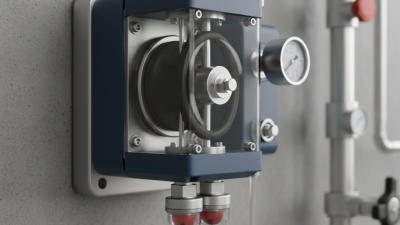
Choosing the right Diaphragm Pumps in 2026 starts with the fluid, not the catalog. A unit that handles clean water may struggle with abrasive slurry, sticky coatings, or chemicals. Write down the liquid’s viscosity, temperature, solids content, and required flow before comparing models. Small details matter. A few hard particles can change wear rates, while a long suction line can reduce dependable output. These conditions shape diaphragm material, valve design, port size, and the pressure range the pump must meet. Treat advertised maximum flow as a reference, not a promise for every installation.
Next, compare actual duty requirements with the manufacturer’s performance curve and material compatibility data. Check whether the pump runs continuously or in short cycles, and whether compressed air or electrical power is available. Consider noise, air consumption, energy use, access for cleaning, and the time needed to replace wear parts. Ask suppliers for documentation that matches your exact fluid and operating conditions; broad compatibility claims deserve a closer look. A short trial with the real liquid can reveal pulsation, leakage, or cleaning problems that a bench specification misses. Not every site can run a trial. In that case, verify assumptions with an application engineer and record what remains uncertain. That step is easy to skip. Yet it can prevent an expensive mismatch. There is no universally best pump. The sound choice balances performance, maintenance, safety, and total operating cost, then leaves room to review results after installation. Even careful selection needs feedback.

Define the fluid before comparing pump curves. Record its temperature, viscosity, solids concentration, particle size, and whether it is abrasive or shear-sensitive. A clear liquid can still carry grit that wears check valves. Specify the required flow at actual discharge pressure, not the pump’s free-flow rating. Measure suction lift and account for line losses; long, narrow hoses can restrict inlet supply and cause erratic cycling. Small details matter.
Describe the duty pattern: operating hours, starts, pauses, and acceptable pulsation. Match the wetted body, diaphragm, and valve materials to the fluid using compatibility data; consider sample testing when failure would be costly. Include cleaning methods and temperature swings.
The U.S. Department of Energy’s Improving Pumping System Performance sourcebook reports that pumping can account for 25–50% of energy use in some industrial plant operations.
For air-operated models, check air consumption at the actual duty point, not just purchase price. Ask for expected diaphragm life and maintenance intervals. One judgment call remains: solids can vary between batches, so document a practical operating margin and review it after trial operation.
Choosing a diaphragm pump starts with the fluid and duty cycle, not the catalogue headline. Air-operated double-diaphragm pumps tolerate suspended solids and can run dry briefly, making them useful for transfer and washdown. Their trade-off is pulsating flow and dependence on compressed air. Electric-drive metering pumps suit repeatable, low-flow dosing; stroke length and speed help control delivery. Hydraulic drives can provide strong output at higher pressures, but add controls and maintenance.
The U.S. Department of Energy’s Compressed Air Sourcebook estimates that compressed air uses about 10% of U.S. industrial electricity. That figure is a reminder to include air generation and leaks in an AODD pump’s operating cost, not just its purchase price. Air is not free. For a dosing skid, compare required flow, pressure, turndown, and chemical compatibility against the pump’s published curves. Check diaphragm material and replacement intervals, too; a neat specification sheet cannot predict every fluid’s effect. I would also ask whether the plant already has reliable compressed air. If not, an electric drive may be the simpler choice, even when the pump costs more upfront. It is not always obvious. A small trial with the actual fluid can expose pulsation, priming, or maintenance problems before installation.
Choosing diaphragm materials starts with the actual fluid, not its label alone. Check concentration, temperature, viscosity, and whether the liquid contains grit or cleaning agents. A mild solution can become aggressive when heated. Also consider every wetted part, including valves, seats, and seals; a compatible diaphragm cannot protect a mismatched seal.
Elastomers such as EPDM or nitrile suit different fluid families, while PTFE may be considered for demanding chemical service. No material is universal. Compare a chemical compatibility chart with the supplier’s temperature and pressure limits, then test a sample when the fluid blend is unusual. A chart is a starting point, not a promise. Small details matter. The surrounding environment matters too: UV exposure, humidity, washdown chemicals, and freezing conditions can age pump materials. Still, this choice is not always neat; real process fluids can vary from batch to batch.
Tips: Record the fluid’s full composition and operating temperature. Ask whether cleaning fluids contact the pump between runs. Inspect a sample diaphragm for swelling, softening, or cracks after a controlled trial. Test before scaling. If conditions change seasonally, reassess the material choice rather than relying on the original specification.
| Pump Part or Material | Commonly Suitable For | Environmental Considerations | Key Limitations and Selection Checks |
|---|---|---|---|
| Polypropylene (PP) wetted body | Many aqueous acids, alkalis, salts, and some corrosive process liquids. | Non-metallic construction avoids metal corrosion; useful where a lightweight body is preferred. | Check the exact chemical, concentration, temperature, and stress conditions. Some organic solvents and strong oxidizing conditions may be unsuitable; pressure and temperature ratings vary by pump design. |
| Polyvinylidene fluoride (PVDF) wetted body | Many acids, halogens, and other aggressive chemicals, subject to compatibility data for the specific service. | Corrosion-resistant thermoplastic option for demanding chemical handling. | Compatibility is not universal. Confirm concentration and temperature limits, permeation risk, and the chemical resistance of all wetted components—not only the body. |
| 316 stainless steel wetted body | Many water-based fluids, oils, and compatible process chemicals where a metal body is needed. | Suitable for many washdown and industrial environments when the grade and finish fit the service. | Chlorides can cause pitting or crevice corrosion, especially in warm or stagnant conditions. Verify chemical concentration, temperature, welds, and cleaning chemicals. |
| Aluminum wetted body | Many oils, fuels, and non-corrosive industrial fluids. | Lightweight metal construction can be practical for portable or general industrial service. | Not a general-purpose choice for corrosive liquids. Strong acids and alkalis can attack aluminum; check the fluid and any coatings or linings. |
| Cast iron wetted body | Many non-corrosive liquids, including some oils and slurries, when the pump is designed for the solids and duty. | Robust option for suitable industrial applications; exposed surfaces may require protection in wet or corrosive surroundings. | Can rust and is generally unsuitable for many corrosive fluids without an appropriate lining. Confirm abrasion, solids size, and lining compatibility. |
| PTFE diaphragm or wetted lining | Broad chemical service, including many aggressive acids, bases, and solvents. | Useful when chemical resistance is a priority; often used as part of a composite diaphragm construction. | PTFE can deform under sustained load and may have lower flex life than some elastomers. Check diaphragm construction, temperature limits, permeation, and pump-specific operating guidance. |
| EPDM elastomer | Water, many dilute acids and alkalis, and some aqueous process fluids. | Generally offers good resistance to weathering and ozone exposure. | Usually a poor choice for petroleum oils, fuels, and many hydrocarbon fluids. Verify concentration, temperature, and cleaning or sanitizing agents. |
| Nitrile rubber (NBR) | Many petroleum oils, lubricants, and fuels, depending on formulation and service conditions. | Can suit indoor industrial service where oil resistance is needed. | Resistance to ozone, sunlight, weathering, and some chemicals is limited compared with other elastomers. Check fuel blend, temperature, and fluid additives. |
| Fluoroelastomer (FKM) | Many oils, fuels, and selected chemicals at elevated temperatures, subject to the specific compound. | Often selected for chemical and heat resistance in compatible service. | Not compatible with every fluid; some ketones, amines, hot water, and steam can be problematic. Check the exact elastomer formulation and operating conditions. |
| Ball, seat, and O-ring materials | Select individually from compatible polymer, elastomer, or metal options to suit the fluid and pump design. | All wetted parts must tolerate the same fluid, cleaning cycle, and ambient conditions. | A compatible body does not guarantee a compatible pump. Check balls, seats, seals, diaphragm layers, fasteners exposed to fluid, and any liner as a complete wetted-material set. |
| Selection note: Compatibility depends on the exact fluid composition, concentration, temperature, pressure, exposure time, and operating cycle. Confirm the complete wetted-material list with current chemical-resistance data and the pump manufacturer’s limits before specifying a pump. Also consider abrasion, solids, UV exposure, outdoor weather, washdown chemicals, and applicable process or safety requirements. | |||
Choose a diaphragm pump by matching its operating point to the system, not by selecting the largest flow rating on a specification sheet. Check the required flow at the actual discharge pressure, fluid temperature, and viscosity. A pump rated for 40 litres per minute at low pressure may deliver less once pipe friction, elevation, and filters are included. Measure it. Compare the manufacturer’s performance curve with your expected range, and leave reasonable capacity for start-up or changing demand. Avoid excessive oversizing; it can cause unnecessary cycling, wear, or energy use.
Pressure and control features matter just as much. Confirm that the pump can handle both normal pressure and brief operating peaks, while keeping the system’s relief protection appropriate. For pulsing flow, consider whether a dampener or a slower stroke rate would protect instruments and steady downstream dosing. Variable speed or adjustable stroke can help when demand changes, but check how accurately each option controls flow at low output. Also verify wetted-material compatibility with the fluid and cleaning routine. In practice, small details—such as a long suction hose or a partly clogged strainer—can change performance. A bench test under real conditions is useful, though it may not capture every site variation. I would not treat one test as the whole answer.
Evaluate Maintenance, Safety, and Total Ownership Costs
A pump’s purchase price is only the starting point. Compare expected diaphragm and valve life, service intervals, and the time needed for routine repairs. Ask how quickly a technician can inspect the air section and replace wetted parts. Small parts matter. A pump that is easy to open may save hours during a planned shutdown.
Safety depends on the process, not just the pump body. Check that materials suit the fluid, temperature, and cleaning method. Confirm the pump’s pressure and flow limits against actual operating conditions, including startup peaks. Look for clear instructions on isolation and depressurization before service. Never assume a familiar setup is safe for a new fluid.
Estimate total ownership cost across several years. Include energy use, replacement parts, labor, downtime, and any needed accessories. For example, a low-cost unit may become expensive if operators must stop production often to clear blockages. Use maintenance records where possible; estimates based only on ideal conditions are often too optimistic. That calculation may still be imperfect. Revisit it after the first months of operation, when real service data can expose hidden costs.