How to Choose the Best Pump Products for Your Needs?

Choosing the right Pump Products for your applications can significantly impact efficiency and productivity. According to a recent industry report by ResearchAndMarkets, the global pump market is poised to reach over $70 billion by 2026, driven by increasing demand across various sectors. This highlights the importance of selecting the ideal pump solutions tailored to specific needs.

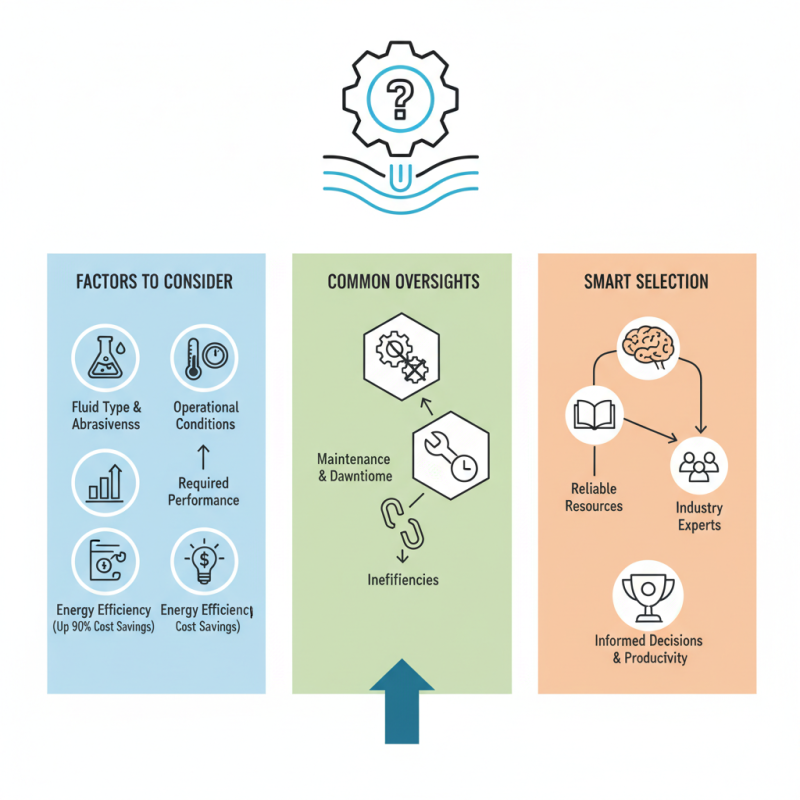
When evaluating Pump Products, several factors come into play. The type of fluid, operational conditions, and required performance all matter. For instance, working with abrasive materials demands more durable pumps. Furthermore, the energy efficiency of a pump can reduce operational costs, as studies indicate that energy costs typically account for up to 90% of the total lifecycle costs of pumping systems.

Many users overlook the importance of compatibility and maintenance when selecting pumps. Different systems may require unique features to ensure optimal functionality. Failing to address these aspects may lead to costly downtime and inefficiencies. Therefore, consulting reliable resources and industry experts can provide valuable insights for making informed decisions. Empower yourself with the necessary knowledge to choose the best Pump Products available.
How to Choose the Best Pump Products for Your Needs?

Understanding Your Pump Requirements and Applications

Understanding your pump requirements and applications is crucial for making informed decisions. Different industries use pumps for various reasons. Some pumps are designed for water transfer, while others handle chemicals or viscous fluids. Knowing the specific application helps narrow down your options.

Consider the operating environment. Is it indoors or outdoors? Will it face extreme temperatures or corrosive materials? These factors greatly influence pump selection. Real-world testing is often necessary to ensure performance meets expectations. Many users have learned this the hard way, realizing too late that their initial choice was not suitable.

Flow rate and pressure requirements are also key. You need to determine how much fluid you need to move and at what speed. These details can make or break your project. Ignoring these specifics may lead to inefficiencies. Seeking advice from industry professionals can provide valuable insights. Most users find it beneficial to consult experts to avoid costly mistakes.
How to Choose the Best Pump Products for Your Needs?

This chart illustrates the different types of pumps available based on their applications and suitability for various requirements. The data shows the percentage of usage across different pump types in common applications.

Types of Pumps and Their Specific Uses

When selecting pump products, understanding the types available is crucial. Various pumps serve unique purposes and industries. Centrifugal pumps, for instance, are widely used in water and wastewater management. According to a report by the Global Pump Market Insights, centrifugal pumps represent over 40% of the market share due to their efficiency in fluid transfer.

Positive displacement pumps, such as gear and diaphragm pumps, cater to applications requiring precise dosing. They are ideal for chemicals and viscous fluids. Industries relying on these pumps often report a 15% efficiency increase when utilizing the correct type. Understanding specific applications helps mitigate risks of product failure.

Tip: Evaluate your fluid type and flow requirements before purchasing. Additionally, consider pump material compatibility to avoid costly replacements.

Another essential type is submersible pumps, important in construction and mining sectors. They can operate underwater, reducing potential hazards. However, improper use can lead to premature wear. Reports indicate that 30% of pump failures stem from unsuitable applications or operational errors.

Tip: Regularly inspect pumps for wear and ensure they are operating within their design parameters. This proactive approach can extend the lifespan of your equipment and enhance productivity.

How to Choose the Best Pump Products for Your Needs?

Pump Type Specific Uses Flow Rate (GPM) Best Suited For
Centrifugal Pump Water supply, chemical processing 10-1000 Industrial, agricultural
Positive Displacement Pump Viscous fluids, metering 0.5-200 Food processing, pharmaceuticals
Submersible Pump Drainage, sewage 5-400 Residential, municipal
Diaphragm Pump Chemical transfer, spray systems 1-80 Agricultural, industrial
Gear Pump Fuel, hydraulic applications 0.5-300 Transportation, machinery

Key Features to Consider When Choosing a Pump

How to Choose the Best Pump Products for Your Needs?

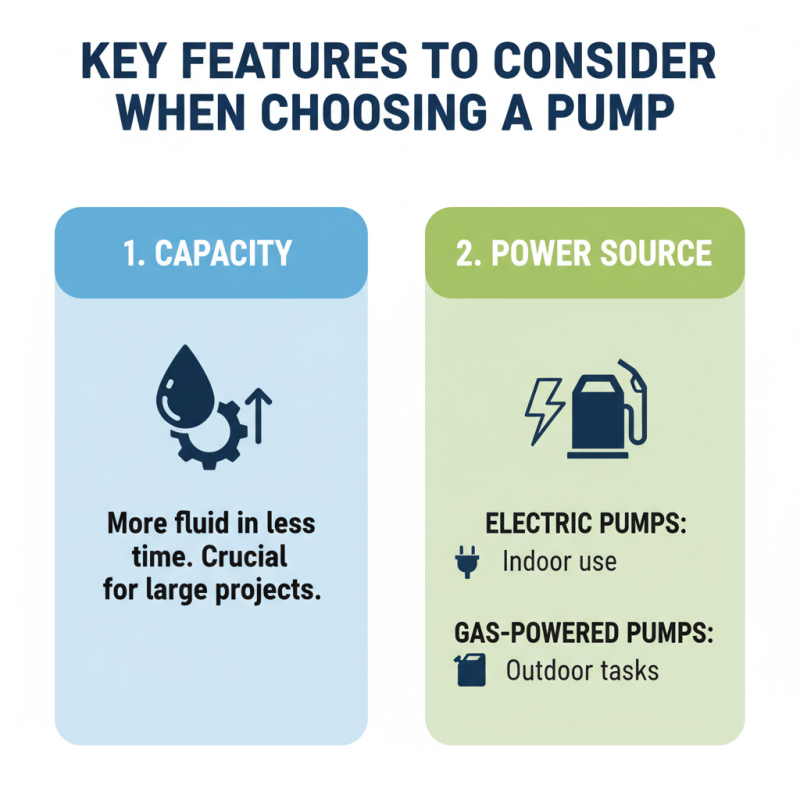
When choosing a pump, pay attention to key features that fit your specific needs. Consider the pump's capacity. A higher capacity pumps more fluid in a shorter time. This is crucial for large projects. Also, look at the power source. Electric pumps work well for indoor uses, but gas-powered pumps are better for outdoor tasks.

Tips: Evaluate the noise levels, especially for indoor use. Some pumps can be quite loud, which may not be suitable in residential areas. Assessing the durability is important too. A well-built pump can save you money in the long run. Look for materials that withstand harsh conditions.

Another vital feature is the flow rate. It determines how quickly the pump can move fluids. Make sure it aligns with your project's demands. Don't overlook the ease of maintenance. Simplified maintenance ensures long-term reliability. Always read user reviews. Real-life experiences reveal pros and cons you may not consider otherwise.

Evaluating Pump Performance and Efficiency Ratings

When evaluating pump performance and efficiency ratings, focus on a few key factors. Flow rate, pressure, and energy consumption are essential metrics. A pump's ability to move fluid effectively under specified conditions matters most. Check the specifications carefully. They provide insight into how well the pump meets your needs.

Tips: Look for pumps with high efficiency ratings. This means less energy wasted and operational cost savings over time. Take note of the manufacturer's performance tests. These help ensure you buy a reliable product.

Also, consider the pump's footprint. A compact pump may be easier to install and maintain. However, smaller pumps may struggle with larger volumes. Find the right balance between size and capacity. It's vital to weigh these aspects against your specific requirements. Each decision shapes your system's overall efficiency.

Maintenance and Support for Pump Products After Purchase

How to Choose the Best Pump Products for Your Needs?

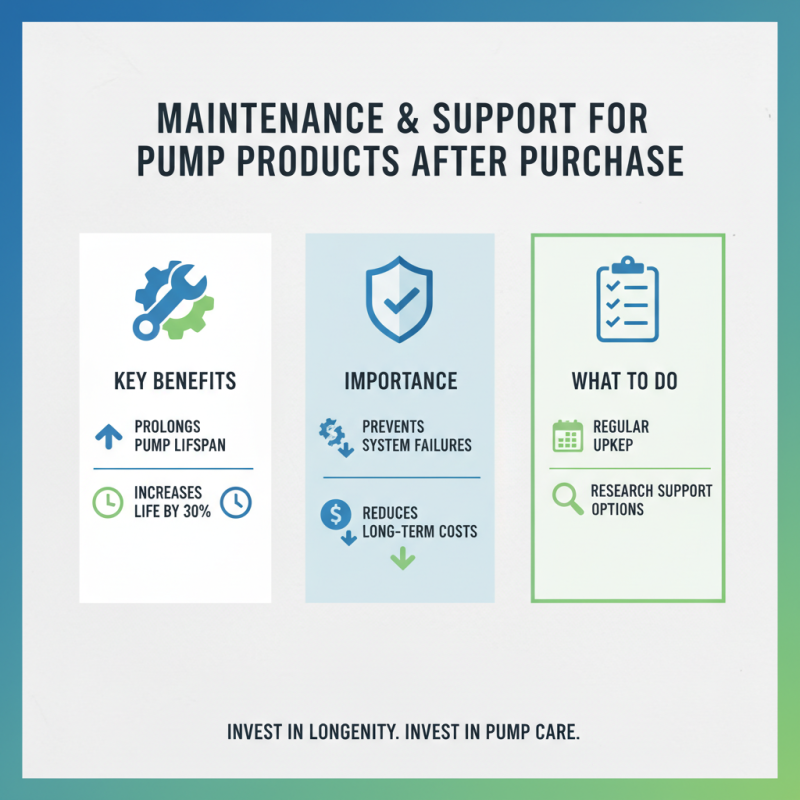
When you invest in pump products, understanding maintenance and support is crucial. Regular maintenance can prolong the life of pumps significantly. Research indicates that proper upkeep can increase pump lifespan by 30%. Neglecting this can lead to system failures and increased costs.

Support options should also be considered. Some manufacturers offer comprehensive training programs for technicians. This can enhance troubleshooting skills and efficiency. A report by the Pump Manufacturers Association highlights that well-trained staff can reduce downtime by up to 25%. It's a critical factor for industries relying heavily on pumps.

Choosing a product without considering its post-purchase support can lead to unfortunate surprises. Many users encounter issues due to a lack of immediate technical assistance. This can stall operations and increase repair expenses. Engaging with support options is as vital as selecting the right pump itself. Reflecting on these aspects can lead to better decision-making.

Go to Top