
A clean, round opening can make a metalworking job look simple, but the cut depends on choosing and using the right tool. A Hole Saw For Metal is designed to cut circular openings in materials such as sheet steel, aluminum, and stainless steel. Its toothed cup removes material around the edge, leaving a solid center plug. This makes it useful for openings too large for an ordinary drill bit. That matters. A suitable hole saw can also create a more controlled cut than some improvised methods, especially when the workpiece is secured and the tool is kept steady.
The best choice depends on the metal’s thickness, hardness, and the hole diameter required. Bi-metal hole saws are common for general metalwork, while tougher alloys may call for a more durable cutting edge. Check the manufacturer’s guidance; product labels can be easy to misread. Use a compatible arbor and pilot bit, select a cautious speed, and apply cutting fluid when recommended. Secure the material before drilling, and keep hands clear of the cutting area. Small metal chips can be sharp. Eye protection is essential, and gloves should be used with care around rotating equipment, where loose material can catch. A hole saw is not automatically the fastest or cleanest option. If the workpiece flexes, the teeth bind, or the cut becomes hot, stop and reassess rather than forcing the tool. Choosing well is only part of the job; setup and patience shape the result.
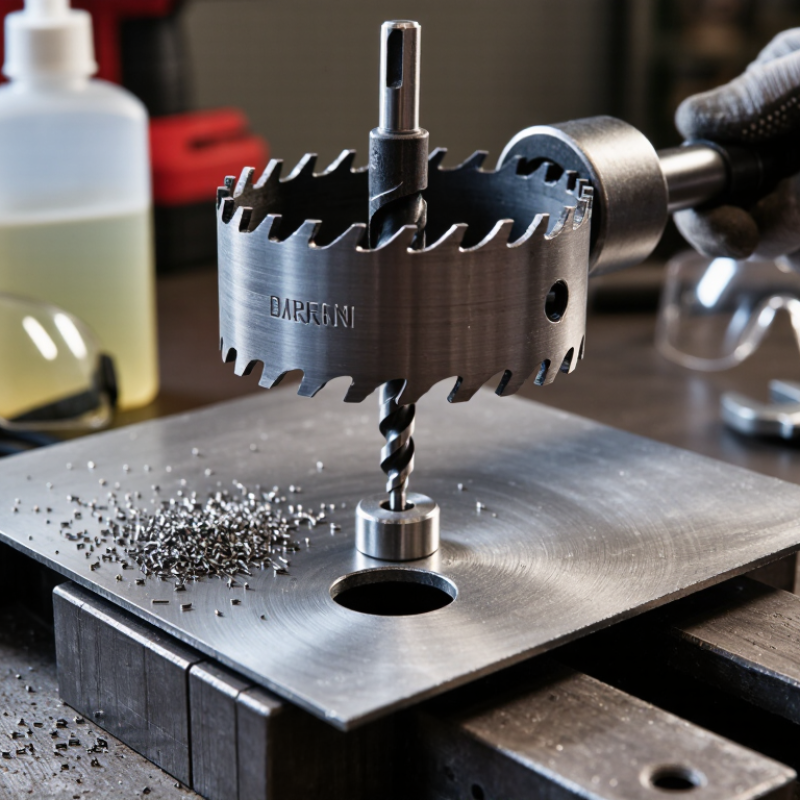
A hole saw is a hollow metal-cutting cylinder with teeth around its rim, mounted on an arbor. A small pilot bit helps center the cut and limits wandering. Unlike a twist drill, the saw cuts an annular groove rather than removing the whole circle. The round core remains inside the cup. Less material becomes chips, which makes hole saws useful for larger openings in sheet metal, tubing, and plate. Small detail, big difference. Tooth shape and speed should suit the metal; excessive pressure can overheat the cutting edge, cause chatter, or leave a ragged rim. A hole saw is not foolproof.
Secure the workpiece before cutting, especially thin sheet that can flex or grab. Use suitable cutting fluid on steel, feed steadily, and pause if the teeth squeal or the cut darkens from heat. The retained slug can be hot and sharp, so let it cool before removal. OSHA’s Eye and Face Protection guidance estimates that nearly 2,000 U.S. workers suffer job-related eye injuries each day. Metal chips are a clear reason to wear safety glasses with side protection. The setup may look simple, but alignment and chip control still deserve a second check.
Why Use a Hole Saw for Metal?
Key Advantages of Hole Saws for Metalworking
Hole saws create round openings without removing a large section of surrounding material. Their annular teeth cut only the perimeter, leaving a metal core that can be removed after drilling. This can reduce cutting time and limit heat compared with making the same opening through repeated smaller cuts. Less waste, often.
For sheet metal and tubing, a correctly sized hole saw helps produce consistent openings for fittings, cable glands, or fasteners. The pilot bit helps center the cut, while a drill press or firmly supported workpiece reduces wandering. Setup matters. Choose a cutter suited to the metal and thickness; tooth design and cutting speed both matter. Use steady pressure, suitable cutting fluid, and clear chips regularly. Rushing can dull teeth or leave a rough, overheated edge.
There are trade-offs. Thin sheet can grab, and large cutters need a secure clamp and controlled drill speed. A backing board can reduce burrs and distortion, though it does not replace deburring. Stop if the cutter binds. Check the hole diameter and edge before installing a fitting; a clean-looking opening may still need filing. Hole saws are useful, but not effortless. Careful setup usually makes the difference.
A hole saw cuts a narrow ring and leaves a solid metal slug, so less material becomes chips than when a twist drill removes the entire hole.
Illustrative geometry-based estimates for 3 mm-thick metal, using a 1.5 mm hole-saw kerf. Values show chip volume only; actual results vary by tool design and material.
Hole saws suit round openings in sheet metal, tubing, and thin-walled enclosures. Common choices include mild steel, stainless steel, aluminum, and copper, provided the cutter is rated for that material. They work well for cable pass-throughs, conduit openings, ventilation ports, and mounting holes in electrical panels. Small holes. Clean edges. A hole saw removes a circular slug, which can be quicker than filing a rough opening from several drilled holes.
The scale of steel fabrication is substantial: World Steel Association’s World Steel in Figures 2025 reports 1,882.6 million tonnes of crude steel production worldwide in 2024.
That figure does not determine which tool to use, but it shows why sheet and structural steel appear in so many workshop projects. Match the saw’s cutting depth to the workpiece, clamp the metal firmly, and use a slow speed with suitable cutting fluid. Thin sheet can snag or distort, while stainless steel can overheat if the cut stalls. A pilot hole helps guide the cut, but it does not prevent every wobble. A test cut in scrap is still worthwhile; burrs and slight ovality can surprise you.
Why Use a Hole Saw for Metal?
How to Choose the Right Hole Saw for Metal
Match the saw to the metal, not just the hole diameter. For thin sheet, a fine-tooth bi-metal saw generally cuts smoothly; thicker steel may need a tougher tooth material and a deeper cutting capacity. Check the stated cutting depth against the workpiece. A saw that bottoms out leaves a rough, incomplete cut. Small detail. Confirm the arbor and pilot drill are rated for the saw’s diameter, and secure the sheet to prevent it spinning.
Speed matters. The Machinery’s Handbook, 31st edition, lists typical high-speed-steel cutting speeds of about 80–100 surface feet per minute for low-carbon steel and 30–50 for stainless steel. Treat these as reference values, not direct hole-saw settings: tooth design, diameter, and manufacturer guidance affect the safe operating speed. Larger saws usually need slower rotation. Use cutting fluid where suitable, clear chips often, and avoid forcing the tool when the teeth begin to bind.
For a clean opening, choose a saw with teeth suited to the alloy and wall thickness, then check its maximum speed before starting. Clamp the work firmly and keep the drill square; a wandering pilot can scar the surface. There is no perfect chart. Actual alloy and sheet thickness can change how a saw performs, so test on scrap when possible.
| Selection Factor | Recommended Choice | Why It Matters | Practical Tips |
|---|---|---|---|
| Thin mild-steel sheet | Bi-metal hole saw with high-speed-steel (HSS) teeth | A hole saw cuts a circular opening while removing less material than many larger cutting methods. | Clamp the sheet securely and support it close to the cut to reduce vibration and snagging. |
| Stainless steel | A hole saw specifically rated for stainless steel; bi-metal or carbide-tipped options are available | Stainless steel can work-harden if the cutter rubs without making steady progress. | Use a suitable cutting fluid, firm feed pressure, and the speed recommended for the saw and workpiece. |
| Thicker or abrasive metal | Consider a carbide-tipped hole saw rated for the specific metal and thickness | Carbide cutting edges can suit demanding applications, but require a stable setup and correct operating conditions. | Check the manufacturer's material and thickness limits before cutting; avoid twisting or side-loading the saw. |
| Hole diameter | Choose a saw whose stated cutting diameter matches the required finished opening | The saw's nominal diameter determines the approximate hole size; the pilot drill is not the finished-hole size. | Measure the required opening and allow for any fitting clearance specified for the application. |
| Cutting depth | Select a saw with sufficient cutting depth for the workpiece | A hole saw must have enough usable depth to cut through the material and manage the metal plug. | For thick stock, check the saw's cutting-depth rating and whether the plug can be cleared safely. |
| Drill and arbor compatibility | Use an arbor that fits the saw and drill; use a rigid drill press where practical | A secure, aligned setup helps reduce cutter wobble and improves control. | Verify the arbor connection and drill capacity. Secure the workpiece; do not hold metal by hand while drilling. |
| Speed and lubrication | Follow the hole-saw maker's speed guidance and use cutting fluid when appropriate | Metal cutting generates heat; the suitable speed depends on cutter type, diameter, and workpiece material. | Larger saws generally require lower speeds than smaller ones. Do not use one fixed RPM for every size and metal. |
| Safety and finish | Use eye protection, secure clamping, and a controlled feed | Cut edges and metal plugs can be sharp, and a binding saw can rotate or catch the workpiece. | Let the cutter stop before removing the plug, and deburr the opening after cutting. |
A hole saw can grab suddenly when its teeth meet metal, so safe cutting starts before the drill turns. Clamp the workpiece firmly to a stable bench; a hand-held sheet can spin or lift. Check that the saw, pilot bit, and drill are rated for the metal and hole size. Wear safety glasses with side protection and a face shield. OSHA estimates that about 2,000 U.S. workers suffer job-related eye injuries requiring medical treatment each day. That figure is not specific to hole saws, but it shows why eye protection matters. Small details matter.
Set the drill to a low speed suited to the saw diameter, and apply cutting fluid when appropriate. Keep the tool square and use steady pressure; forcing it can overheat the teeth or make the saw bind. A setup can look secure and still vibrate, so recheck the clamp rather than assuming it will hold. Stop the drill before clearing chips or removing the metal slug. Let it cool. The cut edge may be sharp, and the slug may stay hot, so wait before handling either. Use gloves only after the drill has stopped, not near rotating parts. Check the finished hole for burrs, then deburr it with the workpiece secured.