
What Are the Top Types of Treatment Plants?

A Treatment Plant is designed to improve water quality for a specific purpose. Some facilities make river or reservoir water safe to drink. Others clean sewage before treated water returns to the environment. Industrial plants handle process water, while desalination facilities remove salts from seawater or brackish sources. These systems may look similar from the road, but their equipment and operating goals can differ greatly.

The phrase “top types” depends on what a community needs. A municipal wastewater plant may use screens, settling tanks, biological treatment, and disinfection. A drinking-water plant may rely on filtration and carefully controlled chemical treatment. Desalination plants often use reverse osmosis, which requires substantial energy and regular membrane maintenance. Stormwater facilities may capture sediment and debris during heavy rain. Small package plants serve sites without access to large municipal systems. Each type has trade-offs. There is no universal best option.

Plant selection depends on incoming water quality, required output, energy access, local conditions, and applicable standards. Operators also monitor flow, equipment performance, and laboratory results; a clear-looking sample alone is not proof of safety. A site visit can reveal practical details, such as sludge handling or how tanks are protected from weather. Still, a short overview cannot replace engineering studies or local operating data. That limitation matters. Understanding the main plant types is a useful starting point, not a final design decision.
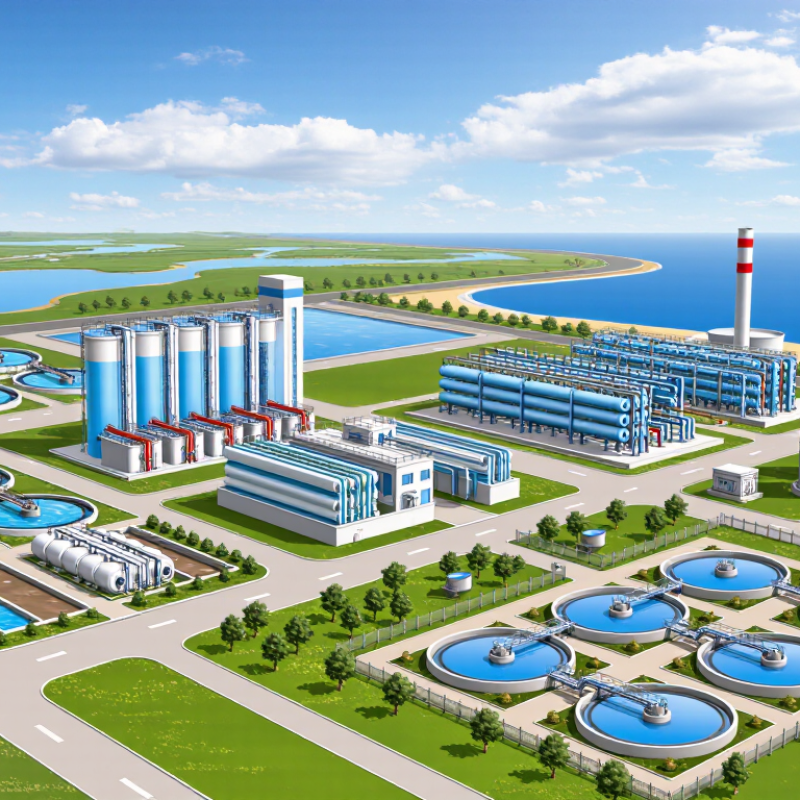
What Are the Top Types of Treatment Plants?

Drinking Water Treatment Plants

Drinking water treatment plants process water from rivers, reservoirs, or aquifers to make it safe to drink. Treatment varies with source conditions. At a surface-water facility, operators may use coagulation and flocculation to gather tiny particles into larger clumps. Those clumps settle, then water passes through filters. Disinfection controls many disease-causing microbes. Some groundwater needs fewer steps, though minerals or naturally occurring contaminants may require targeted treatment. Clear water can mislead.

Daily safety depends on more than equipment. Staff sample water at different stages and track measures such as turbidity, pH, and disinfectant levels. They also inspect pumps, clean filters, and verify alarms. When storms change river water quickly, operators may adjust treatment and increase sampling. A missed reading or worn seal can matter, so records and maintenance deserve the same attention as new technology. Even well-run plants must adapt as source water changes.

Tips: Ask your local utility for its annual water-quality report. If water looks, smells, or tastes unusual, report it and follow local advisories rather than judging safety by appearance alone.

Municipal Wastewater Treatment Plants

What Are the Top Types of Treatment Plants?
Municipal Wastewater Treatment Plants

Municipal wastewater treatment plants clean used water from homes, businesses, and public facilities before it returns to rivers or other receiving waters. The process often begins with screens that catch wipes, sticks, and other large debris. Grit chambers then allow sand and small stones to settle. These simple steps protect pumps and equipment downstream.

In primary treatment, wastewater rests in settling tanks, where heavier solids sink and oils rise. Biological treatment follows: microbes consume much of the remaining organic pollution in aeration tanks. Operators monitor oxygen, flow, and treatment performance; a sudden storm can change all three. Small details matter. Disinfection may use ultraviolet light or other approved methods, depending on the facility’s design and local requirements. Sludge collected during treatment needs separate handling, and some facilities stabilize it for further use or disposal. There is no single perfect setup. Plants differ in age, capacity, and the quality of water they must release, so operating decisions can involve trade-offs. Even clear-looking water needs testing.

What Are the Top Types of Treatment Plants? - Municipal Wastewater Treatment Plants

Plant type Main treatment process Typical strengths Considerations Common municipal application
Conventional activated sludge Air is supplied to a biological reactor where microorganisms consume organic pollutants; a secondary clarifier separates the settled biomass from treated water. Well-established process; can achieve substantial removal of biodegradable organic matter and suspended solids. Requires aeration energy, process monitoring, and management of excess sludge; performance depends on stable operating conditions. Medium and large communities where reliable secondary treatment is required.
Sequencing batch reactor (SBR) A tank treats wastewater in timed cycles that typically include filling, biological reaction, settling, and decanting. Combines biological treatment and settling in the same basin; cycle conditions can be adjusted to support nitrogen removal. Needs automated controls and careful cycle management; flow peaks must be accommodated in the operating schedule or tank capacity. Small to medium-sized communities and sites with limited room for separate process tanks.
Oxidation ditch Wastewater circulates through an oval or looped channel, where aeration and biological treatment take place before solids are settled. Can provide stable treatment and, with suitable design and operation, biological nitrogen removal. The channel layout can require a relatively large site; aeration and circulation equipment need ongoing operation and maintenance. Small and medium communities seeking a robust activated-sludge process.
Trickling filter Wastewater is distributed over a bed of media covered by a microbial film; air moving through the bed supports biological treatment. Generally has lower aeration requirements than fully aerated suspended-growth processes and can be operationally straightforward. May need recirculation and downstream clarification; media distribution and ventilation affect performance. Communities seeking a fixed-film biological process, including facilities upgrading or expanding existing treatment.
Rotating biological contactor (RBC) Partially submerged rotating discs provide surfaces for microbial growth and alternate the biofilm between wastewater and air. Provides attached-growth treatment in a compact arrangement and can be suitable for smaller flows. Mechanical components require maintenance; a clarifier is commonly used to remove sloughed biological solids. Small communities and decentralized municipal facilities.
Membrane bioreactor (MBR) Biological treatment is combined with membrane filtration to separate treated water from suspended solids, often replacing secondary clarifiers. Produces low-solids effluent and can support a smaller treatment footprint; treated water may be suitable for further polishing and reuse, subject to requirements. Membranes need cleaning and eventual replacement; energy use and operating costs can be higher than for some conventional systems. Space-constrained facilities and projects with stringent effluent or reuse goals.
Waste stabilization ponds (lagoons) Wastewater is retained in shallow or deep ponds, where settling and natural biological processes reduce pollutants over time. Can use relatively simple equipment and low mechanical energy input; operations are generally less complex than intensive mechanical processes. Requires substantial land and adequate retention time; performance can be affected by temperature, weather, and seasonal conditions. Smaller or less densely populated communities with available land and suitable local conditions.

Note: Process selection depends on wastewater characteristics, local discharge requirements, available land, climate, energy costs, and operator capacity.

Industrial Wastewater Treatment Plants

What Are the Top Types of Treatment Plants?

Industrial Wastewater Treatment Plants

Industrial wastewater treatment plants are designed around the pollutants a facility actually produces, not a generic recipe. Food processors may need screening and biological treatment for organic loads; metal finishers often need pH adjustment, precipitation, and filtration. Treatment trains can also include equalization tanks, oil-water separation, membranes, and disinfection. Loads vary. Changes in production chemistry can upset the process.

The UN World Water Development Report 2017 estimates that industry accounts for about 19% of global freshwater withdrawals. This is not a wastewater-volume estimate, but it underscores the value of reuse. Treated effluent may serve cooling, washing, or process needs when monitoring confirms suitable quality. Operators track flow, pH, temperature, suspended solids, and site-specific contaminants. A clear outlet sample does not prove every batch is stable; sampling frequency and operating records matter. Details matter.

Tips: Map each wastewater stream before selecting equipment. Keep high-strength streams separate where practical, and test influent during normal production and cleaning cycles. Ask a qualified process engineer to check pilot results; small-scale tests may miss seasonal swings.

Septic and Decentralized Treatment Systems

Septic and decentralized treatment systems handle wastewater close to where it is produced, rather than sending it through a large centralized plant. A typical household septic system uses a buried tank and a soil absorption field. Solids settle in the tank, while soil filters and treats liquid effluent. The U.S. Environmental Protection Agency’s Septic Systems Overview estimates that more than one in five U.S. households relies on septic systems. The agency’s 2005 Decentralized Wastewater Treatment Systems: A Program Strategy estimated that decentralized systems serve roughly one-quarter of the U.S. population. These figures describe different system groupings, so they should not be treated as interchangeable. Small details matter.

Performance depends on site conditions, installation, and upkeep. A saturated drainfield, compacted soil, or a leaking pipe can undermine treatment; warning signs may include slow drains or unusually wet ground above the field. EPA guidance recommends inspecting septic systems at least every three years and pumping tanks generally every three to five years, with timing adjusted for tank size, household use, and solids levels. That estimate has limits. Household routines vary, and a calendar alone cannot show what is happening inside a tank. Decentralized systems can serve rural homes and small communities where extensive sewer networks are impractical, but they still need qualified inspection and careful maintenance to protect groundwater.

Common Septic and Decentralized Treatment Systems

Typical treatment mechanisms used by each system type

Bars count common treatment mechanisms, not treatment performance. Actual system configurations vary by design and site; septic systems typically rely on settling and anaerobic processes, while other systems may add aeration, filtration, or pond-based treatment.

Specialized Treatment Plants for Desalination and Reuse

Specialized treatment plants solve water problems that conventional facilities cannot handle alone. Desalination plants remove salts from seawater or brackish groundwater, often using reverse osmosis. High-pressure pumps push water through membranes, while pretreatment filters reduce fouling. The product water may need remineralization before distribution. Brine disposal also demands careful site-specific planning. Small design choices matter.

Reuse plants treat municipal or industrial wastewater for irrigation, manufacturing, groundwater recharge, or, with advanced safeguards, drinking-water supply. The United Nations’ 2024 SDG 6 report estimated that only 42% of household wastewater worldwide was safely treated in 2022. The World Bank’s 2019 report, Wastewater: From Waste to Resource, noted that much wastewater still returns to the environment untreated. These figures reveal a practical opportunity, but also a monitoring challenge.

Reuse systems may combine biological treatment, filtration, membranes, and disinfection. Operators must track indicators such as turbidity and microbial quality, not just plant output. I would not treat reuse as a simple substitute for new supply; local pipes, energy, and public confidence can limit results.

The process is demanding.

Go to Top