
What Are the Top 10 Lighted Toggle Switches for Buyers?

Choosing the right Lighted Toggle Switch is more than comparing colors, prices, and package counts. Buyers must examine voltage ratings, current capacity, illumination type, terminal design, mounting size, and environmental protection. A switch may look impressive on a control panel, yet fail when vibration, moisture, or repeated operation exposes weak construction.

Industry reports provide useful direction, but they require careful reading. Grand View Research identifies steady growth in the global electrical switches market, supported by industrial automation, transportation, and smart equipment demand. MarketsandMarkets also reports expanding automotive switch applications, where compact controls must withstand heat, vibration, and frequent cycling. These reports usually combine several switch categories. Therefore, their figures should not be treated as exact forecasts for Lighted Toggle Switch products.

Human-centered design expert Don Norman wrote, “Good design is actually a lot harder to notice than poor design.” That principle matters here. A dependable switch should provide clear status visibility without creating glare, heat, or distracting brightness. The best models feel firm under the fingertip, show a clean illuminated mark, and fit the panel without forcing modification.

This guide compares ten leading options for buyers. Each selection considers electrical performance, installation practicality, material quality, lighting visibility, and likely service life. UL and IEC requirements also deserve attention, especially for commercial or industrial equipment. Still, no ranking can replace checking the actual datasheet. That is where buyers sometimes make mistakes. A switch rated for 20 amps may not support every load type, especially motors or LED drivers. Careful matching remains essential.
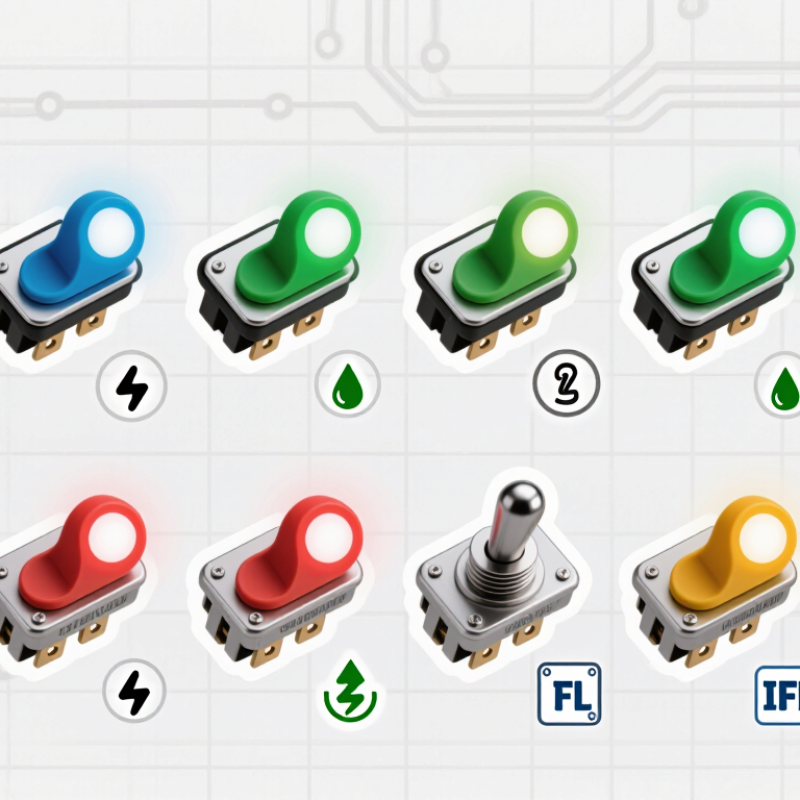
What Are the Top 10 Lighted Toggle Switches for Buyers?

Lighted Toggle Switch Basics and Buyer Selection Criteria

Lighted toggle switches combine manual control with a visible status signal. The lamp may indicate power, activation, or a fault condition. Buyers should confirm its wiring method before installation. Some illuminated switches require a separate ground or neutral connection. Others use two terminals only.

The top ten selection criteria are electrical rating, voltage compatibility, lamp type, terminal layout, switch function, actuator feel, mounting-hole size, housing material, environmental protection, and certification. Check ratings at the actual load, not only the maximum printed value. Match the lamp voltage carefully. A wrong voltage can cause dim lighting or early failure. Choose maintained, momentary, or center-off action based on the equipment’s control needs. It matters.

In workshop panels, I inspect terminal markings and tightening space before choosing a switch. Crowded wiring creates avoidable mistakes. For dusty or damp locations, review the enclosure rating and sealing details. Metal actuators feel sturdy, while reinforced polymer can reduce weight and cost. Consider the viewing angle too; a bright indicator may disappear in direct sunlight. Product drawings, test reports, and traceable specifications provide stronger evidence than attractive photographs. I have learned that “universal fit” often needs questioning. Measure the panel cutout, body depth, and clearance behind the panel. A small mismatch can delay an otherwise simple installation.

Key Features That Separate the Top Ten Lighted Toggle Switches

The top ten lighted toggle switches stand apart through details that buyers can test, measure, and trust. A bright indicator is useful, but only when its voltage matches the circuit. Common options support 12V or 24V systems. Check the label before installation. A crisp toggle action also matters. Loose movement can signal poor internal construction.

Durable models use sealed housings, secure terminals, and heat-resistant materials. An IP rating helps protect against dust and moisture, especially in vehicles, control panels, and outdoor equipment. However, an IP rating does not guarantee total waterproofing. Mounting depth is another practical feature. A switch may fit the panel but leave too little room behind it. Measure twice.

Reliable switches also show clear current ratings and consistent illumination. Some indicators remain visible in bright sunlight, while others become distracting in dark rooms. I prefer terminals that accept firm crimp connections without bending. During testing, I check repeated toggling, terminal heat, and light stability under load. One early mistake was trusting a high current rating without allowing a safety margin. That choice made the housing noticeably warm. Independent test data is valuable, but real installation conditions still matter. Buyers should compare contact materials, panel thickness, operating temperature, and replacement availability before choosing among the leading ten.

Comparing Switch Types, Ratings, Materials, and Installation Methods

Choosing the top 10 lighted toggle switches starts with switch type, not appearance. SPST models suit simple on/off circuits. SPDT versions select between two circuits. DPDT units control two poles simultaneously. Momentary switches return after release, while maintained switches stay engaged. That difference matters in alarms, panels, and control cabinets.

Check AC and DC ratings separately. Motors, lamps, and capacitive loads can create damaging inrush current. A 20-amp resistive rating may not support a 20-amp motor safely. IEC 60947-5-1 provides testing guidance for low-voltage control devices. UL 61058-1 addresses switch safety in appliance applications. Look for ratings, temperature limits, and approved terminal types. I would also verify the circuit’s real load, because catalog ratings can feel reassuringly simple.

Material affects durability. Nylon bodies reduce cost and weight. Thermoset materials tolerate heat better. Stainless-steel toggles resist abrasion, while silver-alloy contacts support repeated switching. For outdoor panels, examine IP or NEMA enclosure requirements. The U.S. Department of Energy reports that LEDs use at least 75% less energy and last up to 25 times longer than incandescent lamps. Therefore, the indicator lamp’s heat and current still deserve attention. Installation varies too: threaded-bushing models fit drilled panels, snap-in versions speed assembly, and PCB or wire-lead types suit compact equipment. A 2024 electrical-switch market report from Grand View Research identifies industrial automation and building controls as major demand areas. That trend is useful, but not proof of quality. Even a well-rated switch can fail when cutouts are loose or terminals are overtightened.

Matching Each Lighted Toggle Switch to Practical Use Cases

Choosing among the top 10 lighted toggle switches becomes easier when the use case comes first. A maintained SPST switch suits simple lighting panels, where the glowing lever shows power status clearly. For reversing a small motor, an SPDT model provides two circuit paths, but its current rating needs careful checking. A momentary toggle works well for test panels, alarms, and short-duration controls. It returns when released. Useful, but easy to misapply.

For vehicles and compact equipment, a low-profile LED toggle reduces accidental contact near dashboards. Choose a 12- or 24-volt version that matches the circuit, not merely the available space. A weather-resistant switch fits outdoor controls, while a sealed model better handles dust, spray, and frequent cleaning. For workshop machines, a heavy-duty metal toggle can tolerate repeated operation and minor impacts. Still, metal construction alone does not prove safe performance. Verify the datasheet.

Illuminated DPST switches are practical when two conductors must open together, such as selected heating or auxiliary circuits. A three-position toggle helps with low-off-high fan control, provided the load suits each position. A guarded toggle may prevent unwanted activation on vibrating equipment. For control cabinets, a bright indicator improves visibility, but excessive brightness can distract operators in dark rooms. I would also inspect terminal spacing and wire access before buying. Product photos rarely reveal those details. One overlooked issue remains common: the lamp may need a separate ground or resistor, depending on its design.

Safety Checks, Maintenance Needs, and Final Buying Considerations

When comparing the top ten lighted toggle switches, safety checks should precede appearance. Inspect terminal spacing, insulation, actuator movement, and heat resistance. The rating must match the circuit’s voltage, current, and load type. A switch rated for resistance loads may fail with motors or lamps. IEC 60947-5-1 provides useful guidance for low-voltage control devices. Its requirements support consistent testing, but they do not replace installation judgment. NFPA’s Electrical Fires report recorded an annual average of about 35,150 electrical distribution and lighting fires in the United States from 2015 to 2019. Small components deserve serious attention.

Maintenance is usually simple, yet often neglected. Turn power off before checking loose terminals, cracked lenses, discoloration, or flickering illumination. Dust can trap heat around a switch body. Moisture demands an appropriate enclosure rating, not improvised sealing. Keep a service record with installation dates and observed temperatures. OSHA safety guidance links electrical hazards to roughly 300 workplace deaths and 4,000 injuries annually in the United States. That figure reinforces careful isolation procedures. Still, a checklist cannot detect every poor design choice.

Final buying decisions should balance contact rating, illumination voltage, mounting depth, ingress protection, and expected operating cycles. Confirm terminal compatibility with the existing wiring. Ask whether replacement lamps or indicators remain available. A lower price can become expensive after repeated failures. I still allow extra panel space, because cramped wiring complicates inspection. That habit is not perfect, but it prevents rushed maintenance. Choose documented test results over attractive descriptions. Reliability is demonstrated under load, heat, vibration, and repeated switching.

What Are the Top 10 Lighted Toggle Switches for Buyers? - Safety Checks, Maintenance Needs, and Final Buying Considerations

No. Lighted Toggle Switch Type Typical Circuit Function Common Illumination Typical Electrical Rating Common Mounting Size Safety Checks Before Installation Maintenance Needs Final Buying Consideration
1 SPST On/Off Toggle Controls one circuit from a single location. LED or neon indicator; usually red, green, amber, or blue. Commonly 10–20 A at 12–125 V AC/DC, depending on the model. Frequently uses a 12 mm or 15/32 in panel hole. Confirm the load current, voltage, terminal polarity, insulation, and required panel clearance. Inspect terminals for looseness, dust, corrosion, and heat discoloration. Clean only after power is isolated. Best for simple equipment controls. Choose a sealed version where dust or moisture is present.
2 SPST On/Off Switch with Independent Lamp Switches one circuit while the lamp operates from a separate supply. LED indicator remains lit independently of the switched load. Switch contacts often rated around 10–20 A; lamp circuit commonly requires a low-current supply. Typical panel cutout is approximately 12–13 mm. Verify the separate lamp terminals, LED polarity, resistor requirement, and maximum contact rating. Check the indicator wiring and terminal screws. Replace the complete switch if the internal lamp is non-serviceable. Useful when continuous status indication is needed even while the controlled load is off.
3 SPST On/Off Switch with Dependent Lamp Switches one circuit; the lamp illuminates only when the circuit is energized. Usually a built-in LED or neon lamp connected to the switched output. Common ratings range from 10–20 A at low-voltage DC or mains-rated AC, as specified. Commonly installed in a 12 mm or 15/32 in panel opening. Ensure the lamp voltage matches the circuit and confirm that the switch is approved for the intended AC or DC load. Look for flickering, dimming, contact chatter, and excess heat during routine inspections. A practical choice when the light should show that the connected circuit is active.
4 SPDT Changeover Toggle Selects one of two outputs or changes between two circuits. Single-pole indicator or center-panel LED, depending on wiring configuration. Often rated around 5–15 A, with DC ratings typically lower than comparable AC ratings. Usually fits a 12 mm or 15/32 in mounting hole. Identify common, normally open, and normally closed terminals before wiring; never exceed contact ratings. Check switching action, terminal tightness, and signs of arcing or pitting. Choose this type for source selection, mode selection, or routing one input to one of two outputs.
5 DPST Double-Pole On/Off Toggle Opens or closes two conductors simultaneously. One or two indicator lamps, commonly used for power-status indication. Commonly 10–20 A per pole, subject to the specified voltage and load type. Typical panel hole ranges from 12 mm to 15/32 in. Confirm that both poles are rated for the application and that the switch is not being used as a substitute for required isolation equipment. Inspect both pole terminals for equal heating, looseness, and corrosion. Suitable for simultaneously switching two conductors, but local electrical codes must still be followed.
6 Momentary Lighted Toggle Returns to its normal position when released; used for start, test, reset, or jog functions. LED or neon lamp for activation or circuit-status feedback. Frequently rated about 3–10 A, depending on momentary mechanism and load type. Common mounting holes are approximately 12 mm or 15/32 in. Confirm whether the action is momentary-on or momentary-off and ensure the load cannot remain energized unintentionally. Test spring return, inspect the actuator, and check for sticking caused by dirt or panel misalignment. Best for controls that must automatically return to a safe state after release.
7 Water-Resistant Booted Toggle Provides standard switching with added protection around the actuator. Sealed LED indicator or an external indicator, depending on construction. Common ratings are approximately 10–20 A; verify the actual enclosure and voltage rating. Often uses a 12 mm or 15/32 in panel hole with a threaded bushing. Inspect the boot, gasket, panel seal, and enclosure rating. A boot does not automatically make the entire assembly waterproof. Replace cracked, hardened, or loose boots; remove salt, mud, and moisture from the surrounding panel. Recommended for outdoor, marine, vehicle, and workshop environments when the complete assembly is properly sealed.
8 Metal-Handle Heavy-Duty Toggle Controls higher-duty equipment or applications requiring a robust actuator. Panel LED, internal LED, or neon indicator with a separate lamp circuit. Often available in the 15–30 A range, but ratings vary significantly by load and voltage. Commonly requires a 12 mm or 15/32 in cutout and adequate rear clearance. Check inrush current, motor or lamp load suitability, grounding requirements, and temperature limits. Inspect the bushing, handle, lock washer, and terminals for mechanical wear or heat damage. Choose only when the datasheet specifically supports the intended inductive, capacitive, or resistive load.
9 Safety-Covered Lighted Toggle Prevents accidental actuation of a critical switch through a hinged or guarded cover. Visible LED status light, often red or amber for warning indication. Commonly 5–20 A, with the cover mechanism not increasing the contact rating. Mounting size varies; many versions use a standard toggle panel hole plus additional cover clearance. Verify that the guard does not obstruct movement, ventilation, emergency access, or required labeling. Check hinge operation, latch retention, indicator visibility, and accumulated debris around the cover. Useful where accidental switching could damage equipment or create a safety hazard.
10 Low-Voltage DC Lighted Toggle Controls battery-powered, automotive, marine, or electronic equipment. Low-current LED matched to common 5 V, 12 V, or 24 V DC systems. Often rated from 3–20 A DC; the DC rating must be checked separately from any AC rating. Frequently fits a 12 mm or 15/32 in panel opening. Confirm DC voltage, polarity, fuse protection, wire gauge, load inrush, and reverse-voltage protection. Inspect for oxidation, loose crimp terminals, battery-gas exposure, and heat at high-current connections. Ideal for low-voltage control panels, provided the switch has a verified DC load rating and suitable environmental protection.
Typical specifications are provided for comparison only. Always verify the exact voltage, current, load type, ingress protection, terminal configuration, and applicable safety approvals in the product datasheet before purchase or installation.
Go to Top