Selecting the right High Pressure Chemical Pump is a process-safety decision, not merely a purchasing exercise. Pressure, flow, temperature, viscosity, and chemical compatibility must work together. A pump may achieve 100 bar on paper, yet fail when the liquid crystallizes, flashes, or carries abrasive particles.
The U.S. Department of Energy’s Improving Pumping System Performance guide identifies pumping systems as a major industrial electricity load. It also shows that better sizing, control, and maintenance can reduce energy waste. That matters in chemical plants, where a small efficiency loss can become continuous heat, vibration, and seal wear. The Hydraulic Institute reinforces this system-based approach through standards covering pump selection, testing, and application. Standards matter.
These ten tips examine duty calculations, wetted materials, seal arrangements, NPSH, control methods, maintenance access, and supplier documentation. API 675 is especially relevant when selecting controlled-volume metering pumps for demanding chemical service. However, standards alone cannot replace field experience. A clean laboratory fluid may behave differently after contamination, temperature cycling, or prolonged storage. That possibility deserves attention. Chemical compatibility charts can also oversimplify real conditions, particularly with mixed solvents and changing concentrations. Therefore, this guide considers verified performance curves, factory testing, corrosion data, and practical operator feedback. The best choice is rarely the pump with the highest advertised pressure. It is the pump that delivers stable flow, predictable maintenance, and safe operation throughout its working life.
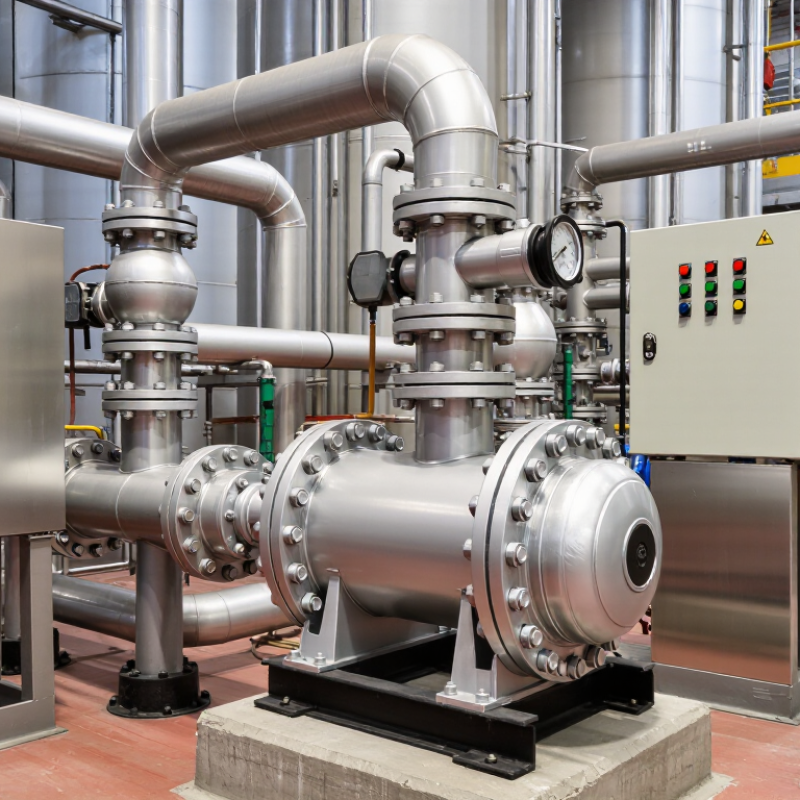
Define the real pressure, flow, and chemical service requirements before comparing pump models. Pressure means differential pressure, not discharge gauge pressure alone. Include static head, pipe friction, valves, filters, and the required control margin. Record normal, minimum, and maximum flow separately. A pump sized only for peak flow may operate inefficiently most days.
Tip: Draw the full system curve.
Field commissioning often reveals hidden pressure losses. That detail matters.
The U.S. Department of Energy’s Improving Pumping System Performance sourcebook reports that pumping systems can consume 25–50% of industrial facility electricity. The IEA’s Energy Efficiency 2023 report places industry at roughly 37% of global final energy use. Efficient selection has measurable value. Confirm viscosity, density, temperature, vapor pressure, solids, and chemical concentration. These properties can change the actual pressure and flow point.
Tip: Request chemical data at operating temperature.
Safety margin is useful, but excessive margin can create throttling, heat, and wasted power.
Check material compatibility with the liquid, seals, gaskets, and shaft components. Review minimum flow requirements and NPSH conditions. Confirm whether pulsation, corrosion, crystallization, or gas entrainment may occur. API 675 guidance is useful for controlled-volume metering applications, while Hydraulic Institute standards support pump testing and system evaluation.
Do not trust a single laboratory value. Process conditions drift.
Tip: Validate the duty with three operating scenarios.
A clean spreadsheet is not proof; actual site measurements may challenge the original assumptions.
A high-pressure chemical pump must match the liquid, not just the pressure rating. Confirm the chemical concentration, temperature range, viscosity, and contamination risk before selecting materials. The European Commission’s Ecodesign preparatory study reports that pumps use about 22% of industrial motor electricity, making efficient material and hydraulic choices important. Poor compatibility can also cause swelling, cracking, or product contamination.
Temperature changes the compatibility picture. A seal that performs well at 20°C may harden or lose strength at 80°C. Check the manufacturer’s chemical-resistance data at the actual operating temperature, including startup and cleaning cycles. PTFE often handles aggressive chemicals, but it may deform under high pressure or repeated thermal cycling. Stainless steel can resist many fluids, yet chloride-rich solutions may still create localized corrosion. Small details matter.
Use a written compatibility matrix. Record every wetted part, including the diaphragm, valves, fasteners, coatings, and gaskets. The National Association of Corrosion Engineers identifies temperature, concentration, and flow conditions as major corrosion variables in process equipment guidance. I have seen specifications fail because engineers checked the casing but ignored a small elastomer. That mistake is easy to repeat. Test a sample when data is uncertain, and leave a realistic safety margin instead of trusting a perfect laboratory value.
Pressure handling begins with the real operating envelope, not the catalog maximum. The U.S. Department of Energy reports that pumping systems can consume about 25% of industrial electricity in some facilities. That makes hydraulic efficiency a safety and cost issue. Record normal pressure, startup pressure, temperature, viscosity, flow variation, and possible blockage conditions. A pump rated for 100 bar may still fail under repeated thermal cycling or pressure surges.
Sealing deserves equal scrutiny. Select materials against chemical compatibility charts, temperature limits, abrasion, and crystallization risk. Double containment can reduce exposure when leakage is unacceptable. API 682 guidance provides structured seal selection and testing practices. The International Energy Agency reports that electric motor systems use about 53% of global electricity, so excessive seal friction and poor alignment deserve attention. In field reviews, operators often specify the pump first and the seal plan later. That order creates avoidable problems.
Check casing strength, shaft deflection, bearing loads, relief protection, and minimum continuous flow. Confirm NPSH margin under the hottest and most volatile conditions. Pressure gauges should sit where operators can actually read them. Add leakage detection when the fluid is corrosive or hazardous. Small details matter. One imperfect assumption remains common: laboratory compatibility does not guarantee long-term performance. Validate the design with witnessed testing, documented material certificates, and operating data from comparable duty.
Choosing a high-pressure chemical pump starts with the process, not the catalogue. Record viscosity, temperature, vapor pressure, solids, flow, and discharge pressure at the operating point. A pump that survives pressure testing may still waste power every shift. The U.S. Department of Energy’s Improving Pumping System Performance sourcebook places pumping systems near 20% of industrial electricity use. It identifies potential savings of 20–50% through optimization. Treat those figures as screening estimates, not promises.
Check whether variable-speed control matches demand changes, instead of throttling a fixed-speed pump against a closed valve. Confirm control response during startup, low-flow operation, and sudden downstream restrictions. Instrumentation should show suction pressure, discharge pressure, temperature, leakage, and motor load. Hydraulic Institute guidance encourages measuring actual operating conditions before equipment selection. Small errors matter. An incorrectly scaled pressure sensor can make a healthy pump look unsafe. Maintenance plans should specify seal inspection, bearing checks, flushing, alignment, and spare-part intervals. Condition monitoring may reveal cavitation or misalignment before failure.
For safety, verify materials against the chemical, pressure rating, temperature range, and corrosion mechanism. Use containment, guarded couplings, emergency isolation, and a documented relief path. OSHA’s Process Safety Management standard emphasizes written procedures, training, and management of change for covered processes. Do not assume a familiar liquid is harmless. Site experience is valuable, but it can create blind spots. Have an independent engineer review the worst credible case before purchase.
| No. | Selection Dimension | Recommended Check | Practical Target or Range | Why It Matters | Safety or Maintenance Note |
|---|---|---|---|---|---|
| 1 | Define the Duty Point | Confirm required flow rate, discharge pressure, fluid temperature, operating hours, and whether the system has continuous or intermittent demand. | Select a pump that operates near its best efficiency point at normal duty. | A pump selected only for maximum pressure may operate inefficiently, overheat, or experience excessive wear at normal conditions. | Include minimum, normal, and maximum operating cases in the selection review. |
| 2 | Check Chemical Compatibility | Evaluate concentration, pH, oxidizing properties, solids content, viscosity, and compatibility of wetted parts, seals, valves, and diaphragms. | Use materials rated for the actual fluid and temperature, not water-only service. | Chemical attack can cause swelling, embrittlement, corrosion, leakage, or sudden component failure. | Obtain compatibility confirmation for the complete wetted path and verify it at the highest operating temperature. |
| 3 | Compare Hydraulic Efficiency | Review pump curves showing flow, pressure, efficiency, power consumption, and allowable operating range. | Prefer operation close to the best efficiency point; avoid prolonged operation far left or right of the curve. | Higher efficiency reduces electricity use, heat generation, operating cost, and mechanical stress. | Check efficiency at the actual process point rather than relying only on the published peak value. |
| 4 | Evaluate Pressure Capability | Compare maximum continuous pressure, short-term pressure, pulsation, and pressure relief requirements with system design pressure. | Pump and piping pressure ratings should exceed the maximum foreseeable system pressure. | Insufficient pressure rating may lead to leakage, rupture, inaccurate dosing, or premature fatigue. | Install a correctly sized relief device where blocked discharge or overpressure is possible. |
| 5 | Review Control Options | Check compatibility with variable-frequency drives, stroke or speed control, flow meters, pressure transmitters, and plant control systems. | Choose control resolution suitable for the process accuracy requirement. | Accurate control helps maintain concentration, reduce waste, and respond to changing process demand. | Provide interlocks for low tank level, high discharge pressure, loss of flow, and motor overload. |
| 6 | Assess NPSH and Cavitation Risk | Compare available NPSH with required NPSH while considering temperature, vapor pressure, suction losses, and tank level. | Maintain a positive operating margin between available and required NPSH. | Cavitation can cause noise, vibration, reduced capacity, seal damage, and impeller or valve erosion. | Use short, adequately sized suction piping and avoid unnecessary restrictions on the inlet side. |
| 7 | Consider Solids and Viscosity | Identify particle size, abrasive content, suspended solids, viscosity changes, and the risk of crystallization or settling. | Select clearances, valve design, and drive capacity for the worst credible fluid condition. | Solids and high viscosity can reduce flow, increase power demand, clog valves, and accelerate wear. | Use strainers only when appropriate; excessive suction filtration can increase pressure loss and cavitation risk. |
| 8 | Plan Maintenance Access | Review access to seals, diaphragms, check valves, filters, lubrication points, fasteners, and instrumentation. | Routine inspection and common wear-part replacement should be possible without major disassembly. | Good access reduces downtime, labor cost, and the chance of incorrect reassembly. | Define inspection intervals based on duty severity and keep critical spare parts available. |
| 9 | Verify Safety Features | Check leak containment, pressure relief, guarding, emergency shutdown, grounding, hazardous-area requirements, and chemical exposure controls. | Safety functions should address credible leakage, overpressure, dry running, and electrical hazards. | A chemical pump failure can expose personnel, contaminate equipment, or release hazardous material. | Use suitable secondary containment, ventilation, personal protective equipment, and documented lockout procedures. |
| 10 | Calculate Total Cost of Ownership | Compare purchase price, energy use, spare parts, maintenance labor, calibration, downtime, disposal, and expected service life. | Select the lowest lifecycle cost that meets performance and safety requirements. | A lower initial price may result in higher energy consumption, more frequent repairs, or shorter operating life. | Request documented test data, operating limits, spare-part lead times, and service requirements before purchase. |
Tip 1: Check reliability through pressure-cycle test data, not attractive sales claims.
Tip 2: Ask about materials touching the chemical, including seals, gaskets, and valve seats.
Tip 3: Review maintenance records from similar applications.
Tip 4: Confirm the pump can handle temperature changes and continuous operation. A pump may perform well on paper, yet fail beside a hot, vibrating pipe.
Tip 5: Request current certification documents and verify their scope. Certification should match the pump model, pressure range, and intended service.
Tip 6: Ask whether testing is performed by an independent body or only internally.
Tip 7: Examine traceability for pressure-containing parts. Missing records should slow the purchase.
Tip 8: Calculate total cost, including energy use, spare parts, installation, inspections, and planned downtime. The cheapest unit can become expensive after several seal replacements. I once underestimated training costs, which changed the real budget.
Tip 9: Measure supplier support before signing. Ask about response times, technical drawings, commissioning help, and emergency parts.
Tip 10: Request references from facilities with comparable pressures and chemicals. Speak with operators, not only purchasing teams. Their comments are often less polished, but more useful. A perfect comparison is impossible. Still, a written checklist exposes weak assumptions and makes supplier promises easier to test.