
Machine Guarding Doors help separate workers from moving equipment while preserving practical access for setup, inspection, and maintenance. The right design can reduce exposure to pinch points, rotating parts, and unexpected machine movement. But a door is only one part of a safeguard. Its frame, hinges or tracks, latch, and safety device must work together.
This guide compares seven common options: hinged, sliding, lift-up, roll-up, interlocked, modular-panel, and access-gate designs. Each suits different conditions. A compact hinged door may fit a small workcell, while a sliding door can save aisle space around a large machine. Fast-cycle equipment may need monitored interlocking. Dust, coolant, and frequent cleaning can also affect material and hardware choices. Details matter.
There is no perfect door for every factory. A convenient opening can create a reach-in hazard if its placement is poorly planned. An interlock can also be ineffective if it is bypassed or maintained incorrectly. Not glamorous, but important. Selection should reflect the machine’s hazards, access frequency, operating environment, and applicable safety requirements. Confirm specifications with qualified safety professionals and the equipment manufacturer. The sections ahead explain the strengths, limitations, and practical selection points for each type, so readers can make a better-informed comparison rather than rely on a ranking alone.
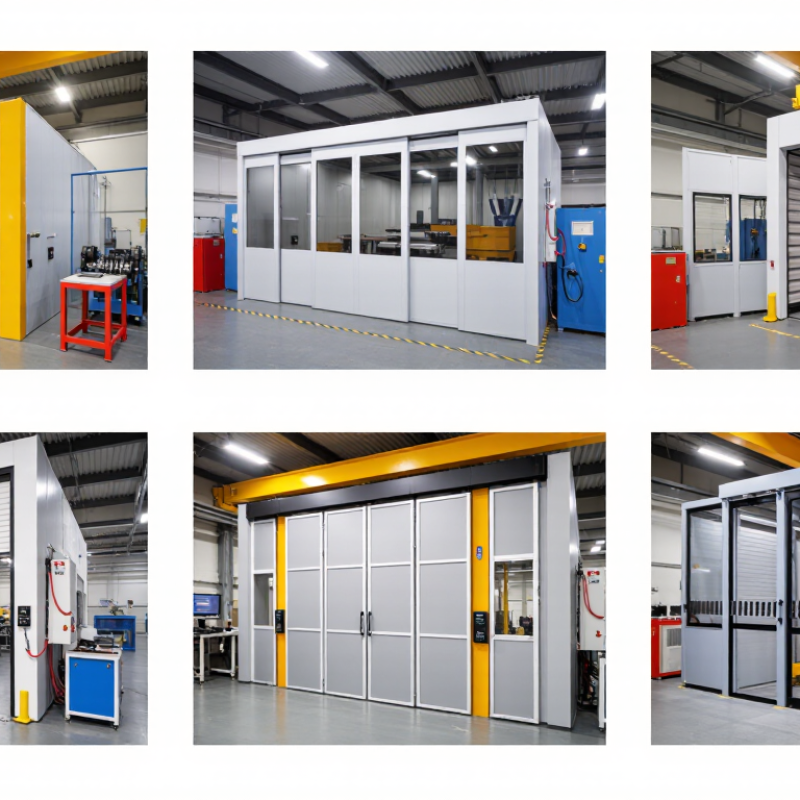
Machine guarding doors protect workers from hazards such as rotating shafts, conveyor nip points, and press operation zones. OSHA’s 29 CFR 1910.212(a)(1) requires guarding against these hazards. For point-of-operation guards, section 1910.212(a)(3)(ii) requires protection that prevents body parts from entering the danger zone during the operating cycle. That distinction matters. A door that looks secure may still leave a reach-through gap.
The U.S. Bureau of Labor Statistics recorded 738 fatal work injuries involving contact with objects and equipment in 2022. This broad category does not represent machine-guarding incidents alone, but it highlights the seriousness of contact hazards.
When assessing a guarding door, check its hinges, latch, opening direction, and safety interlock. Confirm that opening it stops hazardous motion and that restart requires a deliberate action. Test the safety function using a documented procedure, not just a visual check. A door can close neatly and still leave a hand-sized gap.
Easy to miss.
OSHA’s FY2023 tally of 1,644 machine-guarding citations points to a persistent workplace risk. It does not mean 1,644 injuries occurred, nor does it rank door styles. It signals that guarding problems remain common enough to draw enforcement attention. A door that looks protective may still leave a reach-in opening, swing into a walkway, or fail to stop equipment when opened. Details matter.
For a specific machine, compare hinged, sliding, lift-up, roll-up, and interlocked access doors, along with perimeter gates and removable panels. There is no universal “best” choice. The right design depends on access frequency, machine motion, cleaning needs, and the space around the equipment. A poor fit can invite workarounds. That deserves honest review.
Tips: Measure openings and reach distances at the machine. Check that guards stay secure during normal use, and test safety functions after installation or maintenance. Keep access clear; a door blocked by a cart is not useful protection. Document checks, train operators, and ask a qualified safety professional to review unusual hazards. The citation count is a warning, not a complete diagnosis.
OSHA recorded 1,644 citations for 29 CFR 1910.212, “General requirements for all machines,” in FY2023. This figure counts citations—not injuries, machines, or unique facilities. It highlights the importance of selecting and maintaining guarding that prevents access to hazardous machine areas. The door types below are practical options, not a universal ranking; the right choice depends on the machine, risk assessment, access needs, and applicable requirements.
| Guarding door type | Common fit | Access and operating characteristics | Safety considerations |
|---|---|---|---|
| 1. Hinged interlocked door | Enclosed machines with occasional access for setup, inspection, or maintenance. | Swings open from a fixed hinge; can provide a wide opening with a relatively simple layout. | Where opening the door could expose a person to a hazard, an appropriately designed interlocking arrangement can prevent hazardous operation or initiate a stop. Check hinge and latch condition and prevent access around the door. |
| 2. Sliding interlocked door | Machine enclosures with limited swing clearance or frequent operator access. | Slides along a track, so it does not need the floor space required by a swinging door. | Keep tracks, stops, and the closing edge in good condition. Ensure the door cannot be easily bypassed and that its interlocking function is suitable for the risk. |
| 3. Vertical-lift interlocked door | Large openings where a side-swinging door would obstruct a walkway or work area. | Moves vertically and may be manually or power operated, depending on its design. | Assess falling, crushing, and trapping hazards as well as machine hazards. Provide suitable support, travel limits, and interlocking where the risk assessment calls for it. |
| 4. Removable interlocked access panel | Enclosures that need infrequent access to components or interior areas. | Panel is detached or opened with tools or a release mechanism rather than used as a routine operator door. | Secure panels against unintended removal. If removing a panel exposes a hazard, access control and energy-isolation procedures must be considered; an interlock does not replace lockout/tagout for servicing when required. |
| 5. Perimeter access gate | Fenced robot cells, production lines, or other areas enclosed by perimeter guarding. | Allows personnel to enter a larger guarded zone for authorized tasks. | Locate the gate to support safe entry and exit. Consider whether guard locking is needed to prevent entry while hazardous motion continues, and ensure the protected area cannot be reached by going around the gate. |
| 6. Roll-up or vertical-sliding safety door | Production openings that require frequent passage of parts, carts, or operators. | Opens upward, reducing the side clearance needed by a hinged door; some designs support powered operation. | Evaluate closing force, speed, obstruction detection, and safe stopping. A fast or powered door still needs suitable guarding and access control for the machine hazard behind it. |
| 7. Telescoping sliding door | Wide machine openings where a single sliding panel would require a long track or large side clearance. | Multiple linked panels move together and stack to one side, allowing a broad opening in a compact area. | Check panel alignment, overlap, pinch points, and interlocking across all moving sections. Design the opening so hazardous areas remain inaccessible when the guard is closed. |
Standards context: OSHA 29 CFR 1910.212 sets general machine-guarding requirements, including protection from hazards such as points of operation, ingoing nip points, and rotating parts. The cited FY2023 count is specific to that standard and does not establish which door type is best. Interlocks and other protective functions should be selected and validated for the machine’s hazards; they do not replace required safe work practices or energy control.
The right door depends on the machine’s movement, access frequency, and available floor space. Hinged doors swing open on fixed pivots; sliding doors travel along tracks; lift-up doors rise vertically, often with counterbalance support. Roll-up doors coil above the opening, saving space but requiring clear overhead clearance. Telescoping doors use overlapping panels to cover wide openings. Removable-panel doors lift away for occasional maintenance, but they can be misplaced. Interlocked access doors use a safety switch to stop hazardous motion when opened and prevent an unsafe restart. No single design fits every machine.
OSHA’s machine-guarding standard, 29 CFR 1910.212, addresses hazards including points of operation, nip points, and rotating parts. The Liberty Mutual Workplace Safety Index estimated that serious workplace injuries cost U.S. employers $58.8 billion in 2021. That figure covers many injury types, not machine guarding alone, but it shows why access design deserves careful review. A door can look solid and still leave a hand-sized gap near a moving belt. That detail is easy to miss.
Tips: Check reach-through gaps and stopping time before choosing a door. Test interlocks during commissioning and routine inspections. Keep the access route clear. Real production conditions can expose flaws that drawings miss.
A machine door is only effective when its interlock works with the risk it controls. ISO 14119 gives guidance on selecting and designing interlocking devices associated with guards. It emphasizes reliable operation and reducing opportunities to defeat the device. ANSI/RIA R15.06 addresses safety in industrial robot applications, including safeguarding around robot systems. Together, these standards help engineers make informed choices; neither simply names seven “best” doors.
Consider a sliding access door beside a robot cell. If the robot cannot stop before someone reaches the hazard, an interlock alone may not be enough. A guard-locking device can keep the door closed until the danger has passed. The risk assessment should account for stopping time, access frequency, and how easily a person could reach around or over the guard. Small details matter. A few centimeters of reach can change the safeguarding decision.
For a frequently used loading door, the interlock must tolerate regular movement without becoming unreliable. Device selection should consider the guard’s alignment, mounting, environment, and expected wear. Standards also inform decisions about monitoring and resistance to foreseeable bypassing. Still, a compliant component cannot fix poor installation or a badly placed door. It is easy to specify the sensor and overlook the hinge play. Review the complete door-and-machine arrangement, then validate its behavior during commissioning and maintenance.
A machine-guarding door is only effective if it prevents access before hazardous motion stops. In 2022, the U.S. Bureau of Labor Statistics recorded 738 fatal work injuries in the broad “contact with objects and equipment” category. This figure is not limited to machinery, but it underlines why access control deserves careful verification. ISO 13855 provides a framework for positioning safeguards based on approach speed and total stopping time. A commonly used relationship is S = K × T + C: safety distance depends on approach speed, stopping time, and possible reach through or around the safeguard.
For example, at an illustrative approach speed of 1,600 mm/s, a measured stopping time of 0.25 seconds gives 400 mm before adding the applicable intrusion distance. That is not a universal design value. Measure the complete response—from door opening or sensor activation through control response and machine standstill. Check the slowest credible stop, including worn brakes and operating variations. A door that appears far from a hazard may still allow a hand to reach it.
Tips: Measure openings and reach paths with the door in realistic positions; verify interlocks and any guard locking under the machine’s actual operating conditions. Record stopping-time test results, equipment condition, and the assumptions used for the safety-distance calculation. Retest after changes or maintenance. Small gaps matter. The uncomfortable part is that a tidy calculation can still miss a real reach path, so inspect the setup at floor level and question the assumptions.