How to Choose the Right Welded Steel Pipe?

Choosing the right Welded Steel Pipe begins with understanding the job, not comparing prices alone. A pipe carrying cooling water needs different protection from one supporting a structural frame. Diameter, wall thickness, pressure, temperature, load, and installation conditions all matter. So does the fluid inside. Water, gas, chemicals, and abrasive slurries can create very different risks.

Welding-metallurgy authority Sindo Kou explains, “Welding is a materials joining process in which two or more parts are coalesced at their contacting surfaces.” That simple statement carries practical weight. A reliable Welded Steel Pipe depends on sound fusion, controlled heat input, suitable steel chemistry, and careful seam inspection. Buyers should review the manufacturing standard, steel grade, outside diameter, wall thickness, end finish, and required testing. Mill certificates should match the actual batch. Do not accept vague claims.

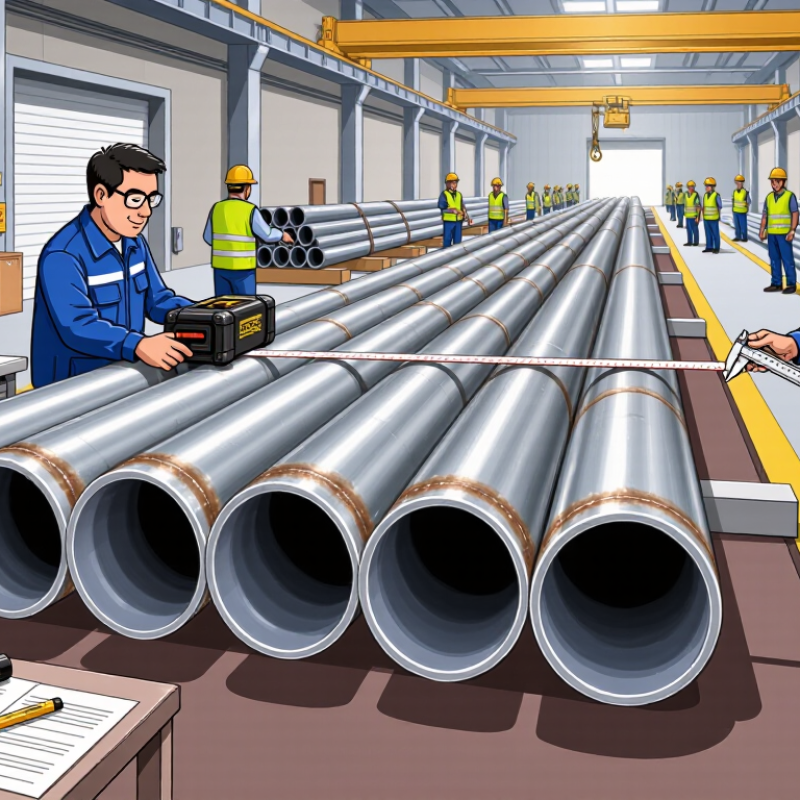
Look closely at the pipe surface. Rust stains, deep dents, uneven weld beads, and rough cut ends deserve questions. Non-destructive testing may reveal flaws that visual checks miss. Ultrasonic, radiographic, or hydrostatic testing should fit the application and project specification. Certification matters. Supplier experience matters more than glossy brochures.

There is no perfect checklist. I have seen specifications that looked complete but ignored installation temperature or internal corrosion. That is an uncomfortable gap. The safest choice combines engineering advice, traceable documentation, and realistic service conditions. When uncertainty remains, ask a qualified engineer before ordering. A cheaper pipe can become an expensive failure.

How to Choose the Right Welded Steel Pipe?

Define the Application, Pressure, Temperature, and Installation Conditions

How to Choose the Right Welded Steel Pipe?

Start by defining the application clearly. A pipe carrying clean water differs greatly from one transporting abrasive slurry, steam, or mildly corrosive chemicals. Identify the fluid, flow rate, solids content, and required service life. Note whether the pipe will remain indoors, underground, offshore, or exposed to road salt. Small details matter.

Pressure and temperature determine wall thickness, material grade, and welding requirements. Record normal pressure, maximum pressure, startup surges, and vacuum conditions. Temperature changes can cause expansion, contraction, and stress near supports. A pipe rated only for average conditions may fail during a short pressure spike. It happens. Consult the applicable design code and have a qualified engineer verify calculations. Request material certificates, weld inspection records, and pressure-test results from the supplier.

Installation conditions deserve equal attention. Measure access routes, lifting limits, trench depth, support spacing, and available welding equipment. Long pipe sections may reduce joints but create difficult handling problems. Consider field welding, coating damage, drainage, and inspection access before ordering. For buried service, soil chemistry and external protection can be decisive. For high-temperature lines, allow movement with suitable supports or expansion arrangements. A practical trial fit can reveal more than a drawing. Do not ignore maintenance space; cramped connections often become expensive later.

Select the Right Steel Grade, Pipe Size, Wall Thickness, and Seam Type

How to Choose the Right Welded Steel Pipe?

Choosing the right welded steel pipe starts with the steel grade, not the catalogue price. Carbon steel grades such as ASTM A53 and API 5L are not interchangeable. Grade selection should consider fluid chemistry, temperature, pressure, and welding procedures. API 5L includes strength levels such as X42 and X52. Higher yield strength can reduce weight, but it does not automatically improve corrosion resistance. The World Steel Association’s 2024 World Steel in Figures reported about 1.9 billion tonnes of crude steel production in 2023. High production volume does not guarantee consistent pipe quality. Mill certificates, heat numbers, and independent test results still matter.

Pipe size should match flow rate and velocity. A small bore increases pressure loss. An oversized pipe adds weight, cost, and dead volume. Wall thickness must consider design pressure, external loads, corrosion allowance, and manufacturing tolerance. ASME B31.3 calculations are widely used for process piping. Structural applications require different checks. Do not copy an old project blindly. Soil settlement, forklift impact, and thermal cycling can change actual service conditions. ERW suits many repeatable, moderate-duty applications. Longitudinal SAW is often selected for larger diameters and heavier walls. Seam selection should follow inspection access, fatigue risk, and pressure requirements, not habit alone.

Tips: Prepare a short design brief before requesting quotations. Include grade, nominal diameter, wall thickness, length, end finish, test standard, and seam type. Ask for hydrostatic or nondestructive testing records. Confirm whether the wall is nominal or minimum. That detail is easy to miss. Perfect selection is unlikely. A documented compromise is safer than an undocumented assumption.

How to Choose the Right Welded Steel Pipe? - Select the Right Steel Grade, Pipe Size, Wall Thickness, and Seam Type

Selection Dimension Recommended Option Typical Specification or Range Suitable Applications Important Selection Notes
Steel Grade ASTM A53 Grade B Minimum yield strength: approximately 240 MPa; minimum tensile strength: approximately 415 MPa Water, air, steam, structural and general mechanical services A common carbon-steel option for general service. Confirm whether the project requires Type E, Type F or Type S manufacturing.
Steel Grade API 5L Grade B Minimum yield strength: approximately 245 MPa; minimum tensile strength: approximately 415 MPa Oil and gas transmission, gathering and process piping Use only when the applicable pipeline specification and required product level, testing and documentation are clearly defined.
Steel Grade API 5L X42 / X52 Minimum yield strength: approximately 290 MPa / 359 MPa respectively Higher-strength pipeline and utility transmission systems Higher strength can reduce required wall thickness, but weldability, toughness, forming and design-code limits must be checked.
Steel Grade ASTM A500 Grade B or C Cold-formed welded structural tubing; Grade B and C have different strength requirements Columns, trusses, frames and other structural members Select this standard for structural hollow sections rather than pressure-service piping unless the design specification permits it.
Pipe Size Small and medium outside diameters Commonly produced by ERW or HFW; exact availability depends on the selected standard and mill capability Building services, water lines, mechanical systems and general process piping Specify outside diameter or nominal pipe size, schedule or wall thickness, length, end finish and dimensional tolerance.
Pipe Size Large outside diameters Commonly produced by LSAW or SSAW; typical projects may use diameters above approximately 16 in (406.4 mm) Large water mains, piling, transmission lines and long-distance pipeline systems Check roundness, straightness, weld inspection, end preparation and transport limitations for large-diameter pipe.
Wall Thickness Light wall Selected for low-pressure service when permitted by the applicable design code Ventilation, low-pressure water, air and non-critical utility lines Do not select by weight alone. Verify pressure rating, corrosion allowance, buckling resistance, handling loads and minimum permitted thickness.
Wall Thickness Standard wall A widely used starting point for general piping; the actual wall is governed by the selected schedule or standard Industrial utilities, water distribution and general process service Calculate the required wall from design pressure, design temperature, allowable stress, weld factor and corrosion allowance.
Wall Thickness Heavy wall Used when higher pressure, external loading, corrosion allowance or mechanical strength is required High-pressure lines, buried pipe, risers and severe mechanical service Consider increased weight, forming requirements, welding heat input, dimensional tolerances and total installed cost.
Seam Type ERW / HFW Longitudinal seam formed from strip or plate using electric resistance or high-frequency welding Small-to-medium diameter water, mechanical, structural and process piping Efficient for high-volume production. Confirm seam heat treatment, nondestructive testing and applicable dimensional requirements.
Seam Type LSAW Longitudinal submerged arc welded pipe, commonly formed from plate Large-diameter and heavy-wall transmission, water and structural applications Often selected for demanding dimensional and pressure-service requirements; specify weld inspection and hydrostatic testing.
Seam Type SSAW / Spiral Submerged Arc Welded Spiral seam formed from steel strip and welded by submerged arc welding Large-diameter water, piling, low-to-moderate pressure and structural applications Review the applicable code carefully because the helical seam, inspection level and permitted service vary by specification.
Quality and Compliance Specification-based inspection Material certificate, chemical and mechanical tests, dimensional inspection, hydrostatic test and NDT as required Pressure, pipeline, structural and safety-critical projects The pipe standard, design code, testing level, acceptance criteria, coating system and traceability requirements should be agreed before purchase.
Selection reminder: The correct welded steel pipe is determined by the complete design basis—not by steel grade alone. Confirm design pressure, temperature, fluid, corrosion allowance, outside diameter, wall thickness, seam type, applicable standard, inspection level and end connection requirements before ordering.

Compare Welding Methods, Standards, Certifications, and Surface Treatments

Choosing the right welded steel pipe starts with the welding method. ERW pipes suit many water, structural, and low-pressure applications because production is fast and dimensions are consistent. SAW pipes offer deeper penetration and strong seams for larger diameters. TIG welding gives cleaner control, but usually costs more. Do not select by price alone. Check pressure, temperature, wall thickness, and the fluid being transported. API 5L, ASTM A53, ASTM A106, and EN 10217 cover different service requirements, so the standard must match the project design.

Certifications provide evidence, not magic. Request mill test certificates, heat numbers, chemical analysis, tensile results, and hydrostatic or ultrasonic testing records. ISO 3834 can demonstrate controlled welding quality, while ISO 9001 supports documented production systems. Review welder qualifications and inspection procedures, too. Surface treatment deserves equal attention. The NACE IMPACT study estimated global corrosion costs at about US$2.5 trillion annually, equal to roughly 3.4% of global GDP. Galvanizing works well for atmospheric exposure, while epoxy, 3LPE, or internal linings may suit buried or aggressive service. Coating thickness and surface preparation often decide real performance.

Tips: Compare the pipe standard with the coating specification. Ask for repair limits and inspection reports. Small gaps matter. A coating can look perfect and still fail after poor blasting. Professional judgment also requires admitting uncertainty; soil chemistry, installation damage, and maintenance records can change the best choice.

Check Manufacturing Quality, Inspection Records, and Supplier Reliability

Choosing the right welded steel pipe starts with manufacturing evidence, not a polished product photograph. Visit the production area when possible. Check coil identification, welding method, heat treatment, and dimensional control. Ask how operators monitor seam alignment, wall thickness, ovality, and surface defects. A clean floor helps, but it proves little. Traceability matters more.

Request inspection records for the actual batch, not a generic certificate. Records should show chemical analysis, tensile results, hydrostatic or nondestructive testing, and dimensional readings. Match heat numbers on the pipe, test report, and packing list. Confirm the testing standard, equipment calibration date, and inspector’s approval. Small gaps deserve questions. Missing signatures may reflect rushed paperwork or weak control.

Supplier reliability appears over time. Review delivery history, complaint handling, replacement procedures, and communication during delays. Ask for references from comparable projects, while checking them independently. A capable supplier explains failures without hiding them. I have learned that perfect records can still conceal inconsistent practice, so sample audits remain valuable. Do not rely on promises alone. Define acceptance criteria, hold points, and document access before ordering. Leave room for one uncomfortable question: what happens when the pipe fails inspection?

How to Choose the Right Welded Steel Pipe?

Use a documented 100-point scorecard to compare welded steel pipe suppliers. Manufacturing quality and inspection records should receive the highest weighting because they directly support dimensional accuracy, weld integrity, material compliance, and traceability.

The scorecard is an example purchasing framework. Confirm the applicable product standard, testing requirements, tolerances, and delivery terms before placing an order. Request material test certificates, dimensional inspection results, weld inspection records, pressure-test evidence where required, and traceability documents.

Balance Total Cost, Service Life, Availability, and Maintenance Needs

Choosing welded steel pipe starts with service conditions, not the lowest purchase price. Define the fluid, pressure, temperature, soil chemistry, and expected operating years before comparing quotations. A pipe meeting API 5L, ASTM A53, or another applicable specification still needs the correct grade and wall thickness. In field reviews, poor drainage and unplanned supports often damage sound pipe faster than normal pressure cycling. That detail is easy to miss.

Total cost includes fabrication, transport, welding, testing, coating, installation, energy, inspection, and replacement risk. The 2016 NACE IMPACT study estimated global corrosion costs at 2.5 trillion dollars annually, or about 3.4% of global GDP. For buried or wet systems, coating selection and cathodic protection may matter more than a small steel-price difference. Yet protection is not free. Maintenance crews need access, isolation points, drain points, and clear inspection records. A low-cost coating can demand earlier repair when abrasion exposes the weld area.

Availability also changes economics. Standard diameters may arrive quickly, while unusual dimensions can extend procurement and create temporary bypass costs. Request mill certificates, weld procedure qualifications, nondestructive examination results, hydrostatic test records, and realistic lead times. World Steel Association data places steelmaking emissions at roughly 7–9% of global carbon dioxide emissions. Using the right wall thickness avoids unnecessary material, but aggressive thinning can shorten service life. No selection method is perfect; the calculation should show what was accepted and what remains uncertain.

Go to Top