Why Choose the Right Pump Products for Your Needs?

Choosing the right pump products is essential for various applications. Each industry has unique requirements. Selecting a pump that does not fit can lead to inefficiency.

Consider the capacity needed for your tasks. Pumps often vary in power and size. A small pump may not handle large volumes effectively. Conversely, a large pump might waste energy on smaller projects.

Evaluate the materials used in pump products. Some materials resist corrosion better than others. This choice impacts the long-term performance of the pump. Compromises in quality can lead to frequent repairs. A thoughtful selection process ensures you meet your specific needs.
Why Choose the Right Pump Products for Your Needs?

Understanding Your Pump Requirements and Applications

When selecting pump products, understanding your specific requirements is crucial. Different applications demand varied pump types. For instance, a submersible pump excels in removing water from deep wells. In contrast, a diaphragm pump is suitable for handling viscous fluids. Analyzing these distinctions helps avoid costly mistakes.

Consider the importance of flow rate and pressure in your application. These factors directly affect efficiency and durability. A pump that cannot meet your flow needs will falter in performance. Yet, oversizing a pump can lead to excessive energy consumption. This scenario highlights the necessity of careful calculation.

Moreover, don’t overlook maintenance needs. Some pumps require regular upkeep, while others are more forgiving. We often choose convenience over suitability, leading to future complications. Reflecting on long-term usage may reveal unexpected challenges. Choosing the right pump not only saves resources but also ensures a smoother operation.
Evaluating Different Types of Pump Technologies

When selecting pump technologies, understanding their differences is crucial. There are various types of pumps, each serving unique functions. Centrifugal pumps, for instance, are efficient for moving large volumes. They work well in applications like irrigation or water transfer. Yet, they may not be the best choice for viscous fluids.

Positive displacement pumps are another option. They excel in handling thick liquids and delivering constant flow rates. This makes them ideal for applications in food processing or oil transfer. However, they tend to wear out faster due to higher pressures. It’s essential to consider the operational environment and medium being pumped.

Pneumatic and diaphragm pumps are also noteworthy. They handle abrasive materials without damage. But they require regular maintenance to function effectively. Evaluating these technologies can be challenging. Sometimes, the ideal pump isn't clear-cut. Seeking expert advice or testing options can lead to better long-term decisions.

Factors to Consider When Selecting a Pump Product

Selecting the right pump product is crucial for many applications. There are several factors to consider. Firstly, you must identify the required flow rate and pressure. If you choose a pump without understanding these needs, it may lead to inefficiencies. A pump that is too powerful can waste energy, while one that’s too weak may not meet your expectations.

Material compatibility is also vital. Different pumps are designed for various fluids and environments. Using the wrong material can lead to corrosion or unforeseen failures. Think about the conditions the pump will face. Will it be handling corrosive materials or abrasive substances? These details can significantly impact the lifespan of the pump.

Another factor is maintenance. Some pumps require regular upkeep, while others are more user-friendly. It's easy to overlook this aspect in the decision-making process. Underestimating maintenance needs can leave you with unexpected downtime. Reflecting on these considerations can lead to a more informed choice and better long-term performance.

The Importance of Quality and Reliability in Pump Selection

Why Choose the Right Pump Products for Your Needs?

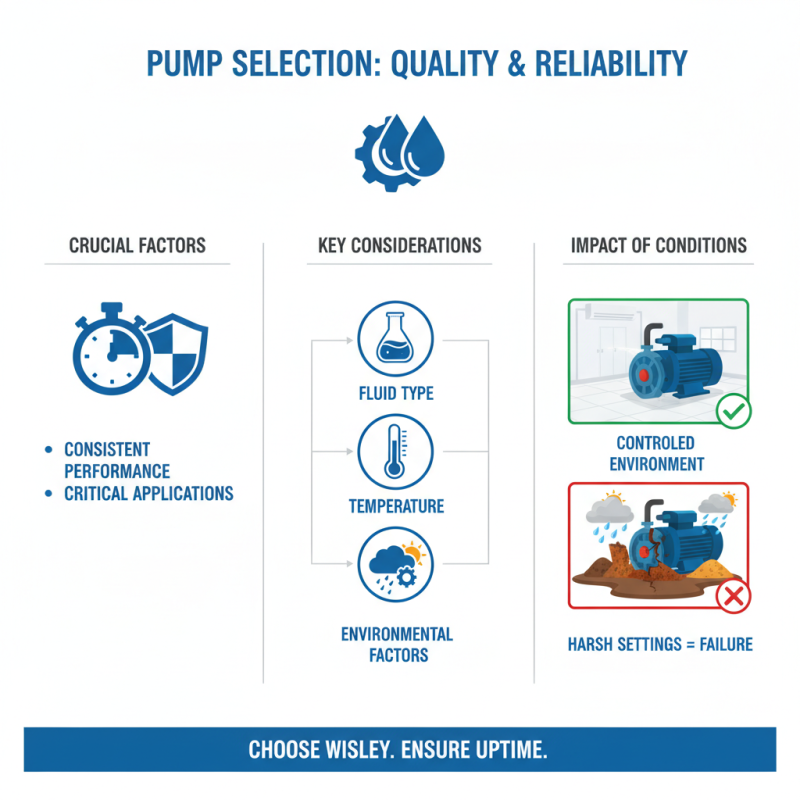
When selecting pump products, quality and reliability are crucial. A reliable pump ensures consistent performance in critical applications. Consider the fluid being pumped, temperature ranges, and environmental factors. These conditions can greatly impact the choice of pump. For instance, a pump that works well in a controlled environment may fail in harsh settings.

It's easy to overlook long-term costs. Cheaper pumps may seem appealing, but they can lead to higher maintenance fees. Frequent repairs drain resources and time. Investing in high-quality pumps may require a bigger upfront cost, but it often pays off in the long run.

Take a moment to reflect on your specific needs. Think about the lifespan of the pump. Is it worth compromising on quality for a lower price? Sometimes, the right choice isn’t the most obvious one. Make sure to analyze your options carefully. Reliable pumps boost overall efficiency and protect your operations.

Cost-Effectiveness vs. Performance: Finding the Right Balance

When selecting pump products, balancing cost-effectiveness and performance is critical. A recent industry report indicates that up to 70% of organizations prioritize initial costs over long-term efficiency. This approach can be misleading. While cheaper options might save money upfront, they often lead to higher operational costs and frequent replacements.

Consider energy consumption. A pump that costs $2,000 may seem economical, but if it consumes 30% more energy annually than a better-performing model, the savings vanish quickly. Over five years, that excess energy cost could exceed the price difference of a higher-quality pump. These facts illustrate the importance of evaluating both upfront and long-term expenses in your decision.

Choosing a pump requires careful thought. Many users end up with equipment that underperforms and increases maintenance downtime. These setbacks affect productivity. The challenge lies in recognizing that not all affordable options will serve your needs effectively. It’s vital to look beyond the immediate price tag and understand the potential hidden costs associated with inefficient systems.

Why Choose the Right Pump Products for Your Needs?

This chart compares cost-effectiveness and performance of various pump types to help you find the right balance for your needs.

Go to Top