When it comes to selecting the right Solenoid Pump, expertise is crucial. Industry authority, Dr. Emily Carter, emphasizes, "Choosing the correct Solenoid Pump can significantly impact your project's success." This indicates not just the importance of choice but also the need for informed decisions.
A Solenoid Pump is a key component in various applications, from healthcare to industrial sectors. With many options on the market, understanding your specific requirements is essential. Different models offer varying flow rates, pressures, and materials. Each feature plays a role in determining functionality.
It's easy to feel overwhelmed by technical specifications. Sometimes, the perfect pump is not the most expensive one. Reflect on your actual needs rather than getting swayed by sales pitches. Choosing poorly can lead to inefficiency and costs. Make sure to consider both your immediate goals and long-term needs.

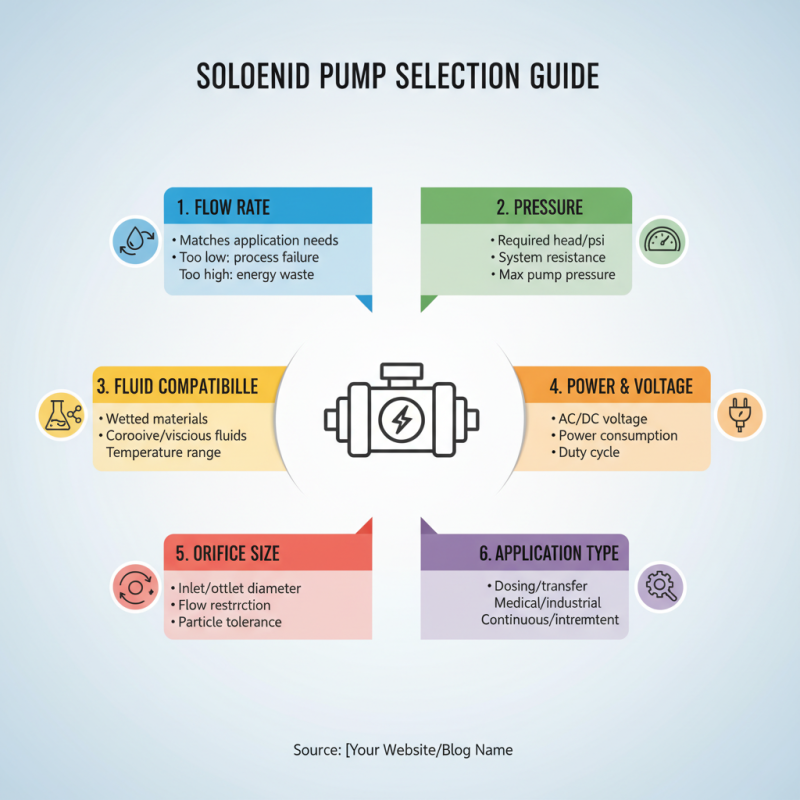
Choosing the right solenoid pump requires careful consideration of several factors. The pump's flow rate is crucial. It determines how much fluid the pump can move in a given time. Consider your application's required flow rate. If it’s too low, the process may fail. If it’s too high, you waste energy and resources.
Another important factor is the fluid characteristics. Is it corrosive or viscous? Different materials resist various fluids better. Identify potential compatibility issues with the pump material. This ensures longevity and efficiency. The operating environment also matters. High temperatures or humidity can affect performance.
Power supply options can impact your choice too. Some pumps work with AC power while others need DC. Assess the availability of electrical sources in your setup. Lastly, consider the cost versus benefits. A cheaper option might save money initially, but could require frequent replacements. Quality should not be overlooked. Make calculated compromises based on your specific needs.
When selecting a solenoid pump, understanding the various types available is crucial. Solenoid pumps primarily fall into two categories: diaphragm and peristaltic pumps. Diaphragm pumps are known for their reliability and ability to handle viscous fluids. According to industry reports, these pumps can operate at pressures up to 100 psi, making them suitable for various applications, including chemical dosing and water treatment.
In contrast, peristaltic pumps, which work by compressing a tube, excel in handling shear-sensitive fluids. They can self-prime and offer minimal contamination risk. Their performance is measured, revealing a flow range that can exceed 300 liters per hour. This is particularly valuable in medical and food processing applications where hygiene standards are paramount.
Choosing the right type depends on specific needs such as fluid characteristics, flow rate, and operational pressure. For instance, while diaphragm pumps may suit aggressive chemicals, peristaltic options might be better for sterile environments. Industry data indicates that improper selection can lead to inefficiencies and increased costs. Thus, thorough evaluation of the intended application and pump specifications is essential.
This bar chart illustrates the various types of solenoid pumps and their applications based on usage in respective industries. Diaphragm pumps are the most commonly used, followed by peristaltic and rotary pumps. Understanding these types helps in selecting the most suitable solenoid pump for specific needs.
When selecting a solenoid pump, flow rate and pressure are crucial technical specifications to consider. Flow rate indicates how much fluid a pump can move in a given time. High flow rates suit large-scale applications, while lower rates work for precision tasks. For example, if you need to transfer fluids rapidly, opt for a pump with a higher flow rate. However, evaluate whether this meets the actual needs of your application.
Pressure is another key factor. It determines how effectively the pump can move fluids against resistance. Your system may require a specific pressure to function properly. A pump with inadequate pressure might lead to inefficient operation or even damage. It's important to match pump pressure with system requirements to avoid these issues.
**Tips:** Always check compatibility with your fluid type, as this can affect pump efficiency. Regular testing of your pump's output and pressure can prevent future problems. Consider durability and maintenance needs when choosing a solenoid pump—these aspects can impact long-term costs. Remember, choosing the right solenoid pump may require some trial and error, so be prepared to reassess your options.
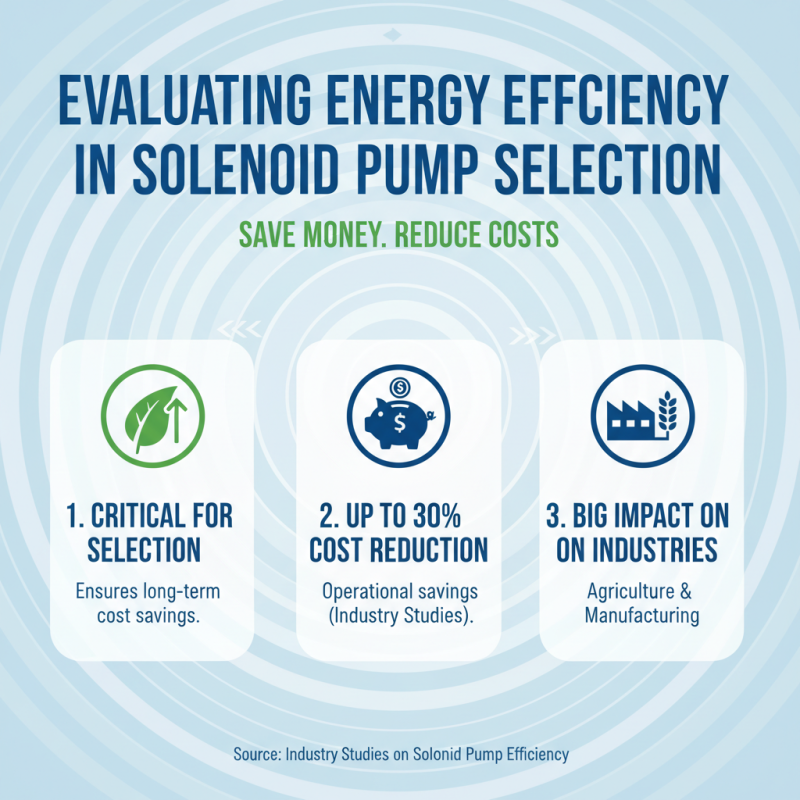
When choosing a solenoid pump, energy efficiency is critical. Understanding energy efficiency ratings helps ensure long-term cost savings. According to industry studies, energy-efficient pumps can reduce operational costs by as much as 30%. This impact can be significant in industries like agriculture and manufacturing, where energy consumption is high.
Evaluating energy efficiency involves looking at various metrics. The first metric is the pump's power consumption compared to its output flow rate. Higher flow rates with lower energy consumption indicate better efficiency. Additionally, solenoid pumps should adhere to standards set by organizations like the Hydraulic Institute. These standards provide a framework for assessing performance and reliability.
Choosing the right solenoid pump is complex. Several factors need consideration, including operational demands and application specifics. Energy ratings can sometimes be misleading if manufacturers use different testing methods. It's essential to consult third-party evaluations whenever possible. Doing so ensures you make informed decisions that align with your sustainability goals while still meeting productivity needs.
When selecting a solenoid pump, understanding industry standards and certifications is crucial. These benchmarks ensure quality, performance, and safety for various applications. For instance, pumps that meet ISO standards have undergone rigorous testing. This helps manufacturers adhere to consistent quality controls. Furthermore, certifications like CE mark signify compliance with European safety directives.
Consider the NSF certification for applications involving drinking water. It guarantees that pumps do not leach harmful substances. Additionally, UL certification is vital in North America for electrical safety. This indicates the product has been tested for potential fire hazards. However, sometimes, companies may fail to display pertinent certifications. This can lead to confusion over the pump's reliability.
Understanding these standards helps you make informed choices. Yet, not all manufacturers are transparent about their certifications. This can pose risks to your operations. Always verify the documentation before making a purchase. Scrutinize the claims, and do not hesitate to ask for proof. Being knowledgeable about these certifications ensures you choose a solenoid pump that meets your specific needs.
| Feature | Description | Common Standards/Certifications |
|---|---|---|
| Flow Rate | The amount of fluid the pump can move in a specified time | ISO 9906 Class 1 |
| Pressure Rating | The maximum pressure the pump can handle | API, ANSI |
| Material Compatibility | The materials the pump can effectively handle | FDA, NSF |
| Power Supply | The type of electrical power required to operate the pump | CE, UL |
| Temperature Range | The temperature limits of the fluid the pump can handle | ASTM, ASHRAE |
| Duty Cycle | Percentage of time the pump can continuously operate | IEC 60034 |