How to Choose the Best Heat Gun for Your Needs
Choosing the best Heat Gun starts with the work in front of you, not the largest wattage on the shelf. Grand View Research valued the global power tools market at $36.9 billion in 2023 and forecast 5.2% annual growth from 2024 to 2030. That report covers power tools broadly, not heat guns alone, but it reflects a growing market with many models and features to compare. For occasional crafts, a lightweight unit with simple controls may be enough. Repeated workshop use calls for steadier temperature control, a comfortable grip, and durable construction.
Demand for repairs and upgrades offers useful context. Harvard’s Joint Center for Housing Studies projected U.S. remodeling and repair spending would reach an annual rate of $509 billion by the first quarter of 2025. A Heat Gun can help with tasks such as shrinking tubing or softening adhesive, but the right choice depends on the material and required heat. Check both temperature range and airflow; high heat alone does not guarantee precise results. A focused nozzle can direct warmth onto a small area, while a wider nozzle spreads it across a surface. Also compare variable settings, a stable stand, cord length, weight, and the manufacturer’s safety guidance. Small details matter. No single model suits every job, and product specifications do not always explain how comfortable a tool feels after an hour. This guide weighs practical performance, safety features, and value so you can choose with clearer expectations.
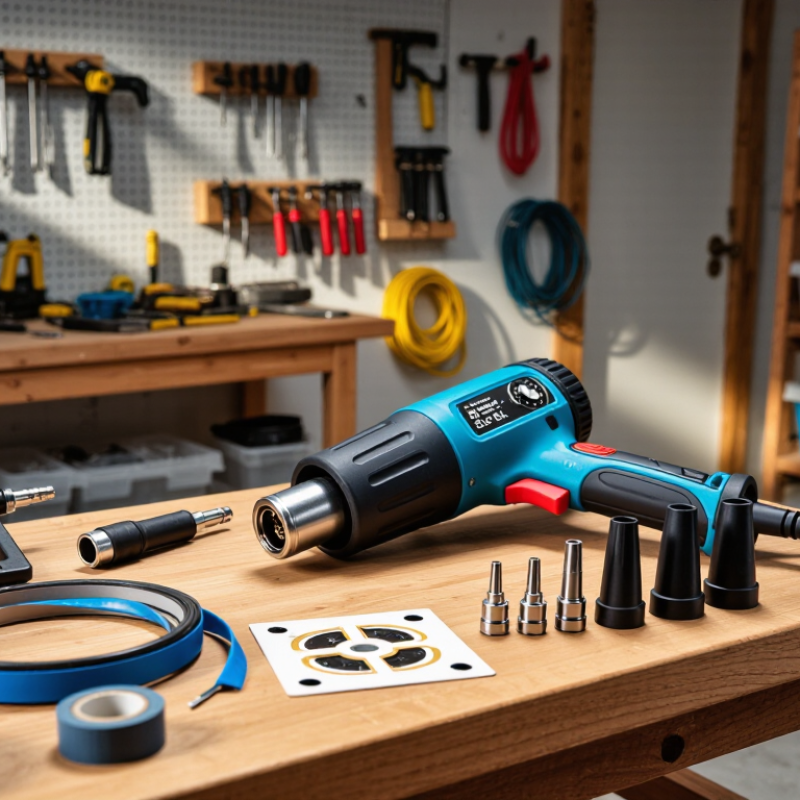
Identify the Tasks and Materials You Will Work With
Choose the heat gun around the job, not the tool’s maximum temperature. Stripping paint from a broad door needs steady airflow and controllable heat; shrinking tubing calls for a narrower stream and careful positioning. Thawing a frozen pipe is different again: gentle, moving heat matters more than speed. OSHA notes that heat guns can reach 1,000°F (538°C), enough to cause severe burns or ignite nearby materials. That figure is a warning, not a recommended working setting. Test on scrap.
Materials differ. Thin plastic can warp before it looks damaged, while wood may scorch around edges or knots. For electronics, use low heat and keep the nozzle moving; nearby connectors and insulation may soften unexpectedly. Check the material’s technical data sheet for heat limits, and begin with the lowest useful setting. A temperature display helps, but it cannot tell you how hot a small surface has become. I would not trust a quick pass to reveal every risk. If an old coating’s composition is uncertain, stop and check lead-safe guidance before heating it. OSHA’s heat-gun safety guidance supports treating temperature control, clearance, and ventilation as part of tool selection—not afterthoughts.
Compare Heat Gun Types and Heating Technologies
Heat guns differ in power source, temperature control, and airflow. Corded electric models provide steady output for longer tasks, such as softening old paint or shrinking tubing. They can feel cumbersome near ladders or crowded workbenches. Cordless models trade sustained power for portability. Runtime matters. Check the battery’s stated operating time at high heat, not just its voltage. Digital controls allow finer temperature adjustments; simpler models often offer only a few settings. A small display helps, but it does not guarantee even heat across the nozzle.
Heating elements also shape performance. Many guns use a resistance coil, which heats passing air quickly. Some use ceramic PTC elements, designed to change electrical resistance as temperature rises. Designs vary, so verify the manufacturer’s temperature range and airflow figures rather than assuming all ceramic units behave alike.
The U.S. Department of Energy’s Energy Saver guidance says electric resistance heating converts nearly all incoming electricity into heat at the point of use. That figure describes conversion, not how evenly a heat gun warms a surface.
A narrow nozzle can concentrate heat on one spot; a wider attachment spreads it. That difference is easy to overlook. A practical comparison should include warm-up time, temperature stability, airflow, and nozzle options—not just the maximum temperature.
Assess Temperature Range, Airflow, and Control Options
A heat gun is easier to choose when you match its temperature range to the materials you actually work with. For paint softening, plastic shaping, or loosening adhesive, adjustable heat helps prevent scorching and warping. Check both the lowest and highest settings, not just the advertised maximum. A displayed temperature is useful, but it may differ from the heat reaching your workpiece. Test on a scrap piece first. Keep the nozzle moving, and start farther away than you think you need to.
Airflow matters too. Strong airflow heats a larger area quickly, while gentler airflow gives you more control around small parts or edges. Some tasks need heat without a forceful stream. That matters. Look for separate airflow and temperature settings if your projects vary. A single dial can work, but it may take practice to repeat the same result.
Control options should feel practical, not merely impressive. A steady temperature setting can reduce fluctuations during longer jobs, while a cool-down mode helps clear residual heat before storage. A clear display is handy when gloves make small markings hard to read. In my experience, controls still require attention: even a precise setting cannot account for material thickness, distance, or drafts. Consider where you will use the tool, and whether its adjustments are easy to make without putting your hand near the hot nozzle.
How to Choose the Best Heat Gun for Your Needs
Compare approximate starting temperatures and airflow for common tasks when assessing a heat gun’s range and controls.
These figures are general starting points, not fixed requirements. Actual settings vary by material, tool, and working distance. Use adjustable temperature and airflow controls, test on a scrap piece, and follow the material manufacturer’s safety guidance.
Check Safety Features, Attachments, and Ease of Use
Choosing a heat gun is not just about maximum temperature. Check for adjustable heat and airflow, a thermal cutoff, and a stable stand for hands-free cooling. These features matter when you move between paint softening and shrinking tubing. The nozzle stays hot after use, so plan a clear place to set the tool down. Read the manual; controls and safe distances vary by model.
Attachments help direct heat, but the right set depends on your tasks. A narrow nozzle concentrates airflow, while a flat nozzle spreads it across a wider surface. Scraper attachments can help lift softened coatings, though they may mark delicate material if pressed too hard. Handle each attachment carefully, and let it cool before changing it. A comfortable grip and reachable controls also make a difference during longer jobs. Still, “easy to use” is personal; try the weight and balance if you can.
Tips: Test a low setting on scrap material first. Keep the nozzle moving, wear eye protection, and work with good ventilation. I’d avoid rushing; a small test can save a larger repair.
Choose a Model That Fits Your Budget and Workload
How to Choose the Best Heat Gun for Your Needs
Choose a model that matches both your budget and the hours you expect to use it. For occasional tasks, such as loosening old labels or gently shaping craft materials, a basic heat gun with two settings may be enough. Simple can work. For repeated jobs, variable temperature control helps you avoid overheating delicate surfaces. Adjustable airflow is useful too, especially when working around corners or small parts. Check the handle weight and cord length before buying; a tool that feels fine for five minutes may become tiring during longer sessions. Extra attachments can help, but unused accessories still add to the purchase price.
Think beyond the shelf price. The U.S. Energy Information Administration reported an average residential electricity price of 16.0 cents per kilowatt-hour in 2023. At that rate, a 1,500-watt heat gun running at full power would use about 24 cents of electricity per hour. Actual use varies with settings and time spent heating. For a light workload, paying more for advanced controls may not make sense. For frequent work, steadier temperature adjustment, a stable stand, and an accessible service policy may justify the extra cost. It is easy to focus on wattage alone; that can be misleading, since control and comfort matter during real jobs.