
Why Choose Sides Spray Retort for Efficient Food Processing?

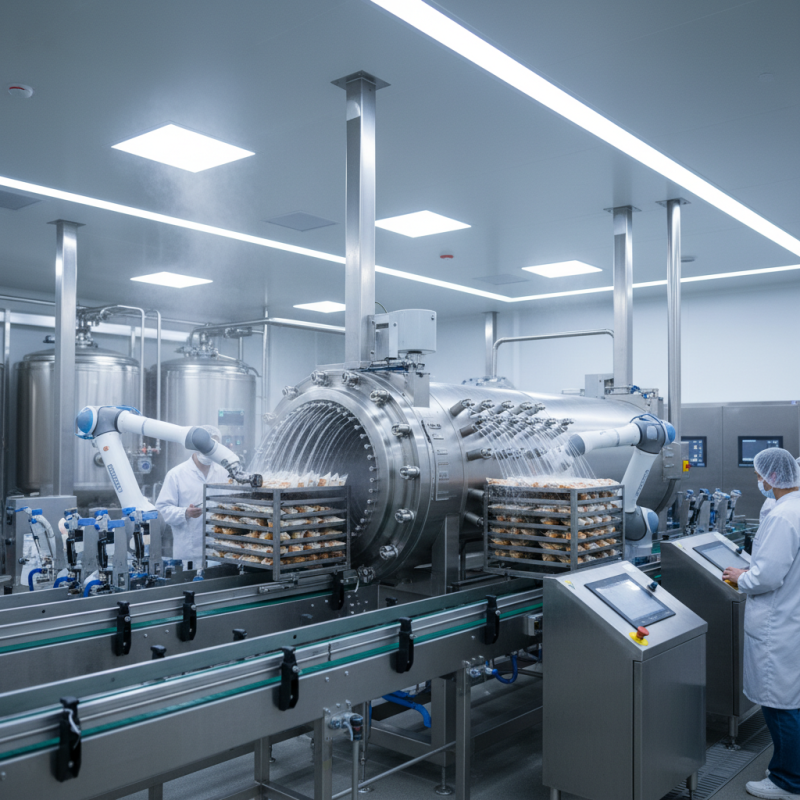
The food processing industry faces constant challenges in efficiency and safety. Sides Spray Retort emerges as a compelling solution, optimizing these critical aspects. This method offers improved heat distribution, reducing processing times and enhancing product quality. By employing advanced technology, Sides Spray Retort ensures uniform sterilization, minimizing the risk of contamination.

In recent years, food safety has gained paramount importance. Consumers demand reliable products that meet high standards. Sides Spray Retort responds to this need by providing a consistent and effective sterilization method. This reliability fosters trust among consumers and manufacturers alike.

However, like any technology, it is crucial to acknowledge potential limitations. Some facilities may struggle with the initial investment or training staff. Reflecting on these challenges is essential for maximizing benefits. Overall, Sides Spray Retort represents a significant advancement in food processing efficiency. Choosing this method can lead to long-term advantages for businesses in a competitive market.
Why Choose Sides Spray Retort for Efficient Food Processing?

Benefits of Using Sides Spray Retort in Food Processing

The Sides Spray Retort offers a significant advantage in food processing through its unique approach to heat transfer. By utilizing a spray mechanism, it ensures even heat distribution, minimizing the risk of overheating or undercooking. This is crucial, as studies indicate that uneven cooking can lead to food safety issues. According to the Food and Drug Administration (FDA), improper processing can result in potentially harmful bacteria surviving in the final product.

Efficiency is another notable benefit. Reports suggest that Sides Spray Retort systems can process food 30% faster than traditional methods. This accelerated processing time not only enhances productivity but also helps maintain the nutritional value of food. Nutrients are often lost during prolonged cooking, but quicker, efficient methods can better preserve them. However, some processors may find that the initial investment in this technology could be a barrier, and ongoing training is necessary to maximize benefits.

While Sides Spray Retorts provide numerous advantages, challenges exist. Maintenance can be complex and requires trained personnel. Companies must be prepared for the learning curve and potential downtime during training phases. Additionally, some operators may initially struggle with calibration settings to ensure optimal performance. These factors highlight the importance of a thorough implementation plan and ongoing support.

Benefits of Using Sides Spray Retort in Food Processing

How Sides Spray Retort Enhances Food Quality and Safety

The Sides Spray Retort stands out in food processing, particularly in enhancing food quality and safety. With its innovative design, it uses precise spray techniques to distribute heat evenly. This method ensures that food reaches safe temperatures uniformly, minimizing the risk of cold spots that may harbor harmful bacteria.

According to the Food Safety and Inspection Service (FSIS), proper sterilization is crucial. Studies have shown that ineffective heating can lead to foodborne illnesses. The Sides Spray Retort achieves a consistent thermal profile, reducing the risk of pathogens. Reports indicate that facilities using these retorts see a significant decrease in spoilage rates, contributing to a longer shelf life for their products.

Tips: Regular maintenance checks can improve efficiency. Keeping the spray system clean enhances performance. Conduct routine training for staff to ensure safety protocols are followed diligently.

Another potential area for reflection is the energy consumption of the retort system. While it operates efficiently, it’s important to monitor energy usage to minimize costs. Engaging with energy audits can uncover opportunities for savings and better sustainability practices in food processing.

Comparison of Sides Spray Retort and Traditional Processing Methods

The comparison between sides spray retorts and traditional processing methods highlights key efficiency benefits. Traditional methods often require longer processing times and higher energy consumption. For instance, standardized data shows that conventional batch systems take approximately 30% longer to achieve the same sterility levels as sides spray systems. This inefficiency not only increases costs but can also affect food quality over time.

In contrast, sides spray retorts utilize a unique spray technology that reduces processing times significantly. Industry reports indicate that this method can enhance heat transfer rates by up to 35%. Such improvements lead to better energy use and potentially lower overheads for food manufacturers. However, it’s vital to note that transitioning to this technology may require a steep learning curve. Manufacturers need to adapt to new operating protocols and ensure their staff are adequately trained.

Moreover, while sides spray retorts demonstrate remarkable performance, there could be challenges in scaling up production. Ensuring uniform spray coverage proves critical for achieving consistent results. Failure to adjust operational parameters may lead to uneven heating, impacting food safety. Thus, while the advantages are evident, the path to implementation demands careful consideration and assessment of existing capabilities.

Why Choose Sides Spray Retort for Efficient Food Processing? - Comparison of Sides Spray Retort and Traditional Processing Methods

Feature Sides Spray Retort Traditional Processing Methods
Heat Distribution Uniform and consistent Variable, often uneven
Processing Time Reduced time (up to 30% faster) Longer processing times
Energy Efficiency Higher energy efficiency Lower efficiency
Flexibility in Product Types Wide range of products Limited to specific products
Quality Retention Better retention of nutrients Possible nutrient loss
Maintenance Costs Lower maintenance costs Higher maintenance costs

Key Features of Sides Spray Retort for Optimal Efficiency

In modern food processing, efficiency is key. The Sides Spray Retort offers features that enhance operational performance. First, its unique spray system ensures uniform heat distribution. This design reduces cooking times while maintaining food quality. Operators can achieve consistent results, which is crucial for large-scale production.


Another significant feature is the precise temperature control. This retort allows processors to set specific temperature profiles. Such flexibility caters to diverse food products and their varying processing needs. Accurate monitoring and adjustments minimize the risk of overcooking or undercooking. The result is optimal food safety and flavor retention.


Yet, some users may find the initial setup complex. Training staff on this advanced machinery is essential. Regular maintenance is also critical to ensure longevity and efficiency. Reflection on these aspects can uncover areas for improvement. Embracing these challenges leads to better utilization of the Sides Spray Retort in food processing operations.

Environmental Impact of Sides Spray Retort in Food Production

The environmental impact of food production is a pressing issue. Sides spray retorts offer a more sustainable approach to food processing. By using innovative technology, they minimize resource consumption. These systems optimize heat transfer, resulting in less energy waste. This efficiency leads to a significant reduction in greenhouse gas emissions.

Reducing water usage is another critical benefit. Traditional methods often require large amounts of water. In contrast, sides spray retorts use advanced techniques that conserve this vital resource. This not only helps the environment but also lowers operating costs for producers. A more efficient method means less financial strain on businesses.

Implementing such systems is not without challenges. The initial setup costs can be high, and some processes may need adjustments. However, the long-term benefits often outweigh these concerns. Manufacturers must adapt to new technologies to achieve sustainability goals. It requires commitment but offers a pathway to responsible food production.

Go to Top