
Top 10 Best Seawater Desalination Plant Costs You Should Know?

Seawater desalination has emerged as a crucial solution to water scarcity. With the growing global demand for fresh water, understanding the Best Seawater Desalination Plant Cost becomes imperative. Various factors influence these costs, including technology, location, and plant capacity.

Investing in desalination plants requires expertise and long-term planning. The choice of technology directly affects operational costs and efficiency. For instance, reverse osmosis is popular but can be costly initially. On the other hand, thermal methods may have higher energy demands but could be more suitable in specific regions.

Reflecting on these costs is essential. Many people overlook hidden expenses related to maintenance and operation. These can vary widely between plants. Thus, comprehensive planning and awareness of all factors are critical in evaluating the overall financial impact of a seawater desalination project. Understanding these elements can lead to more informed investment decisions in the future.
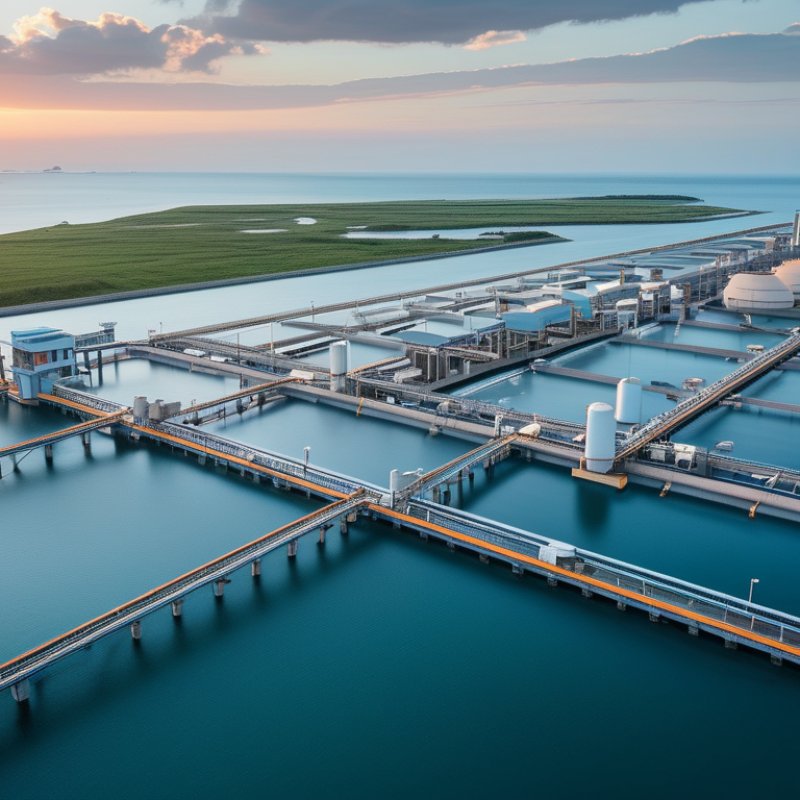
Top 10 Best Seawater Desalination Plant Costs You Should Know?

Overview of Seawater Desalination Process and Technologies

Seawater desalination is a critical technology for addressing global water scarcity. The process involves removing salt and impurities from seawater to make it suitable for drinking and irrigation. Desalination typically uses methods like reverse osmosis and distillation. Reverse osmosis pushes seawater through membranes, allowing only water to pass. This method is energy-intensive and can face challenges in membrane fouling.

The environmental impact of desalination deserves attention. Brine, a byproduct of desalination, can harm marine life if not properly managed. Entering the ocean, it raises salinity levels. Moreover, energy consumption is a significant concern. Renewable energy sources can mitigate this issue, but widespread implementation is still lagging. The costs of implementing desalination vary greatly, influenced by plant size, technology, and location.

Investing in desalination infrastructure raises questions about long-term sustainability. While it provides an immediate water source, reliance on this method can lead to reduced efforts in water conservation practices. Exploring innovative technologies and improving existing methods may enhance efficiency and reduce costs. Balancing desalination with sustainable water management is essential for a resilient future.

Top 10 Best Seawater Desalination Plant Costs You Should Know

Rank Desalination Technology Cost Per Cubic Meter ($) Capacity (MLD) Location
1 Reverse Osmosis 0.50 100 Middle East
2 Multi-Effect Distillation 1.00 80 Asia
3 Electrodialysis 0.70 50 North America
4 Nanofiltration 0.80 20 Australia
5 Reverse Osmosis - Pressurized 0.55 120 Mediterranean
6 Vacuum Distillation 1.20 60 Gulf Region
7 Forward Osmosis 0.65 30 South America
8 Solar Desalination 1.50 25 Africa
9 Zero Discharge System 2.00 15 Indian Ocean
10 Hybrid Systems 1.10 40 Caribbean

Key Factors Influencing Desalination Plant Costs

The cost of seawater desalination plants is shaped by several key factors. Understanding them is essential for stakeholders. One significant factor is the technology employed. Reverse osmosis commonly dominates but incurs higher initial costs. Other methods, like thermal desalination, may be cheaper but often less efficient.

Energy consumption is another critical element. Desalination processes require ample energy, leading to higher operational expenses. The location of the plant also influences costs. Areas with challenging geographic conditions can see increased construction and operational expenses. Water quality plays a role; source water with high salinity levels needs more advanced treatment solutions.

Labor costs should not be overlooked. Experienced personnel may demand higher wages, affecting overall project costs. Additionally, regulatory fees can add significant overhead. Not all plants account for these expenses effectively, which underscores the importance of thorough financial planning. When approaching project financing, careful consideration of all these aspects is vital. Ignoring them can lead to unexpected budget overruns.

Comparison of Different Desalination Plant Designs

Desalination plants are crucial in providing freshwater in water-scarce regions. The design of these plants significantly influences their cost and efficiency. Common designs include reverse osmosis and multi-effect distillation. Reverse osmosis is popular for its lower energy consumption. Multi-effect distillation, while more complex, is often preferred in regions with abundant energy sources.

Understanding the strengths and weaknesses of each design is key. Reverse osmosis systems have lower initial costs but may require higher maintenance due to fouling and scaling. Multi-effect systems, although pricier upfront, often result in lower operational costs over time. Evaluating the long-term implications is essential for decision-making.

In making choices about desalination technology, consider local conditions. Energy availability, water quality, and environmental impact all play a role. Pilot studies can offer valuable insights before full-scale implementation. Collaborating with experienced engineers can yield better designs tailored to specific needs. Always revisit design strategies to innovate and improve efficiency, as technology evolves rapidly in this field.

Top 10 Best Seawater Desalination Plant Costs

This chart illustrates the cost per cubic meter of water produced by various seawater desalination plants. The costs vary based on different factors including technology used, location, and operational efficiency. This data can help stakeholders in the water management sector to benchmark and assess their facilities.

Regional Cost Variations in Seawater Desalination Projects

Regional variations in seawater desalination project costs can significantly influence financial planning. Factors such as geography, labor, and technology play a critical role. For instance, Middle Eastern countries, where water scarcity is high, often invest more heavily. Reports suggest that the average cost of desalinated water can range from $0.50 to $3.00 per cubic meter, influenced by location and energy sources.

In contrast, regions with abundant fresh water may spend less on desalination. In places like Australia or California, projects often rely on renewable energy for operations. This shift can reduce operational costs long-term. However, initial investment remains substantial. Data indicates that the capital costs can exceed $1 billion for large-scale plants, regardless of location.

Local regulations and environmental impact assessments further complicate cost estimation. In some regions, environmental policies can inflate costs by requiring advanced filtration technologies. Understanding these regional dynamics is crucial for stakeholders. Without a thorough analysis, unexpected expenses can arise, affecting project viability.

Future Trends in Desalination Technology and Cost Efficiency

As the global demand for fresh water rises, seawater desalination technology is evolving rapidly. Recent reports indicate that the cost of desalination has decreased over the past decade, largely due to technological advancements. In 2022, the average cost of desalinated seawater was about $0.60 per cubic meter. This is a significant drop compared to previous years, where costs exceeded $1.00. Innovations in reverse osmosis and energy recovery systems are key contributors to this cost reduction.

However, challenges remain. The energy consumption of desalination plants is still a concern, accounting for 3 to 6 kWh per cubic meter of water produced. As the industry targets sustainability, integrating renewable energy sources is becoming a trend. Projects worldwide are experimenting with solar and wind energy to drive desalination processes. These efforts not only aim to cut costs but also address environmental impacts.

Moreover, the scalability of desalination plants presents inherent limitations. Smaller communities may still face high initial capital costs. While large-scale projects can benefit from economies of scale, smaller facilities often struggle to achieve cost-effectiveness. This disparity highlights an area needing further innovation and investment. The future will rely heavily on addressing these challenges to achieve broader adoption of desalination technology.

Go to Top