What Are the Best Neon Light Suppliers in 2026?
Choosing the best Neon Light supplier in 2026 means looking beyond attractive product photos. Buyers need to compare brightness, color consistency, construction, customization, delivery, and after-sales support. Grand View Research estimated the global LED lighting market at USD 75.66 billion in 2024 and projected a 10.4% compound annual growth rate from 2025 to 2030. That broad market figure is useful context, not a forecast for neon signage alone.
Details matter. The U.S. Department of Energy’s Energy Saver guidance says LEDs use at least 75% less energy and can last up to 25 times longer than incandescent lighting. Those figures do not compare LED neon directly with traditional glass neon. A supplier’s own specifications, test conditions, and warranty therefore matter more than a general efficiency claim. Ask for a working sample and inspect its glow, joints, cable exits, and dimming behavior in the setting where it will be installed.
This guide compares suppliers through practical evidence: product range, material options, project support, stated lead times, warranty terms, and customer feedback. It also distinguishes flexible LED neon from glass neon, since their appearance, installation needs, and maintenance differ. Not interchangeable. A polished sample may still hide uneven illumination or weak support after purchase; that deserves scrutiny. The strongest supplier is not automatically the cheapest or most famous. It is the one that can document what it promises and answer specific questions clearly.
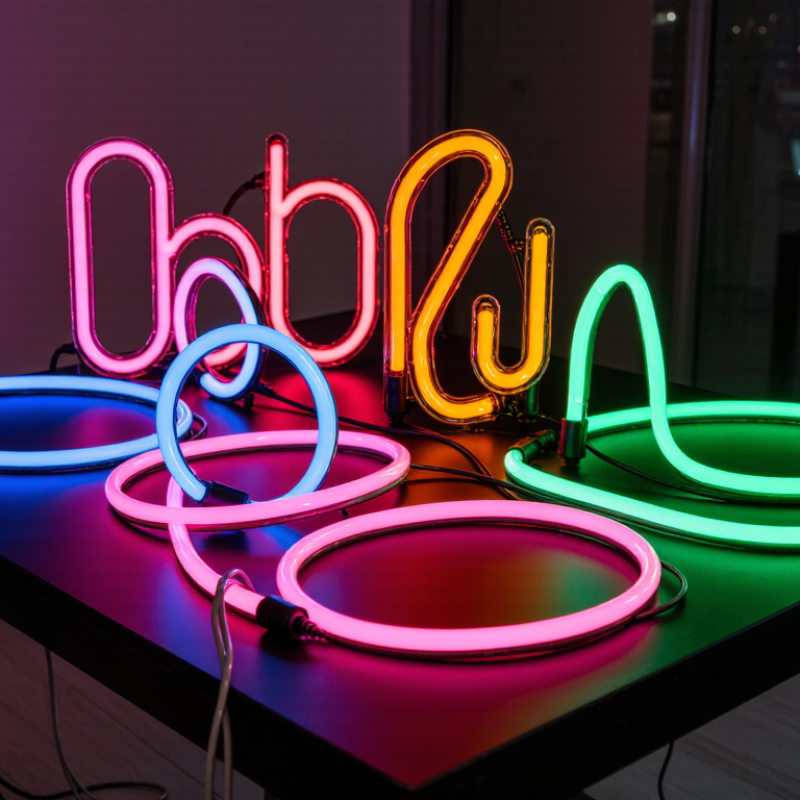
What Neon Light Suppliers Provide in 2026
In 2026, neon light suppliers often provide more than a finished sign. Many help turn a sketch, storefront photo, or wall measurement into a production-ready design. A useful quote should specify dimensions, colors, mounting method, power requirements, and expected delivery time. Ask for a proof before production. Small spacing changes can make a name easier to read from across a room.
Suppliers may offer LED neon flex, cut-to-size lettering, remote dimmers, power adapters, mounting templates, and installation instructions. Some also provide indoor and outdoor options, but suitability depends on the product’s stated protection rating and installation conditions. Request clear product specifications, warranty terms, and care guidance. A close-up photo of a sample can reveal uneven bends or visible light gaps that a polished mock-up may hide.
After-sales support matters, too. Check whether replacement parts are available and how the supplier handles transit damage. For larger projects, ask about a physical sample or staged approval process. The comparison is not always tidy: one supplier may excel at customization, while another offers clearer documentation. I would not assume a low price includes suitable mounting hardware or responsive support. Ask before paying.
How Neon Lighting Technologies and Supplier Types Differ
Neon lighting suppliers often specialize in different technologies, so compare the product before comparing prices. Traditional glass neon uses shaped tubes filled with gas. It creates a smooth, continuous glow and suits custom signs or detailed lettering. However, glass can be fragile, and repairs may require a skilled technician. LED neon flex uses LEDs inside flexible silicone or PVC. It is lighter, easier to shape, and typically simpler to install. Its light can look more uniform than glass, though the effect may feel less authentic up close.
Supplier types matter too. Sign-making specialists can help with artwork, lettering, mounting, and installation. Lighting manufacturers may offer more options for colors, brightness, and dimming, while distributors can provide quick access to standard products. Ask each supplier for clear specifications, sample photos, warranty terms, and guidance on indoor or outdoor use. A photo alone can hide uneven brightness; that detail is easy to overlook. There is no perfect option for every project.
Tips: Request a small illuminated sample. Check the glow in your actual room, and confirm power requirements before ordering. If the supplier cannot explain installation and maintenance plainly, keep comparing.
Which Factors Define a Leading Neon Light Supplier
A leading neon light supplier is defined by more than bright samples and a fast quote. Look for clear specifications: brightness, color consistency, power use, operating temperature, and expected lifespan. Ask how each figure was measured. A supplier should provide test records and explain what changes between a showroom sample and a full production run. Physical samples matter.
Reliability also depends on construction. Check the diffuser for even illumination, inspect joints and cable exits, and ask how the product handles heat and moisture. The U.S. Department of Energy’s LED Lighting guidance says LED lighting can use at least 75% less energy than incandescent lighting and last up to 25 times longer. Those figures are useful context, not a guarantee for every custom sign. Request power and lifespan data for the exact product being quoted.
Service quality becomes visible when something goes wrong. Ask about replacement parts, installation guidance, response times, and warranty exclusions in writing. A polished catalog can still hide uneven color or vague testing. I would not treat a long warranty as proof by itself. Compare documentation, sample quality, and the supplier’s willingness to answer specific questions; that takes extra time, but it can prevent costly surprises.
How to Compare Suppliers for Different Project Needs
What Are the Best Neon Light Suppliers in 2026? The best fit depends on the project. A shopfront sign exposed to rain needs different specifications from a temporary display inside a gallery. Before requesting quotes, write down the sign’s dimensions, mounting surface, operating hours, and viewing distance. Small details matter.
For outdoor installations, compare documented weather-resistance ratings, cable connections, and suitable power supplies. Ask suppliers to explain how the rating applies to the complete assembly, not just one component. For indoor retail or event work, check color consistency, dimming options, bend radius, and whether the design can be reproduced later. Request a physical sample or illuminated mock-up when color accuracy matters. A product image on a screen can be misleading.
Compare quotes line by line. Check what is included: design files, drivers, mounting hardware, shipping, and replacement sections. Ask for production timelines and written warranty terms, then verify that technical documents match the quoted model. No scorecard catches every issue. A low price may still leave installation details unclear, and a polished sample may not reflect a large order. It is worth asking the same practical questions of every supplier, even when the process feels repetitive.
How to Compare Neon Light Suppliers in 2026: Water-Protection Ratings
How to use this chart: The second digit in an IP rating indicates water protection. These digits are standardized rating levels, not a linear measure of protection. Match the required rating to the installation environment, and ask suppliers to confirm the complete IP code and test conditions. For IPX8, immersion conditions are specified by the manufacturer.
How to Choose and Verify a Neon Light Supplier
Choosing a neon light supplier starts with the project, not a glossy catalog. Is the sign for a bright shop window, a dim bedroom, or an outdoor wall? Ask for a sample using the same tubing, backing, power supply, and finish planned for production. Check its color in daylight and under warm indoor lighting. Small shifts can look dramatic across a long sign. Ask how the supplier checks bending accuracy, sealed joints, brightness, and dimmer compatibility. Request clear specifications, lead times, packaging details, and warranty terms. Keep the answers in writing.
Verification needs more than a polished sample. Ask for recent test reports and photos of comparable completed work. Confirm who handles quality checks and what happens if a batch arrives damaged or uneven. A video call from the production area can help you assess equipment and working methods, though it is not a full audit. It is easy to overvalue one perfect prototype; consistency across production runs is harder to judge. Request sample measurements or inspection records from a finished batch. Compare quotes carefully, since unusually low pricing may omit essential components or support. Ask direct questions, then check whether the answers stay consistent.