
10 Best Conveyor Belt Beam Cutting Press Factories

Choosing among the 10 Best Conveyor Belt Beam Cutting Press Factories means looking beyond advertised tonnage. Buyers should compare cutting-bed dimensions, pressure consistency, tooling compatibility, guarding, service access, and spare-parts support. A clean cut matters. So does repeatability across long production runs, where small alignment errors can create costly waste.

Market reports offer useful context, but not a direct ranking of press makers. Grand View Research estimated the global conveyor belt market at about US$5.85 billion in 2023 and projected continued growth through 2030. That figure describes conveyor belts—not beam cutting presses—so it should not be treated as proof of demand for any particular machine. Conveyor specialist Todd Swinderman has extensive experience with belt systems and maintenance; his published work supports a practical lesson: reliable performance depends on sound design and disciplined upkeep. I could not verify a verbatim quote from him specifically about beam cutting presses, so attributing one would be misleading. That gap matters. Factory claims deserve the same scrutiny as machine specifications. In this guide, Conveyor Belt Beam Cutting Press Factories are assessed through observable details: frame rigidity, sample-cut quality, control options, operator access, and documented service capability. A polished brochure is not enough. Ask for a material-specific cutting trial, inspect the edge, and check how quickly the factory can supply critical components. The strongest supplier may not be the cheapest—or the one with the largest catalogue.
10 Best Conveyor Belt Beam Cutting Press Factories

Understanding Conveyor Belt Beam Cutting Presses

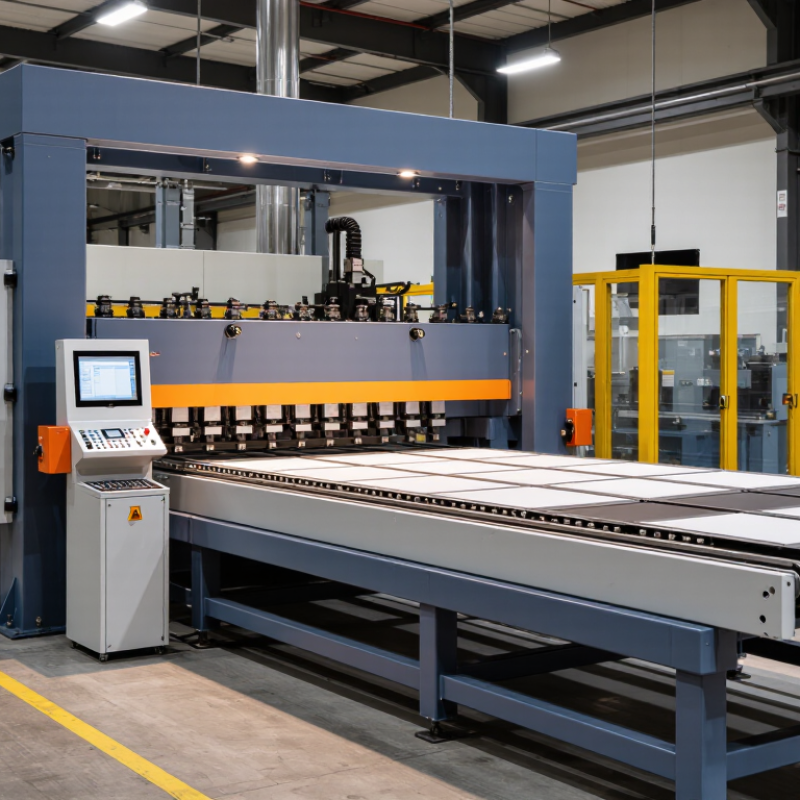
A beam cutting press uses a moving upper beam to drive a shaped steel-rule die through belt material. Operators place rubberized fabric or carcass plies on a flat bed, align the die, and apply controlled pressure. The cut should reach the intended layers without crushing reinforcement or leaving ragged edges. Small errors matter.

Press selection depends on bed size, cutting force, beam parallelism, stroke adjustment, and repeatability—not tonnage alone. A die spanning a wide belt section needs even pressure from edge to edge. Ask for sample cuts using the actual belt construction, then inspect edge quality and dimensional variation. Check guarding and maintenance access, too.

Grand View Research’s 2023 conveyor belt market report estimated the global market at USD 5.85 billion in 2022. Its forecast projected a 4.3% compound annual growth rate from 2023 to 2030. This is market data, not proof of press performance. A forecast cannot identify the right machine for a specific belt recipe. Treat it as a demand signal, then verify cycle time, material waste, and cut consistency on the shop floor.

How Beam Cutting Presses Cut Conveyor Belt Materials

Beam cutting presses cut conveyor belt materials by driving a shaped blade or die vertically through the sheet. The operator positions the belt on a firm cutting board, aligns the die, and lowers the press head. Controlled pressure helps produce consistent pieces without dragging the surface. The required force depends on thickness, reinforcement, and material hardness.

Rubber, PVC, and fabric-reinforced belts can respond differently. A thick belt may need a slower, more forceful cut, while a softer cover can deform if pressure is excessive. Operators check the cut edge for incomplete separation, crushed layers, or loose fibers. A small test cut can reveal problems before a full production run. Still, setup is not foolproof; worn dies and uneven material can affect results.

Tips: Keep the cutting board flat and inspect the die edge regularly. Secure the belt so it cannot shift during cutting. Record settings that work, but verify them when material batches change. Small variations matter.

Criteria for Evaluating Beam Cutting Press Factories

Evaluating a conveyor belt beam cutting press factory starts with machine fit, not brochure claims. Ask how the press handles your belt width, thickness, reinforcement, and daily shift pattern. Request a sample cut using your own material. Check the edge for fraying, compression marks, and consistent dimensions. Details matter.

Review the factory’s engineering and quality-control process. Ask how cutting pressure, blade alignment, and feed accuracy are checked before delivery. A clear inspection record is more useful than a vague promise of precision. Look for guards, accessible emergency stops, and practical maintenance instructions. Ask directly. Can operators replace wear parts without lengthy downtime? A quick demonstration can reveal awkward controls or difficult access.

After-sales support deserves equal attention. Confirm what commissioning includes, how spare parts are supplied, and who handles technical questions. Ask for realistic service response times and references from facilities with similar cutting needs. Compare written specifications with a live machine test; the fastest quoted cycle may not produce the cleanest cut. I would treat that number cautiously. Factory visits also have limits: one successful demonstration cannot prove long-term reliability. Request test results, maintenance schedules, and clear warranty terms, then note any unanswered questions before choosing.

Key Technologies and Services Offered by Leading Factories

10 Best Conveyor Belt Beam Cutting Press Factories

Key Technologies and Services Offered by Leading Factories

Leading factories combine rigid press frames with controlled beam movement to produce consistent cuts across conveyor belt materials. Many use CNC positioning, servo drives, and hydraulic systems to manage pressure and repeatable stroke depth. Sensors can detect material position and help reduce misalignment. Small details matter. A clean cutting table and correctly fitted die can affect edge quality as much as the press itself.

Factory services often begin with material trials. Technicians can test belt samples, recommend tooling, and check whether the selected press suits the material’s thickness and width. Ask for measured results, not just a demonstration on ideal stock. Some suppliers also provide installation, operator training, spare parts, and scheduled maintenance. These services matter when production depends on steady cycle times.

Useful support includes clear setup instructions and practical troubleshooting guidance. Operators should know how to inspect blades, confirm beam alignment, and spot uneven pressure before defects spread. No press is perfect. A factory may overlook a small workflow issue during testing, so buyers should share real production conditions and review the trial cuts closely. Safety features and service response times deserve attention too.

Profiles of 10 Leading Conveyor Belt Beam Cutting Press Factories

Profiles of ten leading conveyor belt beam cutting press factories should compare engineering choices, not just machine photographs. One factory may build rigid, large-bed frames for thick rubber; another may prioritize servo control and fast repeat cycles. Others specialize in modular feeding, custom tooling, textile handling, guarding, or maintenance support. Check sample cuts, edge quality, and material thickness limits. Ask how operators clear scraps. Small details matter.

Automation is changing factory expectations. The International Federation of Robotics’ World Robotics 2024 report counted about 4.28 million industrial robots operating worldwide in 2023. That figure does not measure cutting presses directly, but it shows why buyers increasingly inspect controls, loading systems, and service skills together. A press can be precise on paper and awkward on the floor. That happens.

The ten profiles are best judged through evidence: frame deflection records, repeatability tests, energy use, and documented training. The conveyor systems market was valued at about $10.6 billion in 2023, according to Grand View Research, which forecast continued growth through 2030. This is adjacent-market context, not proof of press demand. Be careful with that distinction. Factory claims vary, and published specifications rarely reveal long-term wear. A witnessed production trial is more convincing than a glossy brochure.

Go to Top