
Sourcing Beta Arbutin Powder in bulk requires more than comparing prices on supplier websites. Cosmetic manufacturers need consistent purity, dependable documentation, and practical support from the first inquiry to final delivery. This guide examines seven suppliers that may suit serious bulk buyers.
The evaluation focuses on product quality, manufacturing standards, batch consistency, minimum order quantities, and international logistics. Buyers should request a recent Certificate of Analysis, HPLC results, safety data, and clear traceability records. Factory certifications also matter, especially when suppliers claim GMP, ISO, or regulated production controls. Small details can reveal much. Check the powder’s color, packaging seal, lot number, and storage instructions.
No supplier is perfect. A polished website proves little. Some vendors offer attractive prices but provide weak technical communication or delayed samples. Others charge more while delivering stronger testing and steadier inventory. That difference can affect production schedules, customer trust, and product performance. Independent verification remains wise, even when a supplier appears experienced. The shortlist below is designed to support careful comparison, not rushed purchasing. It considers evidence, responsiveness, and realistic bulk-buying needs. Prices and availability may change, so buyers should confirm current terms directly. A sample can also expose issues that documents miss. That lesson is easy to overlook.
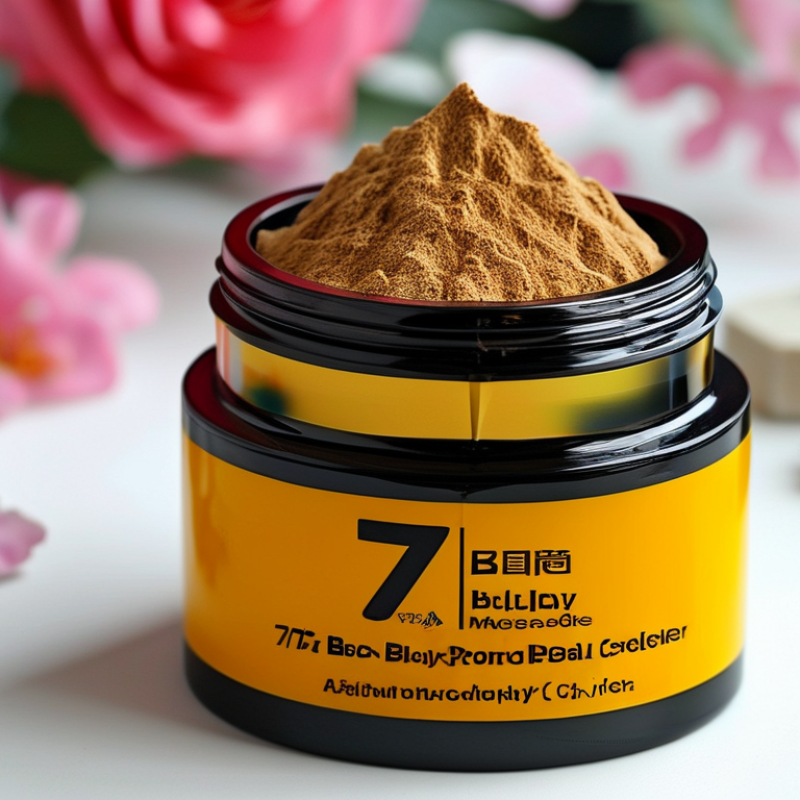
Beta arbutin powder is a water-soluble cosmetic ingredient derived from hydroquinone glycosides. It helps reduce melanin formation by influencing tyrosinase activity in the skin. Formulators commonly add it to brightening serums, creams, masks, and body lotions. It is not a sunscreen. Daily UV protection remains essential.
Grand View Research projected the global skin-lightening products market to grow at about 8% annually through 2030. This demand does not prove every brightening formula works equally well. The European Commission’s Scientific Committee on Consumer Safety has assessed beta-arbutin under specific concentration and use conditions. Buyers should check current regional requirements before approving a formula.
In production, beta arbutin powder usually dissolves in the water phase. Gentle mixing helps prevent clumps. Excessive heat may reduce formulation stability. A practical target is a controlled pH, often near the mildly acidic range, based on compatibility testing. That assumption needs verification for each formula.
Bulk buyers should request an HPLC assay, identity test, microbiological limits, heavy-metal results, and residual-solvent data. Hydroquinone-related impurities deserve careful attention. A certificate alone is not enough. Independent laboratory confirmation is wiser for large orders. Packaging should be sealed, moisture-resistant, and clearly lot-coded. In my experience, small pilot batches reveal problems that supplier documents can miss. This step feels slow, but it protects consistency across thousands of units.
Choosing among the 7 best beta arbutin powder suppliers requires more than comparing price per kilogram. Grand View Research estimated the global skin-lightening products market at about USD 8.9 billion in 2023, with continued growth expected through 2030. This expansion increases demand, but it also raises quality risks. Bulk buyers should request batch-specific certificates of analysis, HPLC assay results, moisture levels, residual solvents, heavy-metal testing, and microbiological limits. A supplier should also explain its production site, traceability system, and storage controls.
Quality Control Consistent powder matters. Ask for particle-size data, packaging details, retest dates, and at least three recent batch records. Suppliers following ISO 22716 principles may offer stronger manufacturing discipline, although certification alone does not prove every batch is suitable. The 2024 Global Cosmetic Industry market analysis also highlights rising pressure for documented ingredient safety and supply-chain transparency. That trend is practical, not decorative. Still, documents can be incomplete or overly polished. An independent laboratory test remains wise before placing a large order.
Tips: Request a small sample first. Test color, odor, solubility, assay, and stability under realistic storage conditions. Compare the sample with the final production batch. Check whether the supplier can maintain the same specification during seasonal demand. A very low quote deserves questions. No checklist is perfect.
Wholesale buyers should compare seven supplier profiles: direct manufacturers, GMP-certified ingredient producers, regional distributors, export specialists, custom-packaging companies, laboratory-backed traders, and stock-holding warehouses. Each option serves a different purchasing need. Direct manufacturers may offer better pricing, while regional warehouses often reduce delivery delays. A useful shortlist should include suppliers with batch-specific COAs, HPLC assay results, moisture testing, and microbiological data. Ask for the production date, retest date, packaging size, and storage temperature. Small details matter.
Market demand supports careful sourcing. Grand View Research forecasts the global skincare products market to grow at about 4.7% annually through 2030. Cosmetics Europe reported approximately €104 billion in European cosmetics and personal care sales in 2024. These figures indicate sustained ingredient demand, but they do not guarantee reliable beta arbutin supply. A supplier claiming “high purity” without test evidence deserves caution.
For a practical audit, request a 100–500 gram sample before ordering 25-kilogram cartons. Inspect the white powder, seal quality, lot code, and document consistency. Confirm that the assay method matches the certificate. Review three recent batches, not just one. I would also compare lead times, payment terms, and damaged-goods procedures. A spreadsheet helps, but it can hide weak communication. That risk is easy to underestimate. Suppliers with traceable records and responsive technical teams usually offer stronger long-term value than the lowest quote.
When screening seven beta arbutin powder suppliers for bulk purchasing, begin with identity and consistency. Request a recent certificate of analysis, not a generic template. Check assay results, HPLC methods, moisture, particle size, and microbiological limits. Ask for the batch number printed on the sample jar. A small sample matters. It reveals color, odor, flow, and packaging discipline before a larger commitment. For important orders, compare supplier documents with independent laboratory testing.
Pricing deserves more than a per-kilogram comparison. Separate material costs from testing, custom documents, freight, insurance, and payment fees. A low quote may hide a high MOQ or weak replacement policy. Build a landed-cost table for 25, 100, and 500 kilograms. Then check whether volume discounts remain realistic. Certification claims also need verification. Review ISO or GMP documents, validity dates, issuing bodies, and facility details. Certification alone does not guarantee consistent powder quality.
MOQ should match your production forecast, cash flow, and storage capacity. Ask how the powder is sealed, labeled, and protected from humidity. Confirm lead times with a written production schedule. I would score quality, documentation, pricing, MOQ, response speed, and corrective-action history. I would not choose the cheapest offer automatically. That shortcut can fail when one missing document delays customs or production. Supplier comparisons are never perfect; some vendors provide polished paperwork but limited technical answers. That weakness deserves a lower score.
Bulk buyers should treat beta arbutin powder as a documented raw material, not simply a low-cost ingredient. Before requesting quotations, define the required assay, particle size, packaging, annual volume, and destination. A supplier asking precise questions often shows stronger process control than one offering an instant price.
Request a recent certificate of analysis for each lot. Check assay results, moisture, appearance, microbiological limits, heavy metals, and residual solvents. Confirm the testing method, laboratory identity, and report date. HPLC data helps. Only when the method is clear. A clean-looking PDF proves little. Ask for evidence.
Request a retained sample and compare it with the production lot after approval. Review batch numbers, manufacturing dates, shelf life, storage conditions, and tamper-evident packaging. Traceability should connect each finished bag with production records and raw-material controls. Request allergen, non-GMO, and regulatory statements when relevant to your market. Do not guess.
Evaluate manufacturing standards, audit access, complaint handling, and replacement terms before placing a large order. Confirm lead times during peak seasons, not only during calm months. Payment terms matter, but consistency matters more. A very low quote may hide weak testing or unstable supply. Experienced buyers can still overvalue certificates and undervalue communication. That mistake is easy to repeat. Leave room for a small trial order, even when the supplier seems convincing. Small trials help.
This anonymized comparison uses practical bulk-buying benchmarks rather than company or brand claims. Buyers should verify every specification with a current quotation, certificate of analysis (COA), sample, and regulatory document before placing an order.
| Supplier Profile | Recommended Assay Benchmark | Identity & Quality Documents | Contaminant Controls | Packaging Suitable for Bulk Powder | Typical Commercial Quantity to Confirm | Key Buyer Verification Point | Overall Suitability |
|---|---|---|---|---|---|---|---|
| Profile 1 High-purity cosmetic ingredient supplier | Beta-arbutin assay: ≥99.0% Confirm the analytical method and batch number. | Current COA, specification sheet, SDS, HPLC data, and product identification test. | Heavy metals, residual solvents, microbial limits, and pesticide status should be listed or tested where applicable. | Light-resistant, moisture-protective inner bag inside a sealed fiber drum or carton. | Common bulk discussion range: 25–100 kg per order. | Check whether the COA is batch-specific and issued by an identifiable laboratory. | ★★★★★ |
| Profile 2 Documentation-focused exporter | Target assay: ≥99.0% Ask whether the result is a release specification or a typical value. | COA, SDS, technical data sheet, allergen statement, non-GMO statement, and origin declaration. | Request limits for lead, arsenic, mercury, cadmium, total plate count, yeast, and mold. | Double polyethylene liner with an outer drum or multilayer export carton; confirm tamper evidence. | Often suitable for 10–50 kg trial-to-commercial purchasing. | Confirm document consistency across the COA, label, invoice, and shipping paperwork. | ★★★★☆ |
| Profile 3 Large-volume manufacturing source | Commercial specification commonly requested: ≥99.0% | COA, GMP or quality-system information, process overview, change-control policy, and audit support. | Require a defined testing plan for identity, assay, impurities, heavy metals, and microbiology. | Industrial packaging should include an intact liner, lot label, net weight, manufacture date, and retest or expiry information. | Usually better suited to 100 kg or more after sample approval. | Confirm production capacity, lead-time commitments, and supply continuity before signing a contract. | ★★★★★ |
| Profile 4 Low-MOQ distributor | Verify assay on the actual stock lot Do not rely only on a catalog specification. | At minimum, request a current COA, SDS, specification sheet, and traceable lot number. | Confirm whether contaminant testing was performed by the distributor, manufacturer, or an independent laboratory. | Smaller sealed bags or cartons may be available; check moisture protection after repacking. | Practical for approximately 1–25 kg qualification orders, subject to stock availability. | Ask whether the material is factory-sealed or has been repacked in the distribution chain. | ★★★★☆ |
| Profile 5 Private-label and formulation-support source | Target assay: ≥99.0% Request sample-to-batch consistency data. | COA, SDS, formulation guidance, stability information, recommended use level, and compatibility notes. | Check microbial limits and whether the material is tested for residual solvents and other process-related impurities. | Packaging should protect the powder from light, humidity, and repeated opening during formulation work. | Useful for 5–50 kg projects with potential scale-up. | Confirm that technical support covers the raw powder rather than only finished cosmetic products. | ★★★★☆ |
| Profile 6 Regulatory-ready ingredient source | Assay should meet the agreed written specification | COA, SDS, INCI name confirmation, country-of-origin statement, compliance declarations, and traceability records. | Request heavy-metal limits, microbiological results, allergen status, and any market-specific compliance documents. | Use sealed, labeled packaging with lot traceability and storage instructions. | Commonly evaluated from 25 kg upward, depending on market and product grade. | Check whether documents support the destination market and intended cosmetic application. | ★★★★★ |
| Profile 7 Cost-optimized bulk source | Never select on price alone Set a written minimum assay and impurity specification first. | Require a verifiable COA, SDS, technical specification, sample, and supplier quality contact. | Compare independent test results with the supplier COA before approving a large shipment. | Confirm that the package is suitable for long-distance transport and resistant to moisture ingress. | May be attractive for 50–500 kg orders after successful qualification. | Calculate total landed cost, including testing, freight, duties, insurance, storage, and potential rejection risk. | ★★★☆☆ |
| Minimum pre-order checklist: approve a representative sample, match the lot number to the COA, verify beta-arbutin identity and assay, review contaminant limits, confirm packaging and storage conditions, obtain written delivery terms, and define acceptance criteria for incoming quality control. | |||||||