
7 Glass Manufacturing Machine Buying Tips

Choosing a Glass Manufacturing Machine is a major investment, not a decision to make from a price tag alone. The right equipment should match your products, production volume, available floor space, and staff experience. A machine designed for standard bottles may not suit thin glass panels or complex shapes. Small mismatches can lead to wasted material, slower output, and costly adjustments.

Look beyond the headline specifications. Ask suppliers for details about forming accuracy, cycle times, energy use, control systems, and routine maintenance. If possible, review sample products or arrange a production demonstration. Watch how the machine handles a real process, from feeding and forming to cooling. Listen for unusual vibration. Check whether operators can reach service points without dismantling major components.

The seven buying tips ahead offer a practical way to compare options and ask better questions. They cover capacity, compatible glass types, automation, operating costs, safety features, supplier support, and future expansion. No checklist can replace a careful assessment of your own production needs. Some figures may also look impressive on paper but depend on ideal conditions. Verify assumptions with the manufacturer, and speak with current users when available. A little doubt is useful here. It can reveal what a sales brochure leaves out.
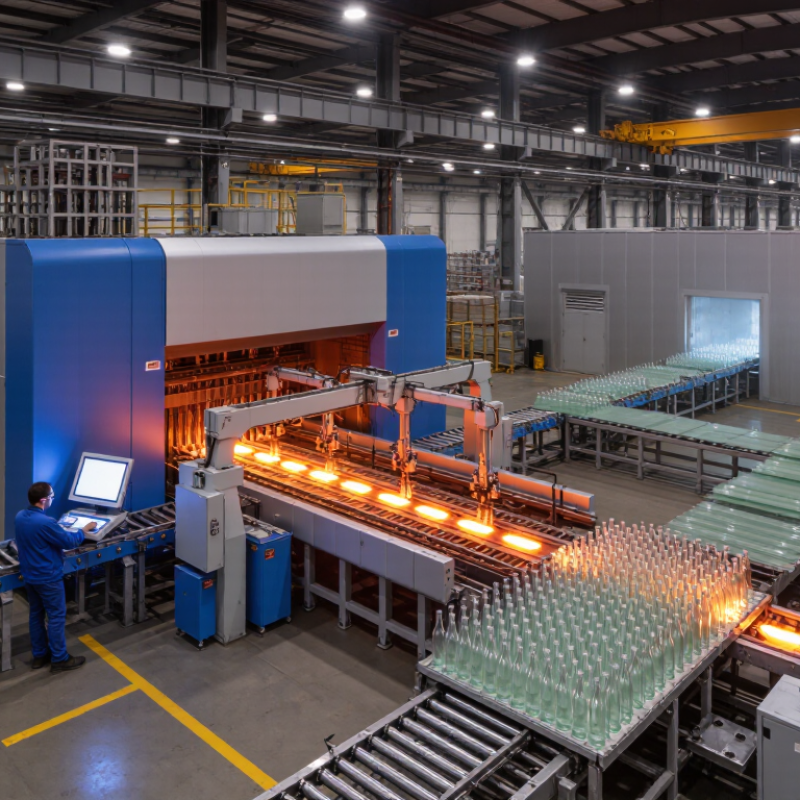
7 Glass Manufacturing Machine Buying Tips

Define Your Glass Products and Production Requirements

Before comparing machines, define the glass products you plan to make: bottles, jars, panes, or technical parts. Their shapes and finishes determine whether you need forming, cutting, edging, tempering, coating, or linked processes. Record dimensions, thickness, weight, edge quality, optical clarity, and acceptable defect rates for each product family. A bottle line and a thin architectural-glass line need very different handling. Small details matter.

Set realistic production targets. Include average and peak output, shift patterns, changeovers, and expected scrap. Do not size a machine around best-case speed alone; maintenance stops and mixed orders affect actual throughput. Feedstock matters too. Specify batch composition, cullet share, fragment size, and contamination limits. FEVE’s 2020 European glass-packaging collection data reported an 80.1% collection rate, but collected glass is not necessarily clean, sorted, furnace-ready cullet. Ask suppliers to test your actual recipe and feedstock, rather than relying on brochure figures. This is often underestimated.

Plan for product changes as well as today’s orders. Request a trial using representative molds, sheets, or batches, then measure yield, cycle time, and changeover time. If your specifications are still uncertain, acknowledge that before purchase. A precise machine cannot fix an unclear production brief.

Compare Machine Types and Manufacturing Processes

Choosing glass machinery starts with the product and its forming process, not the machine’s headline speed.
Float lines suit flat glass, while container lines form bottles and jars from molten gobs. Press-and-blow systems can help produce wide-mouth containers; narrow-neck designs may need different forming controls. These are not interchangeable setups. Details matter.

Tip: Compare the full process flow. Check batch preparation, melting capacity, forming method, annealing, and inspection equipment. Ask how quickly settings can change between product sizes. A fast forming machine may still create a bottleneck if the lehr or inspection station cannot keep pace. Not always obvious.

When reviewing options, request production data for products similar in size, glass weight, and output targets. Confirm which tooling is included and how often molds or feeders need adjustment. Also compare energy use, maintenance access, operator training, and expected downtime. A compact layout can look efficient on paper, yet leave little room for safe servicing. Be cautious with estimates based on ideal conditions; actual yields depend on glass composition, temperature stability, and operator skill. The right comparison is process-specific, and some trade-offs will remain.

Evaluate Capacity, Precision, and Automation Features

7 Glass Manufacturing Machine Buying Tips

Evaluate Capacity, Precision, and Automation Features

A machine’s rated output can look impressive, but it may not match your daily production mix. Check the expected number of panels per hour, including setup, loading, and routine stoppages. Compare that figure with your busiest shift, not just your average day. Do not guess. Confirm the maximum glass size and thickness the equipment can process. A line built for large sheets may struggle with frequent product changes. Also inspect how material moves between stations; one slow transfer can limit the entire line.

Precision should be tested on your actual glass types and cut patterns. Ask for repeatability data, then inspect sample edges for chips, unevenness, or excess finishing work. Small details matter. Review how often calibration is needed and who can perform it. Automation features such as recipe storage, sensors, and fault alerts can reduce manual adjustments, but they do not remove the need for trained operators. During a demonstration, watch a product changeover and ask how the system handles a missed feed or sensor warning. It is easy to focus on speed and overlook maintenance access; cramped service points can turn a minor repair into lost production. Request clear acceptance criteria before purchase, and leave room for a little skepticism when projected output seems unusually perfect.

Check Safety Standards, Energy Use, and Maintenance Needs

Safety deserves more than a brochure checkbox. Ask which safety standards the machine meets in your installation region, and request current documentation. Check guarding around moving rollers, accessible emergency stops, and interlocks that prevent operation when covers are open. Glass edges and furnace zones can remain dangerous after a cycle ends. Heat is unforgiving. Confirm that the layout allows safe cleaning and servicing, and that operators receive practical training. A demonstration should include a stop-and-restart check, not only a smooth production run.

Energy estimates need context. Ask for expected electricity or fuel use at your planned output, including warm-up and idle periods. A high-output machine may use more energy per hour but less per finished unit; verify with comparable production figures. If possible, review meter readings from a similar operating cycle. Maintenance costs matter just as much. Ask how often refractory linings, filters, belts, rollers, and lubrication points need inspection or replacement. Find out whether routine tasks require specialist technicians, and check the lead time for common spare parts. Keep a sample maintenance schedule. It may look tidy on paper, but real shifts get busy, so test whether the schedule fits your staffing and downtime limits.

7 Glass Manufacturing Machine Buying Tips - Check Safety Standards, Energy Use, and Maintenance Needs

Tip Buying consideration What to check Practical evaluation
01 Define the process and product Confirm whether the equipment is for forming, cutting, tempering, laminating, coating, or another glass-production process. Specify glass type, thickness range, dimensions, and required tolerances. Ask the supplier to demonstrate the machine using samples that match your intended materials and product specifications. Check that the stated operating range covers your full production mix.
02 Check applicable safety requirements Identify the regulations and standards that apply in the machine's country of installation. Depending on the equipment and jurisdiction, relevant references may include ISO 12100 for risk assessment and IEC 60204-1 for electrical equipment of machines. Request the risk assessment, safety documentation, and declaration or conformity records required locally. Verify guarding, emergency stops, interlocks, safe access, and procedures for handling hot or sharp glass.
03 Compare energy use fairly Request energy consumption in a clearly defined form, such as kWh per operating hour or kWh per unit of saleable output. For furnaces, compare figures using the same product, throughput, operating conditions, and measurement boundaries. Ask what is included in the energy figure—for example, heating, cooling, compressed air, or auxiliary equipment. Check available metering and energy-management features, and consider local electricity or fuel costs.
04 Assess capacity and usable output Distinguish nominal machine speed from sustained production output. Actual output can be affected by changeovers, loading and unloading, reject rates, downtime, and the characteristics of the glass being processed. Request a throughput estimate for your product mix and planned operating schedule. Ask how capacity was calculated and, where possible, validate it with a production trial and documented acceptance criteria.
05 Plan for maintenance and spare parts Review scheduled maintenance tasks, inspection intervals, wear parts, lubrication needs, and the availability of spare parts. Components such as rollers, belts, seals, bearings, and cutting tools may require periodic inspection or replacement depending on use. Request a maintenance schedule, recommended spare-parts list, and clear instructions for safe isolation before servicing. Confirm lead times and whether common maintenance tasks can be completed by your trained team.
06 Check installation and utilities Verify floor-space and foundation requirements, access for delivery and service, electrical supply, ventilation, cooling, compressed air, and any process-specific utilities. Compare the machine's utility requirements with your site's available capacity. Include installation, commissioning, operator training, and any building or utility upgrades in the project plan.
07 Review controls, training, and support Check that operating controls, alarms, manuals, and maintenance information are understandable to the people who will use the machine. Clarify software or control-system support and the scope of operator training. Ask for a demonstration of normal operation, fault recovery, and routine changeovers. Confirm warranty terms, technical-support channels, documentation language, and the process for obtaining updates or replacement components.

Assess Suppliers, Total Costs, and After-Sales Support

A glass manufacturing machine is a long-term operating decision, not just a purchase price. The International Energy Agency estimates that industry accounts for about 37% of global energy use. That makes furnace efficiency, forming speed, and reject rates important cost checks. Ask suppliers for measured energy use under conditions similar to your production line. A showroom demonstration may not reflect your shift pattern or glass mix.

Tip: Request references from plants running comparable products. Check installation timelines, operator training, spare-parts availability, and response times in writing. Compare total costs, including tooling, utilities, maintenance, and downtime—not only the equipment quote. Ask for proof. A detailed service promise matters more than a polished brochure.

After-sales support should be practical. Confirm which components are stocked locally and whether remote diagnostics are available. Ask how quickly technicians can reach your site, and what support costs after the warranty ends. Keep the answers beside your cost model. I would still leave room for uncertainty: actual output can fall when recipes, operators, or product sizes change. A supplier willing to discuss those limits may be more useful than one promising perfect performance.

Go to Top