
7 Best Recycling Machines for Global Buyers?

Choosing the right Recycling Machine is rarely about buying the largest or fastest model. Global buyers face different waste streams, labor costs, energy prices, and recovery targets. A compact baler may suit a supermarket, while a recycling plant may require shredders, granulators, and optical sorters. The best choice depends on material quality, daily volume, maintenance access, and the final product’s value.

Andrew Morlet, CEO of the Ellen MacArthur Foundation, describes the circular economy as “a systems solution framework that tackles global challenges like climate change, biodiversity loss, waste, and pollution.” His words are relevant to machine selection. Equipment should not merely reduce waste. It should help recover useful materials consistently. That sounds simple. It is not.

This guide examines seven practical machine categories for international buyers: balers, shredders, plastic granulators, washing lines, optical sorters, glass crushers, and compactors. Each machine solves a different operational problem. A baler can turn loose cardboard into dense, stackable blocks. A granulator can transform rigid plastic into reusable flakes. An optical sorter may improve purity, but it also demands stable feeding and careful calibration.

There is no perfect machine. A cheaper model may consume more power or require difficult-to-source parts. A high-capacity line may remain underused in a smaller facility. Buyers should request verified output data, safety documentation, warranty terms, and references from similar installations. We also need to admit one uncomfortable point: published capacity figures often reflect ideal conditions, not wet, mixed, or contaminated materials. Practical testing matters more than impressive brochures.
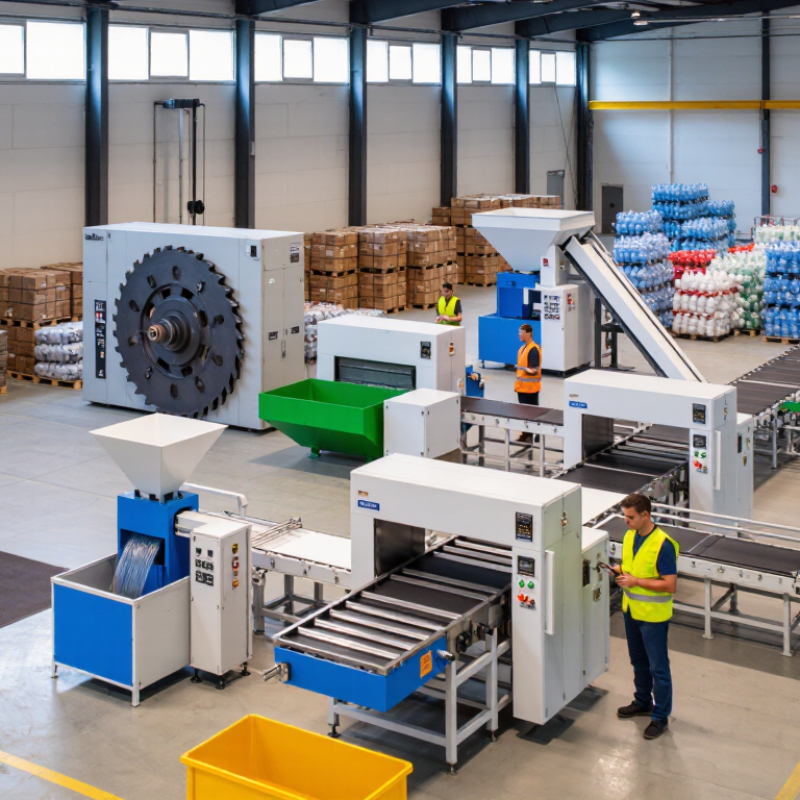
7 Best Recycling Machines for Global Buyers?

Global Recycling Demand: 2.01 Billion Tonnes of Municipal Waste Annually

7 Best Recycling Machines for Global Buyers?

Global municipal waste is a massive resource stream. The World Bank’s What a Waste 2.0 report estimated 2.01 billion tonnes of municipal solid waste generated each year. At least 33% was not managed safely. By 2050, annual waste could reach 3.40 billion tonnes, according to the same report. These figures explain growing demand for practical recycling equipment, especially in cities with limited land and rising collection costs.

The seven most useful machine categories include trommel screens, magnetic separators, optical sorters, shredders, granulators, balers, and glass crushers. Each solves a different bottleneck. A trommel can remove soil from mixed materials. A magnetic separator extracts steel from a moving conveyor. A baler reduces the volume of sorted paper or plastic, sometimes turning loose material into dense one-tonne blocks. Small details matter. Feed moisture, particle size, electricity stability, and local labor skills can change machine performance.

The International Solid Waste Association has highlighted the need for better sorting, collection, and recovery systems worldwide. However, one machine rarely fixes a weak recycling chain. This is where buyers should remain cautious. The 2.01-billion-tonne estimate is global and includes different waste definitions across countries. Actual local volumes may vary sharply. A careful buyer should review a waste audit, test representative samples, and confirm spare-parts access before purchasing. Cheap equipment can become expensive when conveyors stop, blades wear, or operators lack training.

Material-Specific Machines: Plastic, Metal, Paper, Glass, and E-Waste Systems

7 Best Recycling Machines for Global Buyers
The best machine depends on the material, contamination level, and daily volume. Plastic recycling usually needs three connected systems: a shredder, granulator, and washing line. The shredder reduces bulky containers, while the granulator creates more even flakes. A washer removes dirt and labels, but it also consumes water and needs proper treatment. Small operators may choose one combined unit instead. It saves space, though maintenance can become less convenient.
Metal Recycling

Metal recycling requires different equipment. A metal baler compresses cans and sheet offcuts into transportable blocks. A cable stripper separates copper from insulation with less manual cutting.

Paper & Glass Recycling

Paper recycling often starts with a vertical baler, especially where storage space is limited. It produces dense bundles from cardboard and office paper. Glass needs a glass crusher or pulverizer. Dust control is essential, and the output size must match the buyer’s specifications.

E-Waste Systems

E-waste systems may include a dismantling bench, conveyor, magnetic separator, and controlled granulator. Batteries and hazardous components must be removed before processing.

Choose carefully. Very carefully.
Ask for tested throughput using your actual material, not a clean sample. Check motor voltage, spare-part access, noise levels, guarding, and operator training. A machine rated for ten tons daily may perform poorly with wet, mixed feedstock. I have seen purchasing plans focus on capacity while ignoring cleaning time and rejected output. That is an expensive mistake. Specifications can look impressive, but reliable results come from matching each machine to real working conditions.

The 7 Best Recycling Machines Compared by Capacity, Recovery Rate, and Cost

Seven recycling machines deserve attention from global buyers, but “best” depends on feedstock, labor, and electricity. The Global E-waste Monitor 2024 reported 62 million tonnes of e-waste in 2022, with only 22.3% formally recycled. That gap makes equipment selection consequential.

A primary shredder usually handles 1–20 tonnes per hour, with recovery near 90–98% after proper sorting. A granulator processes about 0.3–3 tonnes hourly and can reach 95–99% material recovery. Washing lines handle 0.5–5 tonnes hourly, while clean plastic output may reach 85–95%. Optical sorters offer high purity, often 90–98%, but commonly cost 100,000–500,000 dollars. Balers process 1–10 tonnes hourly and often cost 20,000–150,000 dollars. Pelletizers produce roughly 0.2–2 tonnes hourly, with 80–95% usable yield. Compactors are cheaper, often 10,000–80,000 dollars, but they improve logistics more than recovery. Prices vary sharply by automation, installation, and local service.

The OECD’s Global Plastics Outlook estimates that only 9% of plastic waste was recycled globally in 2019. Therefore, a washing line or pelletizer may create more value than a larger shredder. However, dirty input can reduce recovery quickly. My ranking is not absolute. Buyers should test 500–1,000 kilograms of real feedstock, measure moisture, residue, power use, and labor hours. A quoted recovery rate without those measurements is incomplete. That remains an uncomfortable, but practical, purchasing lesson.

E-Waste Recycling Priorities: 62 Million Tonnes Generated and 22.3% Recycled

The UN Global E-waste Monitor 2024 records 62 million tonnes of electronic waste generated in 2022. Only 22.3% was documented as formally collected and recycled. This gap makes equipment selection a practical responsibility, not a catalogue exercise. The right machine depends on material mix, labor skills, electricity stability, and verified downstream outlets. Small details matter. A damp intake room can damage screens, while poor dust control can expose workers to hazardous particles.

For global buyers, seven machine types deserve close comparison: manual dismantling benches, low-speed shredders, hammer mills, magnetic separators, eddy-current separators, cable granulators, and sensor-based sorters. Each addresses a different bottleneck. Dismantling benches improve recovery before size reduction. Shredders create a consistent feed. Magnetic and eddy-current units separate metals. Cable granulators recover copper and plastics. Sensor sorting can improve accuracy, but it requires cleaner material and trained operators.

Field assessments often show buyers overvalue throughput and undervalue maintenance access. That mistake is expensive. Ask for trial data using your own devices, not laboratory samples. Check dust extraction, noise levels, guarding, spare parts, and reject rates. A reliable supplier should explain capacity in kilograms per hour and show its measurement method. Recovery claims need independent verification. Results vary. Moisture, mixed plastics, batteries, and irregular housings can reduce performance. Safe battery removal must happen before processing. More equipment is not always better; a simpler line may perform better under local conditions.

7 Best Recycling Machines for Global Buyers? - E-Waste Recycling Priorities: 62 Million Tonnes Generated and 22.3% Recycled

Comparative guide to major e-waste recycling equipment categories
No. Machine category Primary material handled Main function Typical throughput range* Typical output or separation Key buying priorities Best fit for
1 Pre-shredder Whole computers, appliances, cables and mixed electronic assemblies Opens and reduces bulky items before downstream separation 0.5–5 tonnes/hour Usually 50–150 mm shredded material, depending on screen size and settings Low-dust enclosure, overload protection, replaceable cutters and controlled particle size Medium- and large-scale collection or dismantling plants
2 Granulator Pre-shredded circuit boards, plastics, cables and small electronic parts Produces a more uniform particle size for material separation 0.1–2 tonnes/hour Commonly 5–30 mm granulate, adjustable by screen selection Dust extraction, screen access, blade durability and consistent feed control Facilities requiring controlled particle size before sorting
3 Magnetic separator Ferrous metals mixed with shredded electronic materials Removes iron and steel using a permanent or electromagnet 1–20 tonnes/hour, depending on belt width and material density Ferrous fraction and non-ferrous residue; separation efficiency depends on particle size and loading Magnetic strength, belt speed, cleaning system and protection from tramp metal Almost every mechanical e-waste processing line
4 Eddy-current separator Aluminium, copper and other non-ferrous metal pieces Ejects electrically conductive non-ferrous metals from non-metallic residue 1–15 tonnes/hour Non-ferrous metal fraction plus plastics, glass and other residual material Rotor speed, belt width, feed presentation and adjustable splitter position High-volume lines recovering aluminium and copper-rich fractions
5 Cable stripping and granulation machine Copper- and aluminium-conductor cables Removes insulation mechanically and separates metal from plastic 50–500 kg/hour Separated metal granules and plastic insulation; recovery varies with cable mix Cable-diameter range, dry separation performance, dust control and ease of blade adjustment Cable collection centers and plants with a consistent cable stream
6 Printed circuit board separation line Waste printed circuit boards and component-rich electronic scrap Combines size reduction, screening and gravity or electrostatic separation 100–1,000 kg/hour Metal-rich concentrate, non-metallic resin/glass fraction and dust-controlled fines Enclosed processing, dust filtration, screen configuration and assay-based quality control Specialized recyclers processing concentrated board streams
7 Optical sorting unit Mixed shredded plastics, glass or visually distinguishable materials Uses cameras and air jets to identify and eject selected materials 0.5–5 tonnes/hour Separated polymer, glass or color-based fractions; results depend on cleanliness and particle presentation Sensor type, software calibration, compressed-air consumption and contamination tolerance Advanced plants seeking higher-quality recycled plastic or glass fractions
Global context: The world generated approximately 62 million tonnes of e-waste in 2022, while only 22.3% was documented as formally collected and recycled. The seven equipment categories above are complementary; a complete facility normally combines manual dismantling, size reduction, sorting, dust control and compliant downstream treatment.
Notes: Throughput figures are indicative engineering ranges for general equipment categories, not guaranteed machine ratings. Actual performance depends on feed composition, moisture, particle size, feeding method, contamination, operating hours and local safety requirements. Source for the global e-waste figures: The Global E-waste Monitor 2024, published by the United Nations Institute for Training and Research and the International Telecommunication Union.

Global Buyer Checklist: Energy Use, Safety Standards, Automation, and ROI

7 Best Recycling Machines for Global Buyers?

Choosing among balers, shredders, granulators, compactors, optical sorters, washing lines, and pelletizers requires more than comparing purchase prices. Measure energy use per processed tonne, not only motor wattage. A machine drawing 45 kW may outperform a 30 kW model if it handles twice the material. Ask suppliers for tested throughput, standby consumption, and performance data under your actual moisture and contamination levels. Request a short trial with representative feedstock.

Safety must fit the destination country and the daily routine. Check emergency stops, fixed guards, interlocks, noise levels, dust control, and safe access for cleaning. Confirm electrical compatibility, documentation, operator training, and conformity with applicable local standards. Certification alone is not enough. A poorly trained shift can defeat excellent engineering. It happens.

Automation can reduce sorting errors and labor pressure, but it also adds sensors, software, and maintenance skills. Look for fault alerts, manual override controls, remote diagnostics, and readily available spare parts. For ROI, calculate purchase, freight, installation, energy, labor, maintenance, and downtime over five years. Compare these costs with realistic material revenue and operating hours. A spreadsheet can still lie. Use conservative throughput, seasonal supply figures, and a repair allowance. Ask for references from facilities processing similar materials, then verify their figures independently.

7 Best Recycling Machines for Global Buyers

Global buyer checklist: energy use, safety standards, automation, and ROI

Energy use

Values show indicative electricity consumption in kWh per metric tonne processed under typical operating conditions.

Safety standards

Global buyers should verify risk assessment and guarding against ISO 12100, electrical safety against IEC 60204-1, and local CE, UKCA, or OSHA requirements.

Automation and ROI

Automation is rated from 1 to 5. Payback estimates assume stable feedstock, two-shift operation, and revenue from recovered materials.

The figures are indicative industry benchmark ranges represented by typical midpoint values; actual results vary with material type, moisture, contamination, throughput, labor costs, and local electricity prices.

Go to Top