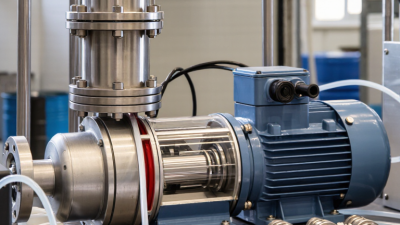
What Are the 2026 Top High Flow Hydraulic Pump Types?

As hydraulic systems demand greater speed, lifting force, and energy control in 2026, choosing the right High Flow Hydraulic Pump requires more than comparing advertised flow rates. Engineers now examine displacement, operating pressure, efficiency, noise, contamination tolerance, and maintenance access. A pump delivering 500 liters per minute may appear impressive, yet it can waste energy if the circuit rarely needs that volume. The application must lead the decision.

This guide introduces the leading pump types expected to shape high-flow equipment in 2026. Axial piston pumps remain important for mobile machinery requiring variable displacement and high pressure. Radial piston pumps suit demanding industrial applications where steady force and durability matter. Vane pumps can provide smooth operation and moderate noise, while gear pumps often offer simple construction, easier servicing, and attractive initial costs. Each design has a different operating personality.

Field experience shows that installation details often decide performance. A clean reservoir, correctly sized suction line, and suitable filtration can protect a powerful pump from early failure. Small oversights matter. Temperature, fluid viscosity, duty cycle, and control strategy also affect real-world results. Manufacturer testing and verified technical data should support every final selection, rather than relying on marketing claims alone. The ranking is not absolute. A pump that performs well on a steel mill may be unsuitable for an excavator working through dust and vibration. This overview compares the main 2026 options with practical judgment, while acknowledging that actual results can vary between systems, operators, and maintenance conditions.
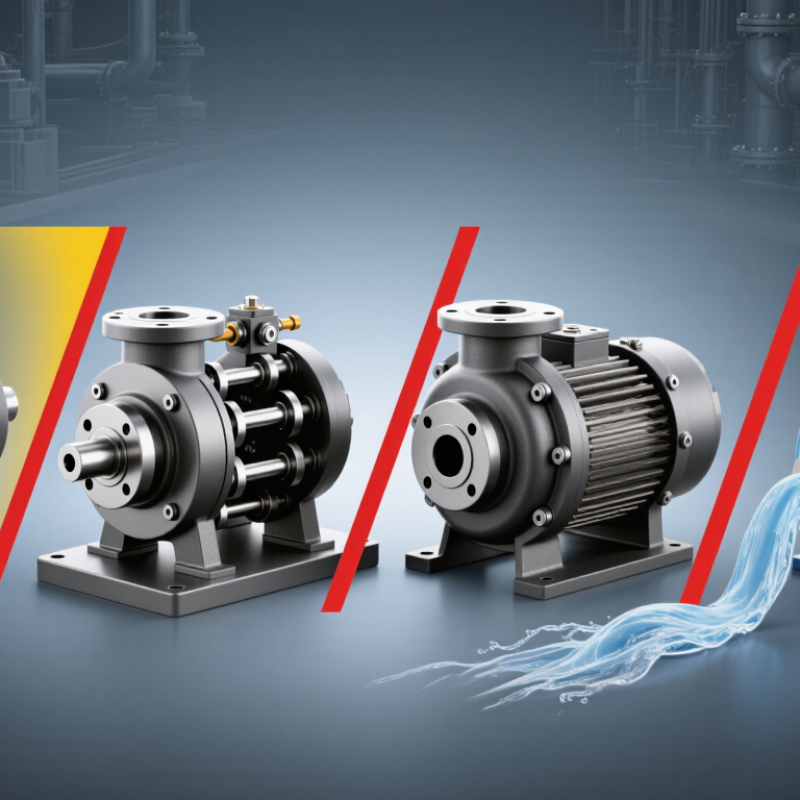
What Are the 2026 Top High Flow Hydraulic Pump Types?

High-Flow Hydraulic Pumps in 2026: ≥100 L/min at ISO 4413 Compliance

What Are the 2026 Top High Flow Hydraulic Pump Types?

High-flow hydraulic pumps in 2026 commonly deliver at least 100 L/min under demanding industrial conditions. Axial piston pumps remain a strong choice for high pressure and variable flow control. Their displacement can adjust as machine load changes, reducing wasted power during partial demand. Bent-axis designs can provide high efficiency, but alignment and installation quality matter greatly.

Large external gear pumps offer a simpler structure and dependable flow for mobile equipment, presses, and material-handling systems. They often tolerate rough operating environments, although noise and heat can increase at higher speeds. Vane pumps provide smooth delivery and moderate noise, yet they require cleaner oil and careful maintenance. Bigger flow does not automatically mean better performance.

ISO 4413 compliance involves the complete hydraulic system, not only the pump. Engineers should verify pressure ratings, hose routing, guarding, emergency isolation, leakage control, and stored-energy release procedures. A 100 L/min circuit needs correctly sized suction lines, return filters, and reservoir capacity to prevent cavitation and overheating. During commissioning, technicians should check oil temperature, vibration, pressure stability, and actual flow with calibrated instruments. Small mistakes matter.

In practice, pump selection depends on pressure, duty cycle, speed, fluid cleanliness, and control requirements. I would not choose a pump from flow rate alone. That shortcut often creates avoidable heat, noise, or unstable motion. Even experienced teams should review real operating data before approving the final design.

Axial-Piston Pumps: Up to 1,000 L/min and 350–450 bar

What Are the 2026 Top High Flow Hydraulic Pump Types?

Axial-piston pumps remain strong candidates for demanding high-flow hydraulic systems. Their compact design supports high pressure and precise flow control.

A properly sized pump can deliver up to 1,000 L/min and operate around 350–450 bar. At 1,000 L/min and 400 bar, ideal hydraulic power reaches approximately 667 kW. Actual input demand is higher. That ceiling is not a promise. Efficiency depends on speed, displacement, oil temperature, and control strategy.

The International Energy Agency’s Energy Efficiency 2023 report estimates that electric motor systems consume roughly 45% of global electricity. Hydraulic power units therefore deserve careful energy planning. The U.S. Department of Energy’s Improving Pumping System Performance sourcebook reports potential energy savings of 20–50% through system optimization.

That range is significant. It includes better pipe sizing, reduced throttling, leak control, and variable-displacement operation. For high-flow service, these details can matter more than rated pressure.

Field engineers should verify duty cycles before selecting an axial-piston pump. Pressure spikes can damage seals, bearings, and control components.

Oil cleanliness also matters; contamination accelerates wear and weakens volumetric efficiency. ISO 4406 cleanliness targets provide a practical maintenance reference. I would not select a 1,000 L/min unit only because the catalog allows it. A smaller pump may run more efficiently during normal production.

In practice, measured flow and pressure should guide the final choice. The uncomfortable truth is that laboratory efficiency rarely survives poor installation.

External Gear Pumps: Up to 500 L/min at Approximately 250–300 bar

External gear pumps remain a practical choice for high-flow hydraulic systems. Some heavy-duty configurations can deliver up to 500 L/min at approximately 250–300 bar. That figure is a limit, not a promise. Actual performance depends on displacement, shaft speed, oil viscosity, and volumetric efficiency. A pump producing 500 L/min needs careful inlet planning. An undersized suction line can create noise, cavitation, and early wear.

Maintenance teams should inspect the pump’s housing, shaft seal, bearings, and pressure relief arrangement. Filtration also matters. Contaminated oil can damage gear surfaces and reduce efficiency long before failure becomes visible. In a real installation, I would confirm flow at operating temperature, not only from a catalog table. Cold oil may increase resistance and distort the test result.

External gear pumps are often valued for their straightforward construction and serviceability. They can suit mobile equipment, presses, and material-handling circuits where high flow is essential. Still, high pressure creates heat, vibration, and greater sealing demands. Not always ideal. I would question any selection that focuses only on 500 L/min. Noise levels, duty cycle, motor power, and maintenance access deserve equal attention. A slightly lower flow rate may deliver better reliability when the system runs continuously.

2026 High-Flow Hydraulic Pump Types

Representative maximum flow and typical maximum pressure ranges for commonly used industrial hydraulic pump designs.

External gear pumps can reach approximately 500 L/min at around 250–300 bar in high-flow industrial configurations. Actual performance varies with displacement, rotational speed, fluid viscosity, temperature, and system design.

Vane Pumps: Up to 500 L/min with Typical Ratings Near 210 bar

Vane pumps remain a practical choice for high-flow hydraulic systems in 2026. Many industrial designs can deliver up to 500 L/min, with typical pressure ratings near 210 bar. These figures suit injection equipment, material-handling lines, and large forming machinery. The real selection depends on duty cycle, fluid temperature, and required efficiency.

Grand View Research’s 2024 hydraulic pumps analysis identifies steady market growth through 2030, reflecting continued demand for compact, high-output systems. However, a 500 L/min rating is not a promise of continuous performance. Actual flow can fall as pressure rises, especially when oil becomes hot or contaminated. That detail is easy to miss.

Field experience shows that vane pumps operate quietly and provide smooth flow. They are often preferred where noise control matters. ISO 4406:2021 cleanliness guidance also matters because particle contamination can damage vanes and reduce volumetric efficiency.

A filtration plan should be designed before installation, not after the first failure. I would also question any catalogue figure without checking speed, inlet conditions, and fluid viscosity. The number may look impressive. It may not survive the factory floor.

Screw Pumps: Up to 1,000 L/min with Low-Noise, 100–250 bar Operation

Screw pumps deserve attention among the 2026 high-flow hydraulic pump types. Suitable configurations can deliver up to 1,000 L/min while operating between 100 and 250 bar. Their twin- or triple-screw rotors move oil smoothly, reducing pressure pulsation and mechanical vibration. The workshop is quieter.

This matters in steel processing, marine equipment, and large injection systems. A 2024 report from the International Energy Agency identifies motor-driven systems as major industrial electricity consumers. Efficient hydraulic design therefore affects both output and operating cost. The U.S. Department of Energy also reports that motor systems can account for roughly 70% of industrial electricity use. Screw pumps may help through steady flow, lower noise, and fewer flow spikes, but actual savings depend on motor control, oil viscosity, and pipe sizing.

Field experience shows that installation details can defeat a good pump. Keep the suction line short, generously sized, and free from sharp bends. Check oil temperature before judging noise or efficiency. At 1,000 L/min, small restrictions create serious pressure losses. A pump rated for 250 bar may not tolerate continuous operation there; consult its duty curve and relief-valve setting. ISO 4413 guidance also emphasizes contamination control, guarding, and safe pressure management. I would not select a screw pump blindly. Its quiet operation is attractive, yet maintenance access and fluid cleanliness still need honest review.

What Are the 2026 Top High Flow Hydraulic Pump Types? - Screw Pumps: Up to 1,000 L/min with Low-Noise, 100–250 bar Operation

Screw Pump Type Typical Flow Range Typical Pressure Range Typical Speed Approx. Noise Level Best-Fit Applications Main Advantages
Two-Screw Pump 100–1,000 L/min 100–250 bar 500–3,600 rpm 65–78 dB(A) High-flow hydraulic power units, marine systems, industrial circulation and transfer duties Very smooth flow, low pulsation, good suction capability and low operating noise
Three-Screw Pump 20–500 L/min 80–200 bar 1,000–3,600 rpm 60–72 dB(A) Lubrication circuits, hydraulic power packs, machine tools and oil circulation systems Excellent flow uniformity, compact construction and particularly quiet operation with clean fluids
Four-Screw Pump 100–800 L/min 100–250 bar 600–3,000 rpm 64–76 dB(A) Large hydraulic manifolds, industrial hydraulics and continuous-duty fluid transfer High capacity, stable delivery and reduced radial loading compared with conventional rotary designs
Five-Screw Pump 50–600 L/min 100–200 bar 500–2,900 rpm 62–75 dB(A) High-volume lubrication, hydraulic oil circulation and low-pulsation transfer systems Quiet operation, minimal pressure ripple and reliable performance during long continuous cycles
Progressive-Cavity Screw Pump 5–300 L/min 20–100 bar 50–600 rpm 60–75 dB(A) Viscous-fluid transfer, filtration systems and applications requiring gentle handling Handles high-viscosity fluids and suspended solids with low shear and steady flow

Note: Performance values are typical engineering ranges for properly selected screw pumps. Actual flow, pressure, speed, noise and efficiency depend on displacement, fluid viscosity, temperature, inlet conditions, motor speed, installation and manufacturer design. The 1,000 L/min rating is generally associated with large two-screw or multi-screw configurations rather than every screw-pump design.

Go to Top