
2026 Best Polyethylene Boards for Global Buyers
In 2026, global buyers need more than a low price when selecting Polyethylene Boards. They need stable performance, traceable materials, and realistic delivery planning. Polyethylene includes several grades, such as HDPE, UHMW-PE, and recycled PE. Each behaves differently under impact, moisture, heat, and abrasion.
PlasticsEurope’s Plastics—The Fast Facts 2024 reports global plastics production of 413.8 million tonnes in 2023. This scale supports broad polyethylene availability, but it also creates quality differences between suppliers. Grand View Research identifies packaging and industrial applications as major drivers of the polyethylene market. That trend matters for board buyers because demand can affect resin supply, lead times, and pricing. Small details matter.
A reliable purchasing process should compare density, thickness tolerance, impact strength, surface finish, and working temperature. Buyers should also request technical data sheets, batch information, and sample testing before approving large orders. ISO and ASTM test methods can improve comparisons, although test results may not perfectly predict field performance. A board that survives a warehouse floor may fail beside a hot machine. That is easy to overlook.
The OECD’s Global Plastics Outlook warns that plastic waste could nearly triple by 2060 without stronger policy action. Therefore, recycled-content claims, end-of-life options, and documented sourcing deserve careful review. Recycled Polyethylene Boards may reduce material pressure, but their color, consistency, and mechanical properties can vary. No board wins every application. This guide evaluates leading options for global buyers through performance, documentation, logistics, sustainability, and total cost. It also recognizes a practical truth: the cheapest quotation is sometimes the most expensive decision.
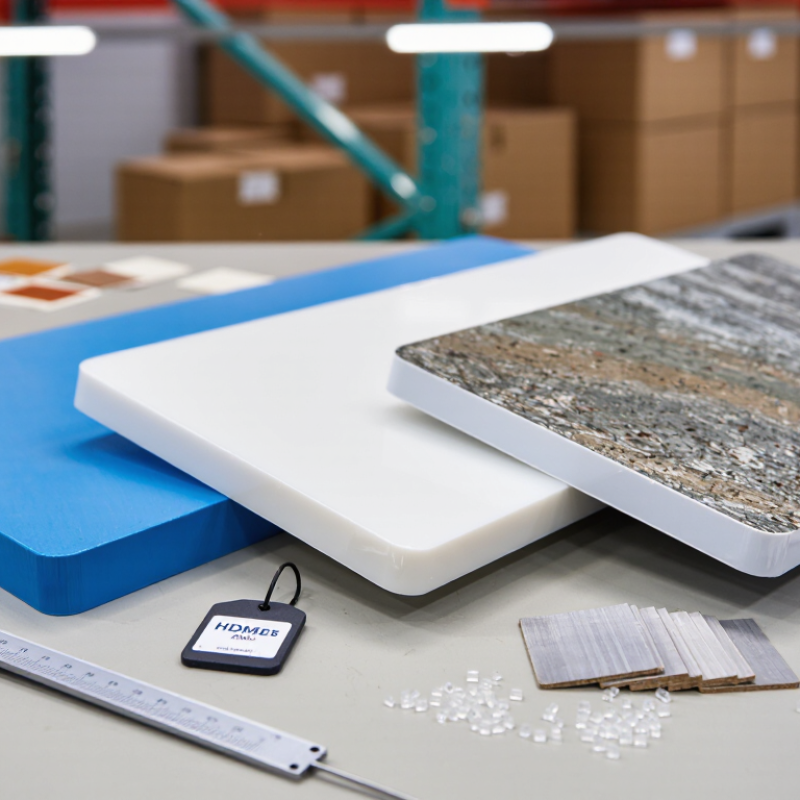
What Are Polyethylene Boards and How Are They Made?
2026 Best Polyethylene Boards for Global Buyers
What Are Polyethylene Boards and How Are They Made?
Polyethylene boards are flat, solid sheets made from polyethylene resin. They are lightweight, moisture-resistant, and easy to machine. High-density polyethylene, or HDPE, is common for industrial panels, food-contact surfaces, and protective liners. Ultra-high-molecular-weight polyethylene offers better wear resistance, but it usually costs more.
Manufacturing begins with polymer pellets. Producers melt and blend them with approved colorants, stabilizers, or performance additives. Extrusion pushes the hot material through a flat die. Rollers then control thickness and surface finish. Compression molding is another option, especially for thicker boards. The sheet cools slowly before cutting and inspection.
Small details matter.
A reliable inspection checks thickness, flatness, impact strength, and surface defects. Buyers should request technical data, food-contact documentation when relevant, and recycled-content declarations. PlasticsEurope reported global plastics production of about 414 million tonnes in 2023, showing the scale of the wider material system. Yet the OECD’s Global Plastics Outlook found that only 9% of plastic waste was recycled in 2019. That gap deserves attention when selecting polyethylene boards.
Recycled polyethylene can reduce virgin resin demand, but color variation and inconsistent properties may appear. I have seen specifications focus heavily on price while overlooking machining behavior. That is a mistake. Board performance depends on resin grade, thickness, processing temperature, and actual service conditions. Data sheets help, but real samples remain necessary.
2026 Best Polyethylene Boards for Global Buyers - What Are Polyethylene Boards and How Are They Made?
| Board Type | What It Is | Typical Density (g/cm³) | Typical Tensile Strength (MPa) | Key Performance | Common Board Applications | Relative Cost Level |
|---|---|---|---|---|---|---|
| HDPE Board | High-density polyethylene with a relatively stiff structure and low moisture absorption. | 0.94–0.97 | 20–37 | Good chemical resistance, outdoor durability, weldability, impact resistance, and easy machining. | Tanks, cutting boards, liners, marine components, fabricated equipment, and protective panels. | Low to medium |
| UHMWPE Board | Ultra-high-molecular-weight polyethylene designed for very high abrasion and impact resistance. | 0.93–0.95 | 35–55 | Excellent wear resistance, very low friction, strong impact absorption, and non-stick performance. | Chute liners, hopper liners, conveyor wear strips, dock fenders, mining components, and sliding surfaces. | Medium to high |
| LDPE Board | Low-density polyethylene with a softer, more flexible structure than HDPE. | 0.91–0.94 | 8–20 | Flexible, lightweight, moisture-resistant, and resistant to many dilute chemicals. | Flexible liners, protective covers, packaging components, seals, and low-load cushioning parts. | Low |
| Recycled PE Board | Board produced partly or primarily from recovered polyethylene; properties depend on feedstock and processing. | 0.93–0.97 | Typically 15–35 | Lower environmental impact potential and good general durability; color and consistency may vary. | Pallets, temporary barriers, landscaping products, construction protection, and general-purpose panels. | Low to medium |
How Polyethylene Boards Are Made
| Production Stage | Process Description | Important Buyer Considerations |
|---|---|---|
| 1. Polymer Selection | Polyethylene resin is selected by density, molecular weight, melt-flow behavior, color, additives, and required end use. | Confirm whether the board is HDPE, UHMWPE, LDPE, virgin-grade, recycled-grade, UV-stabilized, or food-contact compliant. |
| 2. Compounding | Colorants, antioxidants, UV stabilizers, processing aids, or reinforcing materials may be blended with the resin. | Ask for additive details when boards will be used outdoors, near chemicals, or in regulated food-processing environments. |
| 3. Melting and Forming | The material is heated and formed by processes such as extrusion, compression molding, or ram extrusion, depending on the grade and board size. | Forming method affects thickness tolerance, surface finish, internal stress, flatness, and available dimensions. |
| 4. Cooling and Calibration | The hot board is cooled and stabilized to control dimensions, flatness, and surface quality. | Request dimensional tolerances and flatness specifications for CNC machining, fabrication, or automated assembly. |
| 5. Cutting and Finishing | Boards may be cut, trimmed, drilled, machined, textured, printed, or supplied with protective film. | Specify cut size, edge condition, surface texture, hole pattern, packaging, and protection against scratches during international transport. |
| 6. Inspection and Packing | Finished boards are checked for dimensions, appearance, density, mechanical properties, and order requirements before packing. | For global purchasing, request a material datasheet, inspection report, packing list, and certificate of conformity where required. |
Global Buyer Selection Checklist
| Requirement | Recommended Specification to Confirm | Why It Matters |
|---|---|---|
| Dimensions | Length, width, thickness, tolerance, flatness, and maximum board size. | Ensures compatibility with fabrication equipment, installation space, and shipping limits. |
| Environment | Chemical exposure, UV exposure, moisture, abrasion, impact, and operating temperature. | Helps determine whether HDPE, UHMWPE, LDPE, or a stabilized grade is appropriate. |
| Compliance | Food-contact status, REACH or RoHS documentation, recycled content, and country-specific requirements. | Supports customs clearance, regulatory compliance, and qualification by the end user. |
| Quality Documents | Technical datasheet, test method, lot number, inspection report, and certificate of conformity. | Makes material comparison and incoming quality inspection more consistent. |
| Logistics | Incoterms, pallet dimensions, moisture protection, corner protection, container loading, and lead time. | Reduces freight damage, unexpected landed costs, and delivery delays. |
Note: Property ranges are typical indicative values for unfilled polyethylene sheet and board grades. Actual results vary by resin grade, molecular weight, processing method, additives, orientation, test direction, specimen preparation, and test standard. Verify final values against the supplier’s current technical datasheet and applicable ISO or ASTM test method.